

At a glance
Wheatgrass is a nutrient-dense supplement available in several forms, including whole-leaf powder, juice powder, capsules, or tablets. Each differs in processing methods, nutrient concentrations, and intended use. Understanding the key differences can help you choose a wheatgrass supplement that aligns with your health goals, taste preferences, and daily routine.
Wheatgrass is a popular superfood rich in vitamins, minerals, chlorophyll, and phytochemicals that may help boost energy levels, support digestive functions, and enhance overall health.
Discover common forms of wheatgrass supplements and learn how to choose the best product for your health needs and routine.
What is wheatgrass, and what does it do?
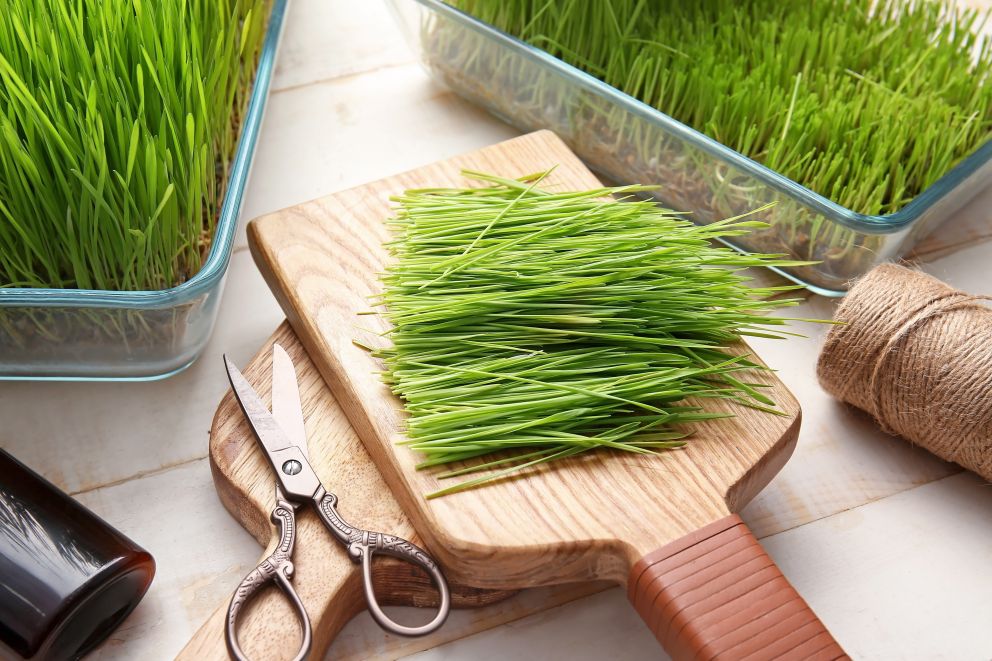
Wheatgrass refers to the young shoots of the common wheat plant, also known as Triticum aestivum, which is harvested just before the plant matures and forms grain.
At this critical growth stage, wheatgrass contains the highest concentration of bioactive compounds such as antioxidants and phytonutrients. Its high nutrient density helps protect the young, fragile plant from environmental stressors as it develops.
These same nutrients can also support human health, making wheatgrass a popular dietary supplement.
It’s valued for its high concentration of chlorophyll, vitamins, minerals, enzymes, and plant compounds that help support healthy immune function and promote overall cellular health.
Wheatgrass offers several nutrients associated with various health benefits, including:
- Vitamins A, C, D, E, and K
- B-complex vitamins
- Calcium
- Iron
- Magnesium
- Plant-protein and essential amino acids
- Enzymes
- Chlorophyll
Because of its broad nutrient profile and concentrated plant compounds, wheatgrass is a popular way to boost plant-based nutrition, support energy production, digestive health, and overall well-being.
What forms of wheatgrass are used in supplements?
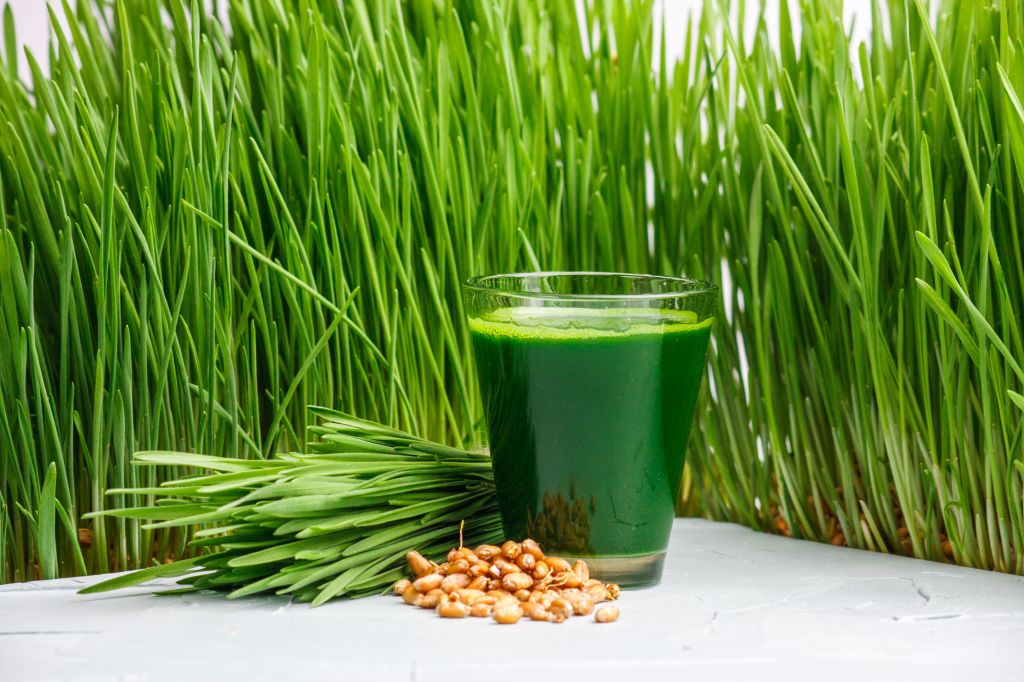
Wheatgrass supplements are primarily available as whole-leaf powders or juice powders, which can be mixed into beverages such as water or smoothies.
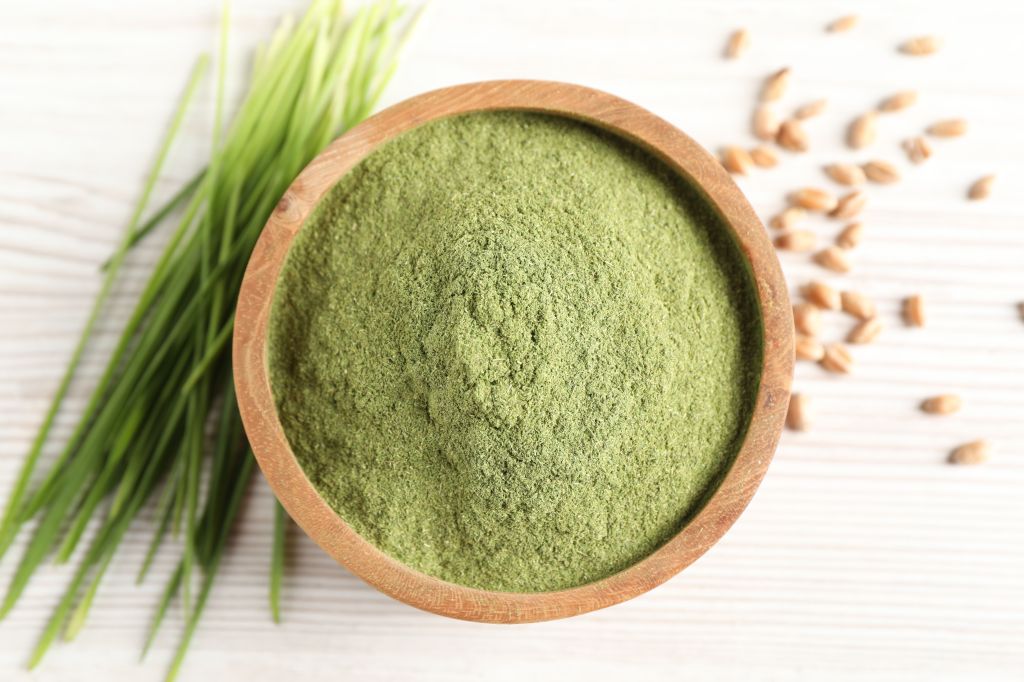
Whole leaf powders are made by drying and finely grinding the entire grass blade, which preserves the plant’s natural fibers along with its full spectrum of nutrients.
“Juice powders are made by extracting the juice from fresh wheatgrass and then freeze-drying the liquid to preserve its nutrients,“ explains Dr. Berg. “This creates a more concentrated product that delivers many of the plant’s water-soluble nutrients without the added bulk of dietary fiber.”
In addition to loose powder, wheatgrass is available in capsules and tablets. These forms contain either whole-leaf powder or wheatgrass juice powder in pre-measured amounts, making them a convenient, flavor-neutral option for those seeking a simple alternative to loose powders.
How much wheatgrass do supplements typically provide?
The amount of wheatgrass in supplements can vary widely depending on the product type and brand, but most provide between roughly 1.5 and 12 g per serving.
Whole-leaf wheat grass is commonly used in a serving size of one tablespoon, providing roughly 8 to 12 g. Some brands use smaller one-teaspoon scoops, which deliver 2.5 to 3.5 g per serving.
Wheatgrass powder retains its natural fiber content, which makes up a significant portion of the serving. As an example, an 8 g serving of whole wheatgrass powder may contain up to 4 g of fiber.
In contrast, wheatgrass juice powders are more concentrated than whole powders, which explains why serving sizes are typically smaller–often between 1.5 and 5 g.
Capsules and wheatgrass tablets tend to contain smaller amounts of wheatgrass per unit, often around 300 to 600 mg per pill. As a result, a full serving may require several capsules or tablets to reach a total intake comparable to approximately 1.5 to 3 g of powder.

Factors that can influence wheatgrass selection
Various factors can influence the type of wheatgrass product that best suits your needs.
The processing method is one consideration. Processing involves either drying the entire young grass or extracting the juice before drying, both of which influence nutrient density, taste, and texture.
Pure juice supplements provide a concentrated dose of bioavailable nutrients the body can readily absorb and utilize, while whole-leaf supplements contain all of the plant’s constituents, including dietary fiber.
Whole-leaf wheatgrass supplements tend to have a more grassy flavor and a gritty texture, while juice products are typically smoother and milder.
The fiber content can also influence your choice in a wheat grass product. Juice supplements contain little to no fiber, while whole wheatgrass contains significant amounts of insoluble fiber.
Research published in Frontiers in Nutrition found that, while insoluble fiber can’t be digested, it may support bowel regularity, which may be ideal for those looking to support gut motility and overall digestive health.
Wheatgrass juice powder may be best for those seeking concentrated, comprehensive nutritional support, while whole wheatgrass powder is ideal for those who prefer a whole-plant approach.
Capsules and tablets can be a good option for individuals who dislike the taste of wheatgrass or prefer a convenient and pre-measured alternative to powder forms.

How to choose a wheatgrass supplement
When choosing a wheatgrass supplement, it’s vital to carefully read the ingredient list to avoid products with artificial flavors, added sugar, or other non-nutritive fillers.
Look for products with clear labeling, stating “raw wheatgrass juice powder” or “organic wheatgrass powder,” and minimal, natural ingredients to help ensure it suits your wellness goals.
Additionally, consider quality and certifications, such as non-genetically modified (GMO) and organic wheatgrass, to maximize nutritional value and health benefits while minimizing exposure to pesticides, such as glyphosate.
Glyphosate and other potential chemical toxins used on wheat crops have been linked to significant health risks.
Research published in the International Journal of Molecular Sciences highlights, “Glyphosate seems to exert a significant toxic effect on neurotransmission and to induce oxidative stress, neuroinflammation and mitochondrial dysfunction.”
Finally, though wheatgrass is naturally gluten-free, choosing a product that is certified gluten-free can help prevent cross-contamination, which may be especially important for individuals with gluten sensitivity, wheat allergy, or celiac disease.
Key takeaways
- Wheatgrass is the young grass of the common wheat plant valued for its high levels of antioxidants, chlorophyll, vitamins, minerals, enzymes, and phytonutrients.
- Wheatgrass supplements are most commonly available as whole wheatgrass powder, wheatgrass juice powder, and capsules or tablets containing one of these forms.
- Juice powders are more concentrated and provide smaller serving sizes, while whole wheatgrass powders retain insoluble fiber and usually require larger servings.
- Capsules and tablets offer a convenient, flavor-free option but may require several pills to reach amounts comparable to powders.
- Choosing a clearly labeled, organic wheatgrass supplement with minimal added ingredients can help ensure quality and purity.
FAQ
- 1. What is the difference between wheatgrass powder and wheatgrass juice powder?
- 2. Are wheatgrass supplements typically taken as powders or capsules?
- 3. Do wheatgrass supplements contain gluten?
- 4. How should wheatgrass supplements be stored?
Sources
- https://pmc.ncbi.nlm.nih.gov/articles/PMC11671356/
- https://pmc.ncbi.nlm.nih.gov/articles/PMC9101768/
Related Articles
-
Greens Powder Supplements: Forms and How to Choose
 Nutrition
Greens Powder Supplements: Forms and How to Choose
At a glance Greens powder supplements can be formulated with a blend of cruciferous vegetables, wheat grass, or other plant-based ingredients to support overall wellness and nutrient intake. These dietary…04/10/2026 -
Does Green Tea Break a Fast?
 Fasting
Does Green Tea Break a Fast?
At a glance Plain green tea contains no calories and is generally considered a fasting-friendly beverage. It also provides beneficial plant compounds that may complement fasting’s benefits by supporting metabolic…03/27/2026 -
Vitamin C Supplements: Forms and How to Choose
 Vitamins
Vitamin C Supplements: Forms and How to Choose
At a glance Vitamin C, an antioxidant nutrient involved in immune function and tissue integrity, can be obtained naturally through food or as a dietary supplement. Vitamin C supplements are…03/13/2026 -
7 Healthiest Foods and Why Your Body Needs Them
 Nutrition
7 Healthiest Foods and Why Your Body Needs Them
At a glance Eating nutrient-dense, minimally processed foods is crucial for maintaining long-term health, as they support digestion, cardiovascular function, energy production, and immune balance. Discover seven of the healthiest…01/08/2026 41.6k views -
Real vs. Fake Olive Oil: How to Tell the Difference
 Nutrition
Real vs. Fake Olive Oil: How to Tell the Difference
At a glance There are several ways to determine if olive oil is truly olive oil, including checking its labeling, packaging, aroma, and taste. Fake olive oil is blended with…12/04/2025 17.4k views -
Does Lemon Juice Have Vitamin C?
 Nutrition
Does Lemon Juice Have Vitamin C?
At a glance Lemon juice is a natural source of vitamin C and several beneficial plant compounds, but its nutritional value depends heavily on freshness and how it’s processed. It…11/13/2025 13.1k views -
Are Lemons Keto-Friendly? – Nutrition & Benefits
 Keto
KetoAre Lemons Keto-Friendly? – Nutrition & Benefits
At a glance Lemons are naturally low in carbs and can fit easily into a nutritious keto diet when used in moderation. Their nutrients and plant compounds support several aspects…04/09/2025 32k views -
Is Pomegranate Keto-Friendly?
 Diet
DietIs Pomegranate Keto-Friendly?
At a glance While pomegranate juice is too high in natural sugars to support ketosis and is best avoided, the seeds are a good option. They contain enough fiber to…04/09/2025 70k views -
How to Use Black Seed Oil
 Health concerns
How to Use Black Seed Oil
At a glance Black seed oil, derived from Nigella sativa, is rich in antioxidants and has been used traditionally for its potential wellness benefits. It can be utilized in various…04/09/2025 26.7k views -
14 Amazing Oregano Oil Benefits
 Health concerns
14 Amazing Oregano Oil Benefits
At a glance Oregano oil is a rich source of bioactive compounds that offer a variety of potential health benefits. It has antimicrobial and antioxidant properties and may support respiratory…04/09/2025 87k views


