

At a glance
Ashwagandha is a traditional medicinal herb known for its adaptogenic properties. Ashwagandha benefits for female health may include stress management, hormonal balance, cardiovascular support, and improved reproductive function. However, it should be avoided if you’re pregnant, breastfeeding, or have certain medical conditions.
Ashwagandha’s potential benefits for female health have been known for centuries.
This adaptogenic herb is commonly associated with promoting a sense of balance and is frequently used to support general health, including hormonal and menstrual wellness.
Discover six ashwagandha benefits for women and learn why taking an ashwagandha supplement may help promote relaxation and support overall female well-being.
6 ashwagandha benefits for female health
Ashwagandha’s long-standing use in traditional medicine has ignited considerable scientific interest.
A growing body of research is exploring how ashwagandha may support general wellness and balance, with particular interest in its potential relevance to women’s health.
Here are six benefits of ashwagandha for female health.
1. Adaptogen
Ashwagandha is widely regarded as one of the most well-known adaptogenic herbs, traditionally used to support the body’s natural response to physical and mental stressors.
Ashwagandha contains withanolides, a group of naturally occurring compounds that have been studied for their potential to interact with hormonal, neuronal, and immune pathways involved in the body’s response to stress.
During periods of stress, your adrenal glands release cortisol, an adrenal steroid-hormone that alters metabolic processes to sustain the body during stressful events such as trauma, exercise, injury, or surgery.
While cortisol plays an essential role in mitigating the physiological effects of stress, chronic stress can lead to imbalanced cortisol levels linked to weak immune defenses, poor blood pressure regulation, and changes in body shape and composition, also known as adrenal body type.
Ashwagandha is thought to influence cortisol levels and gamma-aminobutyric acid (GABA) activity, a neurotransmitter associated with calmness and stress regulation.
A study published in Cureus observed that participants taking ashwagandha root extract experienced more balanced cortisol levels and reported improved sleep quality, stress resilience, and overall well-being.1
2. Hormonal health
Ayurvedic medicine regularly uses ashwagandha to support female hormone balance.
Chronic stress can trigger the release of sex hormone-binding globulin (SHBG), a protein that binds to steroid hormones, including estrogen, which may affect its availability to cells and tissues.
This interaction is thought to influence the balance of other hormones, such as progesterone and luteinizing hormone.
Shifts in female hormone levels have been associated with changes in menstrual patterns, mood regulation, skin health, vitality, and reproductive functions.
Ashwagandha’s adaptogenic properties are believed to help modulate SHBG production, potentially supporting a more balanced hormone profile. This may explain its popularity in promoting overall female well-being.
3. Fertility and reproduction
Chronic stress is commonly recognized for its potential to affect fertility by disrupting hormonal balance and ovulation.
By supporting stress reduction, menstrual cycle health, and overall vitality, ashwagandha extract is often included in wellness routines aimed at promoting general reproductive health.
In fact, research published in BioMed Research International concluded, “Ashwagandha was found to enhance spermatogenesis and sperm related indices in males and sexual behaviors in females.”2
4. Menstrual health
Ashwagandha is believed to help support balanced cortisol levels, which play a role in maintaining regular menstrual cycles.
Its potential anti-inflammatory effects may also contribute to reducing discomfort related to hormonal fluctuations during ovulation and the premenstrual phase.
5. Postmenopausal health
Ashwagandha is often used to support hormonal balance, which may help support temperature regulation, sleep quality, and mood regulation.
It’s also thought to help balance the effects of changing estrogen levels, which may be linked to shifts in bone health.
While further research is needed, ashwagandha may have a positive impact on skeletal health by supporting the activity of osteoblasts, a type of cell involved in maintaining healthy bone mass.
6. Heart health
Ashwagandha is a rich source of withanolides, bioactive compounds that are believed to support healthy blood pressure levels.
Elevated blood pressure, especially when combined with high cortisol, can have an impact on cardiovascular function and may contribute to conditions affecting heart health.
“Ashwagandha’s potential to support balanced blood pressure and promote relaxation may enhance overall wellness, which is often linked to better cardiovascular health,” explains Dr. Berg.
Watch the video below to learn how ashwagandha supports health and wellness.
What is ashwagandha?
Ashwagandha is a medicinal herb also known as Indian ginseng or winter cherry. It belongs to the nightshade family and grows predominantly in India, the Middle East, and parts of Africa.
Ashwagandha contains several bioactive compounds, including a group of phytochemicals known as withanolides, which are believed to support balanced inflammatory responses and promote overall health and well-being.
The roots and berries of the ashwagandha shrub contain the highest concentrations of withanolides and are most commonly used for medicinal purposes.
Where did ashwagandha originate?
The ashwagandha shrub is native to India, Pakistan, and Sri Lanka, and ashwagandha extracts and powders have been used in these regions for more than 3000 years.
Ashwagandha is a prominent adaptogenic herb used in traditional Ayurvedic medicine to promote many physical and mental health aspects.
Over time, knowledge of ashwagandha’s potential health benefits has spread to other parts of the world, where it has since been cultivated and harvested for its impressive medicinal properties.
How long does ashwagandha take to work?
Ashwagandha isn’t considered a fast-acting herb, and how long it takes for ashwagandha to work depends on an individual’s health status, wellness goals, and dosage.
While many experience enhanced stress resilience and better sleep within two to three weeks, other effects, such as improved hormonal balance, may take several weeks or even months of consistent ashwagandha use.
What are the side effects of ashwagandha for females?
While ashwagandha is generally considered safe, some individuals appear sensitive to ashwagandha and may experience side effects.
Gastrointestinal symptoms such as nausea and stomach pains are among the most common side effects of ashwagandha supplementation, and taking ashwagandha with food typically resolves this issue.
Some individuals experience sensitivities or allergic reactions to ashwagandha, and it’s crucial to discuss ashwagandha use with a healthcare provider, especially if you have a known allergy to nightshade plants.
If you experience hives, difficulties breathing, or disorientation after taking ashwagandha, seek immediate medical attention.

How much ashwagandha can you have?
How much ashwagandha you should take depends on your overall health status and the potency and formulation of the ashwagandha supplement you’re planning to use.
A typical ashwagandha dosage ranges between 300 to 600 milligrams, taken once or twice daily. Taking higher amounts of ashwagandha can significantly increase the risk of side effects.
To lower the risk of adverse effects, it’s crucial to follow the instructions of the ashwagandha product and start with a lower dosage, gradually increasing towards the recommended intake.
Watch the video below to learn more about the health benefits of ashwagandha.
What is the best way to use ashwagandha?
The best way to use ashwagandha depends on your personal preferences and the type of ashwagandha products you have available.
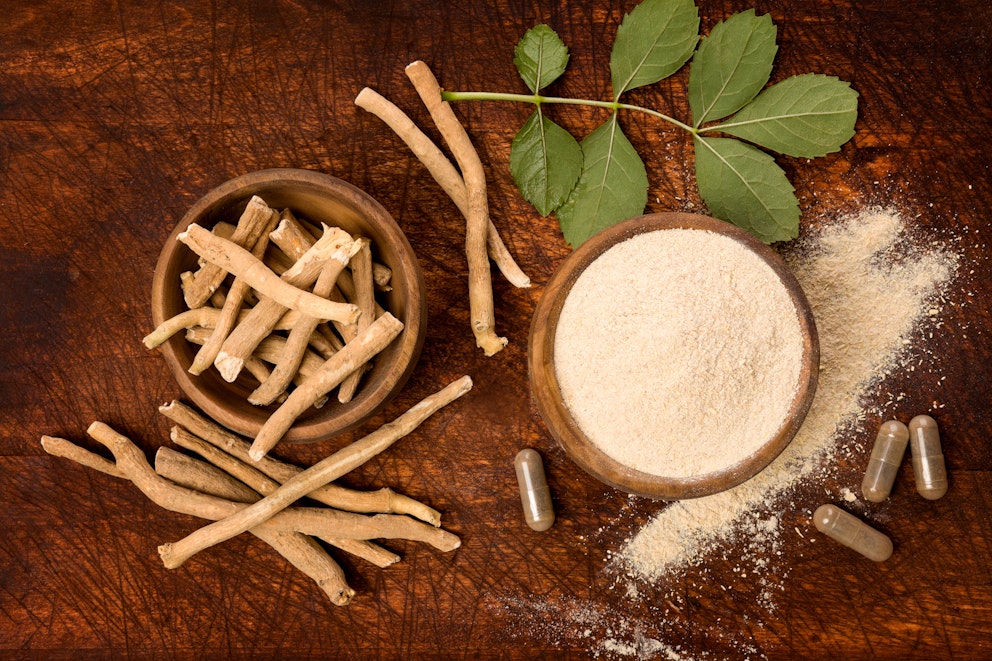
Ashwagandha powder can be mixed with warm milk, water, or smoothies. It’s recommended to start with a small dose, not exceeding half a teaspoon per day, and gradually increase as needed.
Various forms of ashwagandha supplements are widely available, including capsules and tablets. To avoid gastrointestinal side effects, it’s recommended to take ashwagandha with food.
Ashwagandha herbal tea can be made by steeping dried ashwagandha roots in hot water for 10 to 15 minutes.
In addition, ashwagandha oils or creams can be applied topically to the skin to soothe and calm irritated skin caused by excessive dryness or sunburn.

Who shouldn’t use ashwagandha?
The safety of ashwagandha during pregnancy and breastfeeding hasn’t been adequately studied, and it’s crucial that pregnant or breastfeeding women, as well as those who are planning to conceive, avoid ashwagandha-containing products.
Ashwagandha can induce mild sedation and has blood pressure-lowering effects, and it’s recommended to avoid using ashwagandha if you are taking sedative drugs or hypertension medications.
In addition, ashwagandha may modulate immune responses, which could potentially worsen autoimmune conditions such as rheumatoid arthritis, lupus, or multiple sclerosis, and you should consult with a healthcare professional before using ashwagandha if you have an autoimmune disorder.
Key takeaways
- Ashwagandha is a well-known adaptogen that may enhance the body’s ability to manage stress and promote overall balance.
- Ashwagandha benefits for female health may include hormonal balance, menstrual regularity, cardiovascular function, and overall vitality.
- Ashwagandha is commonly available in powder, capsule, or tablet form and is generally regarded as well-tolerated in daily doses of up to 600 milligrams.
- Consult your healthcare provider before taking ashwaghana if you’re pregnant, breastfeeding, on hypertension medications, or have an autoimmune condition.
FAQ
1. What does ashwagandha do to a female body?
2. What are the top benefits of ashwagandha for female health?
3. Is ashwagandha good for female hormones?
4. What happens when you take ashwagandha daily?
5. What are the side effects of ashwagandha for females?
6. How long does it take to see the benefits of ashwagandha for females?
7. How much ashwagandha can I take daily?
8. Can I take ashwagandha if I’m pregnant?
9. How do I use ashwagandha root?
Sources
- https://www.ncbi.nlm.nih.gov/pmc/articles/PMC6979308/ ↩︎
- https://www.ncbi.nlm.nih.gov/pmc/articles/PMC5833251/ ↩︎
Related Articles
-
Why You Feel Hungry: The Role of Hunger Hormones
 Keto
KetoWhy You Feel Hungry: The Role of Hunger Hormones
At a glance Hormones are chemical messengers that regulate appetite, satiety, and energy homeostasis. Key hunger hormones, such as ghrelin, leptin, and insulin, signal when to eat and when to…05/15/2026 -
Craving Chocolate? Here’s What It Could Mean
 Deficiencies
Craving Chocolate? Here’s What It Could Mean
At a glance Regular chocolate cravings may signal estrogen imbalances, elevated cortisol levels, or depleted magnesium stores. Choosing organic dark chocolate with higher cacao content can help satisfy cravings while…04/03/2026 -
Nitric Oxide and Viagra: What’s the Connection?
 Health concerns
Nitric Oxide and Viagra: What’s the Connection?
At a glance Nitric oxide is a key signaling molecule that relaxes blood vessels, improves circulation, and supports sexual functions. Viagra works by prolonging the effects of nitric oxide, which…03/19/2026 5.9k views -
Why Am I Feeling Weak and Shaky? 7 Possible Causes
 Health concerns
Why Am I Feeling Weak and Shaky? 7 Possible Causes
At a glance Feeling weak and shaky can indicate poor blood sugar regulation, dehydration, electrolyte imbalances, or nutrient deficiencies, which can disrupt normal energy production, nervous system signaling, and muscle…03/12/2026 -
How Estrogen Levels Change During Menopause
 Health concerns
How Estrogen Levels Change During Menopause
At a glance Estrogen levels fluctuate before menopause and decline after a woman’s final period, shaping how the body functions during midlife and beyond. These changes can trigger common menopausal…03/06/2026 10.4k views -
What Is Polycystic Ovarian Syndrome (PCOS)?
 Health concerns
What Is Polycystic Ovarian Syndrome (PCOS)?
At a glance Polycystic ovarian syndrome (PCOS) is a hormonal condition characterized by immature ovarian follicles that can disrupt ovulation, menstrual cycles, and fertility. The condition is closely linked to…03/06/2026 42.3k views -
Iodine Deficiency and Ovarian Cysts: Is There a Connection?
 Health concerns
Iodine Deficiency and Ovarian Cysts: Is There a Connection?
At a glance Iodine deficiency has been linked to the development of ovarian cysts due to its effects on thyroid function, hormonal balance, and follicle development. Adequate iodine levels support…02/20/2026 52.6k views -
Dark Spots on Skin: Causes and Natural Remedies
 Health concerns
Dark Spots on Skin: Causes and Natural Remedies
At a glance While dark spots on skin are a normal part of aging, they may also reflect poor lifestyle and dietary habits, and can be improved with targeted changes.…01/22/2026 6.5k views -
The Best Tips for a Heavy Period or Menstrual Cycle
 Health concerns
The Best Tips for a Heavy Period or Menstrual Cycle
At a glance Painful, heavy menstrual periods are often linked to estrogen dominance influenced by high-carbohydrate diets, dairy intake, and hormonal contraceptives. Adopting a ketogenic diet, consuming targeted nutrients, and…01/16/2026 7.1k views -
What Are the Best Foods to Shrink Fibroids?
 Health concerns
What Are the Best Foods to Shrink Fibroids?
At a glance Uterine fibroids are benign growths influenced by estrogen dominance and inflammation. Dietary changes can play a crucial role in managing fibroids, and certain nutrient-dense foods can help…12/23/2025 12.9k views


