

At a glance
Estrogen levels fluctuate before menopause and decline after a woman’s final period, shaping how the body functions during midlife and beyond. These changes can trigger common menopausal symptoms such as hot flashes, mood changes, and shifts in body composition. Lifestyle and dietary habits can play a significant role in helping the body adapt to these hormonal changes.
Estrogen and menopause are closely linked, and menopausal-related changes in estrogen levels can affect multiple systems at once, contributing to a wide range of symptoms.
Discover how estrogen levels shift during perimenopause and menopause, and learn about the diet and lifestyle habits that can help support this transition and promote overall well-being.
What is estrogen?
Estrogen is a group of steroid hormones that regulate reproductive function and influence many non-reproductive tissues, including the brain, bones, liver, and cardiovascular system.
These sex hormones also play a role in regulating menstrual cycles, maintaining bone density, and supporting mental well-being and metabolic health.
The effects of estrogen depend not only on total estrogen levels but also on which form of estrogen is most dominant at different stages of life.
The three primary types of estrogen include:
- Estradiol—the most bioactive form of estrogen during reproductive years
- Estriol—a weaker form of estrogen produced mainly during pregnancy
- Estrone—the dominant form of estrogen after menopause, produced largely by fat cells
As ovarian hormone production declines as a woman ages, the relative balance among these estrogen forms shifts significantly, influencing estrogen activity throughout the body.
Watch the video below to learn how estrogen, menopause, and mood swings are connected.
What is menopause?
Menopause marks the natural end of a woman’s reproductive years and reflects a long-term shift in hormone production. It’s officially defined as the point when menstrual periods have stopped for 12 consecutive months.
Menopause occurs when the ovaries significantly reduce their production of estrogen and progesterone. Most women enter menopause between the ages of 45 and 55, though early menopause can occur due to genetics, medical treatments, or certain health conditions.
As ovarian estrogen production declines, the body relies more on other systems to help manage hormonal balance.
The adrenal glands play an important role in regulating the stress response, which becomes especially relevant during menopause, as adrenal hormone output can influence energy balance, stress tolerance, and overall hormonal stability.
The liver is equally important for maintaining hormonal balance, as it’s responsible for breaking down and clearing estrogen from the body.
Efficient liver function helps prevent estrogen from being recirculated, which can lead to imbalances associated with menopausal symptoms such as hot flashes, mood changes, and vaginal symptoms.
When either system is under strain, due to factors such as chronic stress, poor sleep, or inadequate nutrition, the body may have more difficulty adapting to and compensating for lower estrogen levels.
How does estrogen change before and during menopause?
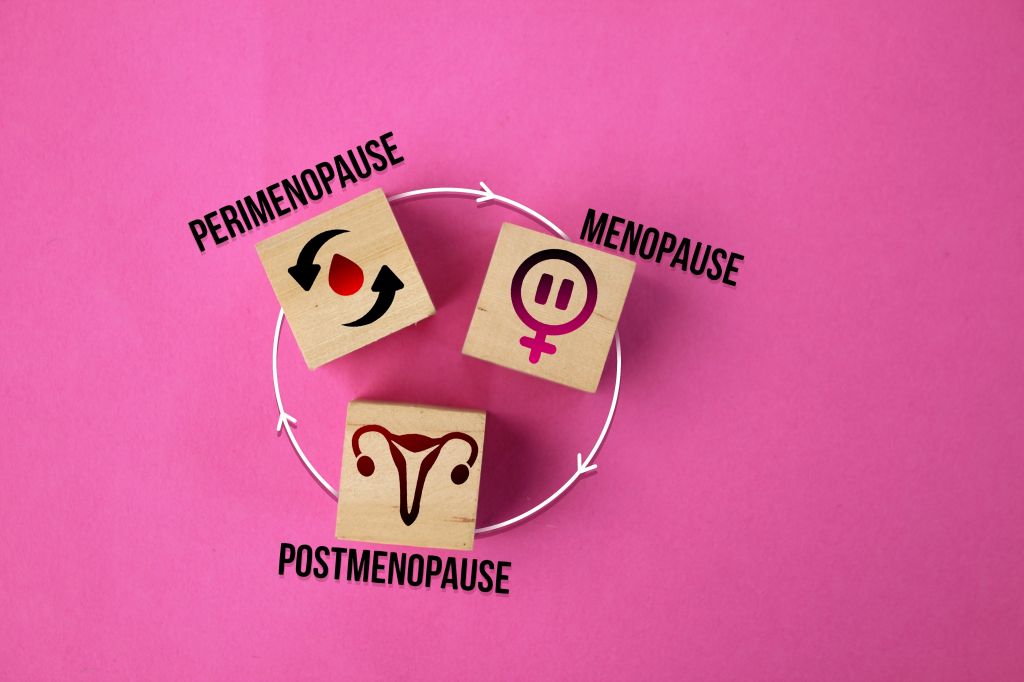
The menopausal transition period occurs in stages and includes perimenopause, menopause, and postmenopause, each associated with distinct changes in estrogen levels.
Perimenopause is the stage leading up to menopause, when estrogen levels may rise and fall unpredictably. During this time, ovulation becomes less consistent, and progesterone levels often decline earlier than estrogen.
These hormonal shifts can disrupt the normal balance between estrogen and progesterone, even when estrogen is not yet consistently low.
This imbalance helps explain why many women experience menopause symptoms such as irregular menstrual periods, breast tenderness, mood changes, hot flashes, and night sweats.
During postmenopause, ovarian estrogen production declines significantly. Estrogen levels settle into a consistently lower range, with estrone becoming the predominant form of estrogen circulating in the body.
This sustained state of low estradiol influences long-term changes in the body, including bone density loss and effects on cardiovascular health related to blood vessel function and cholesterol regulation.
Lower circulating estrogen levels can also affect estrogen-sensitive tissues, which may contribute to vaginal dryness and painful intercourse.
A review published in Climacteric found that declining estrogen levels during menopause are associated with thinning of vaginal tissues, reduced skin hydration, and changes in hair growth patterns.

Lifestyle and nutrition tips to support hormonal balance
Lifestyle factors can influence how well the body adapts to hormonal changes during menopause.
While estrogen levels naturally decline, daily habits related to diet, physical activity, stress, and sleep can influence hormonal balance and help minimize menopausal symptoms.
Here are five tips to support hormonal balance during menopause.
1. Prioritize a nutrient-focused diet
“Diet plays an important role in how the body processes estrogen during menopause,” explains Dr. Berg. “Optimal nutrition supports liver function, which is critical for balanced estrogen metabolism and clearance.”
Cruciferous vegetables such as broccoli, Brussels sprouts, and cauliflower are rich sources of bioactive compounds that support liver detoxification pathways involved in estrogen metabolism.
Leafy green vegetables also promote bile production and digestive regularity, which helps eliminate estrogen-related metabolic byproducts.
Healthy fats from sources such as olive oil, avocados, and fatty fish further support bile flow, while adequate intake of high-quality protein provides the amino acids needed for effective liver enzyme activity.
Not only is a nutrient-focused diet vital to support estrogen clearance, but the body also relies on key nutrients to maintain balanced hormone production.
Cholesterol, found in eggs, grass-fed butter, full-fat dairy, and fatty cuts of meat, provides the building blocks for steroid hormones, including estrogen and testosterone. This explains why a low-fat diet can lead to hormonal imbalances and increase the risk of menopausal symptoms.
In contrast, following a nutritious, high-fat diet such as Healthy Keto®, which emphasizes nutrient-dense whole foods and healthy fats, can help support hormonal balance during menopause.
2. Practice intermittent fasting
A study published in the Journal of Mid-Life Health found that menopause-related estrogen decline is associated with a higher risk of metabolic syndrome and reported that intermittent fasting has been shown to improve insulin sensitivity and reduce visceral fat in menopausal women.
The authors summarize, “Intermittent fasting (IF) holds promise as a therapeutic strategy for managing menopausal symptoms and improving overall health. By addressing weight management, hormonal regulation, and age-related risks, IF can significantly enhance the quality of life for menopausal women.”
Time-restricted eating approaches such as intermittent fasting are especially beneficial when combined with a nutrient-dense Healthy Keto diet to support metabolic health and hormonal balance during menopause.
3. Stay physically active
Maintaining physical activity plays a central role in how the body adapts to declining estrogen levels during menopause.
Evidence published in BioMed Research International found that estrogen deficiency during menopause is linked to increased abdominal fat and altered metabolic regulation.
This helps explain why many women notice changes in body composition during this stage of life, even when eating habits remain the same.
Regular physical activity can counter menopausal-related weight changes by supporting cellular insulin sensitivity, which is critical for blood sugar regulation and weight management.
Resistance training has been found particularly beneficial during menopause, as it helps preserve muscle mass, which supports bone strength and long-term mobility as estrogen levels decline.

4. Incorporate effective stress management
Chronic stress can negatively influence hormone signaling and may worsen menopausal symptoms.
Elevated stress hormones, such as cortisol, can disrupt the delicate balance of estrogen and progesterone by altering hormone production and metabolism, which is especially impactful during the hormonal fluctuations of perimenopause.
Stress-management strategies such as regular movement, relaxation practices, spending time in nature, connecting with loved ones, and consistent daily routines can help support hormonal regulation.
5. Prioritize sleep
Sleep plays a key role in hormone regulation and overall recovery, and a lack of adequate quality sleep can intensify fatigue, mood changes, and other common symptoms associated with menopause.
However, hormonal shifts during menopause can disrupt normal sleep patterns, explaining why disrupted sleep is a common complaint of perimenopausal and menopausal women.
Maintaining a consistent sleep schedule, creating a calming bedtime routine, and reducing sleep-disruptive factors such as late-night eating, blue light exposure from screens, or stressful activities, may help support hormonal balance and overall well-being during menopause.
Key takeaways
- Estrogen and menopause are closely connected, as changes in estrogen levels drive many of the physical and emotional symptoms associated with the menopausal transition.
- Perimenopause, menopause, and postmenopause are the three stages of menopause, each marked by distinct patterns of estrogen fluctuation or decline.
- Fluctuating estrogen levels contribute to common menopausal symptoms, including hot flashes, mood changes, shifts in body composition, and vaginal dryness.
- Following a nutrient-dense diet, staying physically active, incorporating effective stress management, and prioritizing restful sleep can help the body adapt to the hormonal changes associated with menopause.
FAQ
- 1. When does estrogen start to decline?
- 2. Can estrogen levels drop suddenly during menopause?
- 3. Can estrogen levels fluctuate during perimenopause?
- 4. How long do estrogen changes last after menopause?
Sources
- Zouboulis CC, Blume-Peytavi U, Kosmadaki M, Roó E, Vexiau-Robert D, Kerob D, et al. Skin, hair and beyond: the impact of menopause. Climacteric. 2022;25(5):434-442. doi:10.1080/13697137.2022.2050206 https://www.tandfonline.com/doi/10.1080/13697137.2022.2050206
- Garg R, Chetan R, Jyothi GS, Agrawal P, Gupta P. Intermittent Fasting and Weight Management at Menopause. Journal of mid-life health. 2025;16(1):14-18. doi:10.4103/jmh.jmh_227_24 https://pmc.ncbi.nlm.nih.gov/articles/PMC12052274/
- Lizcano F, Guzmán G. Estrogen Deficiency and the Origin of Obesity during Menopause. BioMed research international. 2014;2014:757461. doi:10.1155/2014/757461 https://pmc.ncbi.nlm.nih.gov/articles/PMC3964739/
Related Articles
-
Nitric Oxide and Viagra: What’s the Connection?
 Health concerns
Nitric Oxide and Viagra: What’s the Connection?
At a glance Nitric oxide is a key signaling molecule that relaxes blood vessels, improves circulation, and supports sexual functions. Viagra works by prolonging the effects of nitric oxide, which…03/19/2026 5.9k views -
Dry Fasting and Autophagy: What to Know
 Diet
DietDry Fasting and Autophagy: What to Know
At a glance Dry fasting involves temporarily avoiding all food and water intake, which allows the body to focus on cellular repair processes by triggering autophagy. If practiced for short…03/06/2026 4.1k views -
Benefits of Colostrum for Babies and Adults
 Nutrition
Benefits of Colostrum for Babies and Adults
At a glance Colostrum is the first milk produced after birth and delivers concentrated nutrients, immune factors, and growth compounds that support a newborn’s early development. This nutrient dense milk…02/13/2026 13.3k views -
Dark Spots on Skin: Causes and Natural Remedies
 Health concerns
Dark Spots on Skin: Causes and Natural Remedies
At a glance While dark spots on skin are a normal part of aging, they may also reflect poor lifestyle and dietary habits, and can be improved with targeted changes.…01/22/2026 6.5k views -
5 Spider Vein Natural Remedies
 Health concerns
5 Spider Vein Natural Remedies
At a glance Spider veins are often influenced by genetics, hormonal shifts, and circulatory factors. Natural remedies that support healthy circulation and vein integrity, combined with targeted lifestyle habits, may…11/20/2025 19.6k views -
Can Collagen Cause Constipation?
 Nutrition
Can Collagen Cause Constipation?
At a glance Higher amounts of collagen may lead to constipation, particularly when hydration and fiber intake are low. Understanding how collagen interacts with the digestive system can help you…09/25/2025 -
Dark Circles Under Eyes: Causes and Natural Remedies
 Health concerns
Dark Circles Under Eyes: Causes and Natural Remedies
At a glance Dark circles under the eyes can be more than a cosmetic issue, and may reflect physiological imbalances linked to diet and lifestyle. Incorporating natural remedies that support…04/09/2025 18.1k views -
5 Amazing Castor Oil Benefits
 Health concerns
5 Amazing Castor Oil Benefits
At a glance Castor oil is a thick, plant-based oil rich in ricinoleic acid, a unique fatty acid linked to moisturizing, soothing, and protective properties. It’s been used for generations…04/09/2025 19.3k views -
Natural Tips to Help Slow Premature Greying of Hair
 Healthy lifestyle
Natural Tips to Help Slow Premature Greying of Hair
At a glance Premature greying of hair can occur due to genetics, nutrient deficiencies, stress, and environmental factors. While greying hair is a natural part of the aging process, there…04/08/2025 19.2k views


