

At a glance
Artificial sweeteners may seem like a convenient sugar substitute, especially during intermittent fasting. However, these synthetic, non-caloric sweeteners can disrupt the body’s fasting metabolism and may reduce the health benefits of caloric restriction, potentially affecting overall health and well-being.
Do artificial sweeteners break a fast?
Yes, despite being zero-calorie sweeteners, certain synthetic sweeteners can trigger an insulin response, thereby interfering with the metabolic fasting state and disrupting fat-burning.
Learn why avoiding artificial sweeteners is crucial for sustained fasting success and discover the fasting-friendly sugar alternatives that fit a health-focused wellness routine.
What does it mean to break a fast?
Fasting is a metabolic state in which the body uses stored fat for energy instead of relying on blood sugar as a primary fuel source.
During periods of caloric restriction, blood sugar and insulin levels remain low, which allows the liver to activate and intensify fat-burning pathways. This metabolic state of fat-burning, also known as ketosis, supports steady energy, improved weight management, and cognitive clarity.
Any food or beverage that contains significant amounts of calories or triggers an insulin response can break this state by inhibiting fat burning and returning energy production to processes that rely on blood glucose.
Carbohydrates have the strongest effect on raising blood glucose levels and triggering insulin release. Even though high-fat foods don’t significantly increase insulin levels, they still can break a fast if eaten in large amounts, as they provide calories and activate digestion.
Non-caloric beverages such as water, coffee in moderation, and herbal tea generally don’t break a fast as they have little to no impact on insulin or blood sugar levels, making them safe choices during fasting periods.
Watch the video below to discover the worst sugar alcohols for weight loss.
What are artificial sweeteners?
Artificial sweeteners are synthetically produced sugar substitutes designed to provide a sweet taste with minimal calories.
They’re commonly used in beverages, desserts, and packaged foods as non-nutritive sweeteners, meaning they deliver little to no energy compared to regular sugar.
These synthetic sweeteners are commonly added to diet products designed to reduce sugar intake while allowing consumers to enjoy sweetness without consuming calories.
Artificial sweeteners are typically created through chemical processes that modify naturally occurring compounds or combine different molecules to produce an intensely sweet substance that can be hundreds of times sweeter than sugar.
Synthetically manufactured artificial sweeteners are sometimes confused with sugar alcohols, such as sorbitol, xylitol, or erythritol. However, sugar alcohols are a different category of sweetener derived from plant carbohydrates.
While artificial sweeteners contain minimal calories and are widely used to lower the sugar content of foods and beverages, they can still influence appetite control and food intake, all of which shape metabolic health and body composition.

How artificial sweeteners affect fasting
The use of artificial sweeteners may influence metabolic processes central to the profound health benefits of fasting.
To sustain an effective metabolic fasting state, it’s vital to maintain low insulin levels during the fasting period to maximize fat burning.
However, consuming intensely sweet compounds such as artificial sweeteners can stimulate specific sweet-taste receptors in the digestive system, including those located in the gut and pancreas.
The activation of these receptors can trigger hormonal signaling pathways that influence glucose regulation and insulin secretion, which can interfere with fat burning and effectively break a fast.
Furthermore, evidence published in Nutrients suggests that artificial sweeteners may stimulate hunger and trigger food cravings. It’s believed this response occurs because sweet-taste receptors are activated without the accompanying caloric intake the body expects.
As a result, the use of artificial sweeteners can make maintaining prolonged caloric restriction more challenging and may increase the likelihood of overeating during the feeding period.
In addition, research published in Frontiers in Nutrition suggests that various artificial sweeteners can alter gut microbiota composition and affect glucose tolerance, potentially influencing appetite regulation, body weight, insulin sensitivity, and metabolic efficiency.
“Despite being free of calories and carbohydrates, these synthetic sugar substitutes often counteract many of the health benefits people hope to achieve when practicing intermittent fasting,” explains Dr. Berg.

Artificial sweeteners to avoid
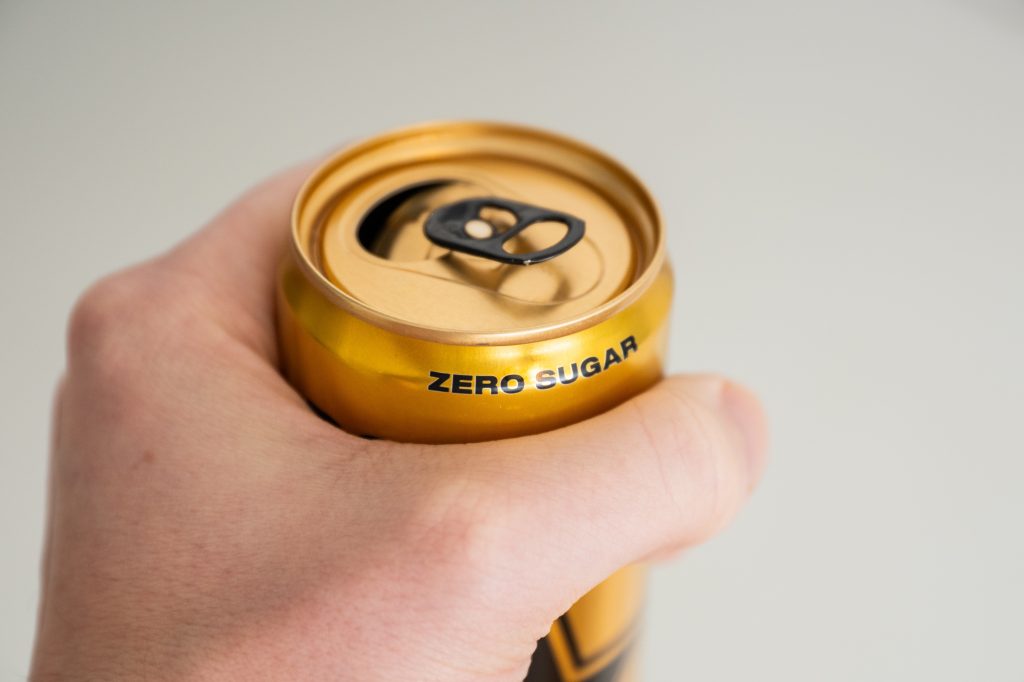
Although the Food and Drug Administration (FDA) has approved various artificial sweeteners as safe for human consumption, evidence consistently links these sugar substitutes to adverse health effects.
Here are five artificial sweeteners to avoid.
1. Aspartame
Aspartame, a key ingredient in products such as Nutrasweet®, Equal®, and Sugar Twin®, is widely used in sugar-free beverages, diet sodas, chewing gum, and low-calorie desserts.
A study published in Nutrients reports that aspartame has been studied for its potential to contribute to obesity, diabetes, birth defects, mood and behavioral disorders, hormonal imbalances, and neurodegeneration.
The authors summarize, “Safety studies have found the metabolic products of aspartame (aspartic acid, phenylalanine, and methanol) to be more harmful to the body than the original substance itself.”
2. Acesulfame potassium
Also known as Ace-K, this artificial sweetener is often blended with other sugar substitutes in beverages, baked goods, and protein products and is commonly sold under the brand names Sunett® and Sweet One®.
Acesulfame potassium may contribute to poor glucose regulation and has been associated with insulin resistance, a metabolic imbalance that increases the risk of obesity, high blood pressure, and diabetes.
3. Sucralose
Sucralose is widely marketed as Splenda® and is often added to baked goods, beverages, chewing gum, gelatins, and frozen dairy desserts.
Evidence published in Microorganism indicates that sucralose may alter the gut microbiota and potentially affect glucose and insulin responses in some individuals.
4. Neotame
Neotame is a highly concentrated artificial sweetener derived from aspartame that’s primarily used in highly processed foods and beverages.
While its long-term health effects aren’t well established, emerging research published in Frontiers in Nutrition highlights its potential impact on gut barrier function and intestinal inflammation.
5. Saccharin
Saccharin is one of the oldest artificial sweeteners and is found in popular tabletop sweeteners such as Sweet and Low®.
Similar to other artificial sweeteners, the use of saccharin has been linked to various potential health issues, including poor gut health, microbial imbalances, and metabolic disturbances.
Best alternative sweeteners to have while fasting
If you have a sweet tooth and like adding sweetness to coffee, bulletproof coffee, or herbal tea while fasting, using natural sweeteners can satisfy your craving without the potential negative effects of artificial sugar substitutes.
Here are four fasting-friendly natural sweeteners.
1. Monk fruit
Monk fruit is a natural sweetener extracted from the monk fruit plant. It delivers intense sweetness without calories or carbohydrates and doesn’t raise blood sugar or insulin levels.
Because it has little effect on glucose metabolism, monk fruit is a fasting-friendly alternative to regular sugar and is often used by those following a low-carb ketogenic diet.
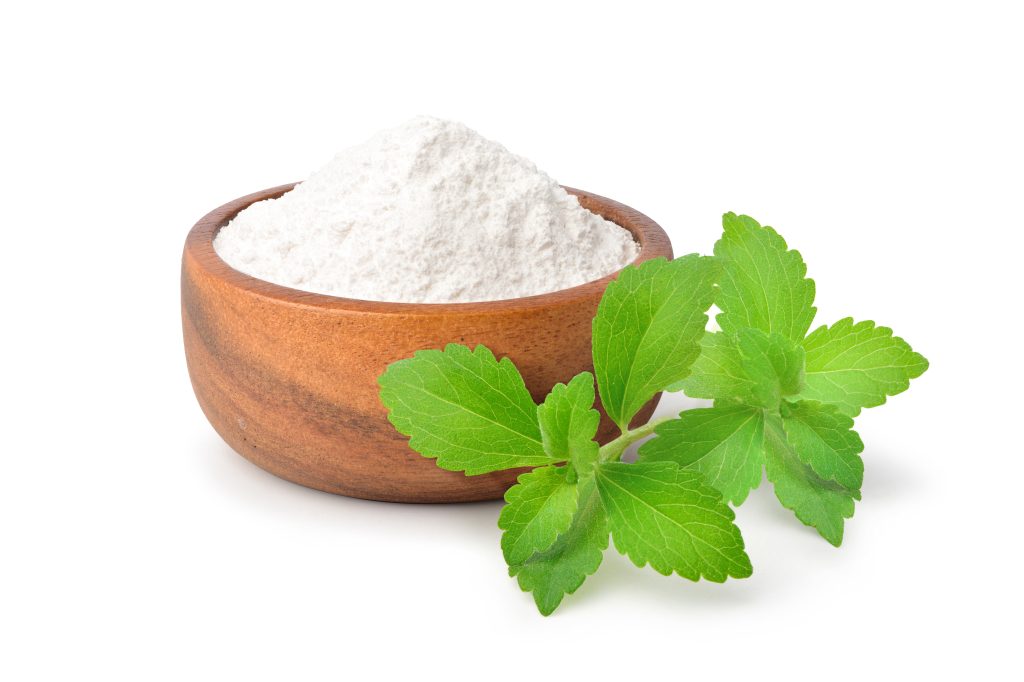
2. Stevia
Stevia is a natural sweetener derived from the leaves of the stevia plant. It’s a rich source of steviol glycosides, which provide strong sweetness without calories and generally don’t raise blood sugar or insulin levels.
Because of this, stevia is often used by individuals seeking to maintain balanced glucose metabolism, support weight loss, and enjoy sweetness without relying on regular sugar.
3. Erythritol
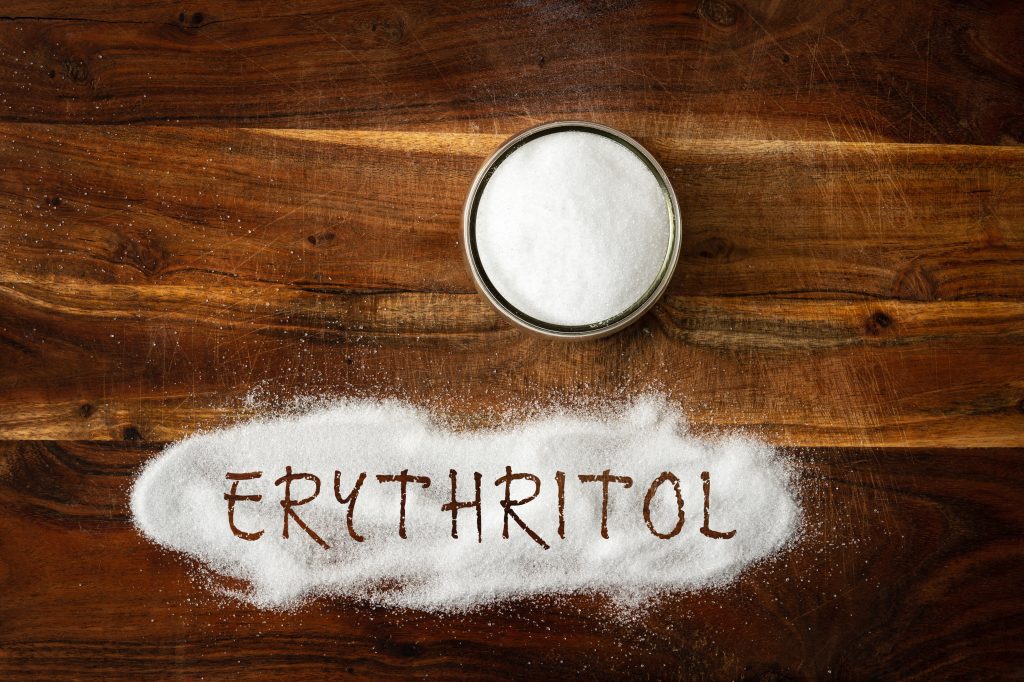
Erythritol is a type of sugar alcohol with a similar chemical composition to table sugar.
Compared to sugar, erythritol isn’t absorbed into the body and doesn’t impact blood sugar or insulin balance, making it an excellent option for sweetening fasting-approved beverages such as coffee or herbal teas.
Unlike many other sugar alcohols, erythritol has no bitter aftertaste and is often used in keto-friendly dessert recipes.
4. Xylitol
Xylitol is a natural sweetener derived from birch tree bark that offers a similar taste profile to sugar but contains considerably fewer calories and carbohydrates.
Although xylitol is considered keto-friendly, it does contain some carbs and should be consumed only in small amounts during the fasting window.
Key takeaways
- Artificial sweeteners contain little to no calories but may still influence insulin signaling and metabolic pathways involved in fasting.
- Because of their intense sweetness, they can activate sweet-taste receptors without providing calories, which may increase hunger and trigger food cravings during fasting.
- Artificial sweeteners can also alter the gut microbiota and affect glucose tolerance over time.
- Common artificial sweeteners include aspartame, sucralose, acesulfame potassium, neotame, and saccharin.
- Natural alternatives such as monk fruit, stevia, erythritol, and small amounts of xylitol provide sweetness but don’t break the fasting state.
FAQ
- 1. Do artificial sweeteners break a fast?
- 2. Do artificial sweeteners contain calories?
- 3. Do artificial sweeteners spike insulin?
- 4. Do diet sodas break a fast?
- 5. Can artificial sweeteners increase cravings while fasting?
Sources
- Jurcevic Zidar B, Knezovic Z, Pribisalic A, et al. Consumer perceptions of artificial sweeteners in food products, consumption frequency, and body mass index: a multivariate analysis. Nutrients. 2025;17(5):814. doi:10.3390/nu17050814 https://www.mdpi.com/2072-6643/17/5/814
- Pang MD, Goossens GH, Blaak EE. The impact of artificial sweeteners on body weight control and glucose homeostasis. Front Nutr. 2021;7:598340. doi:10.3389/fnut.2020.598340 https://www.frontiersin.org/journals/nutrition/articles/10.3389/fnut.2020.598340/full#s7
- Czarnecka K, Pilarz A, Rogut A, et al. Aspartame: true or false? Narrative review of safety analysis of general use in products. Nutrients. 2021;13(6):1957. doi:10.3390/nu13061957 https://pmc.ncbi.nlm.nih.gov/articles/PMC8227014/
- Méndez-García LA, Bueno-Hernández N, Cid-Soto MA, et al. Ten-week sucralose consumption induces gut dysbiosis and altered glucose and insulin levels in healthy young adults. Microorganisms. 2022;10(2):434. doi:10.3390/microorganisms10020434 https://pmc.ncbi.nlm.nih.gov/articles/PMC8880058/
- Shil A, Ladeira Faria LM, Walker CA, et al. The artificial sweetener neotame negatively regulates the intestinal epithelium directly through T1R3-signaling and indirectly through pathogenic changes to model gut bacteria. Front Nutr. 2024;11:1366409. doi:10.3389/fnut.2024.1366409 https://pmc.ncbi.nlm.nih.gov/articles/PMC11078302/
Related Articles
-
What Is Time-Restricted Eating?
 Diet
DietWhat Is Time-Restricted Eating?
At a glance Time-restricted eating is a form of intermittent fasting that limits meals to a consistent daily eating window. This approach focuses on when food is consumed rather than…08/13/2026 -
Does Intermittent Fasting Affect Your Metabolism?
 Diet
DietDoes Intermittent Fasting Affect Your Metabolism?
At a glance Intermittent fasting impacts metabolism by shifting the body towards ketosis, improving insulin sensitivity, and enhancing metabolic flexibility. While fasting can support weight management and metabolic efficiency, results…07/23/2026 -
What Is the Best Meal Timing for Stable Energy?
 Diet
DietWhat Is the Best Meal Timing for Stable Energy?
At a glance Meal timing can influence daily alertness, hunger cues, and blood sugar patterns. The body processes food according to internal rhythms that affect insulin, digestion, and metabolic activity.…07/17/2026 -
Fasting and Cancer: What to Know
 Fasting
Fasting and Cancer: What to Know
At a glance Fasting has been increasingly studied for its potential role in cancer prevention and support during treatment. By influencing cellular metabolism, promoting autophagy, and modulating immune function, fasting…07/16/2026 -
36-Hour Fasting: Benefits, Safety, and How It Works
 Diet
Diet36-Hour Fasting: Benefits, Safety, and How It Works
At a glance A 36-hour fast is a prolonged fasting strategy that shifts the body into ketosis, promoting fat burning, improved insulin sensitivity, and cellular repair through autophagy. These metabolic…06/25/2026 -
Does Fasting Help with Inflammation?
 Diet
DietDoes Fasting Help with Inflammation?
At a glance Fasting is a powerful tool for reducing inflammation and supporting overall health. By promoting fat burning and activating cellular repair processes, fasting can help lower pro-inflammatory markers.…06/05/2026 -
Does Chewing Gum Break a Fast?
 Fasting
Does Chewing Gum Break a Fast?
At a glance Whether or not gum breaks a fast depends on its ingredients. Sugary gum raises insulin and can break a fast outright. Some sugar-free gum is acceptable, but…05/29/2026 -
Why You Feel Hungry: The Role of Hunger Hormones
 Keto
KetoWhy You Feel Hungry: The Role of Hunger Hormones
At a glance Hormones are chemical messengers that regulate appetite, satiety, and energy homeostasis. Key hunger hormones, such as ghrelin, leptin, and insulin, signal when to eat and when to…05/15/2026 -
Can you Exercise While Fasting?
 Fasting
Can you Exercise While Fasting?
At a glance Doing exercise while fasting can be a useful method for supporting weight loss and metabolic health, especially when combined with a Healthy Keto® diet and proper hydration.…05/07/2026 -
Fasting and Working Out: What You Should Know
 Fasting
Fasting and Working Out: What You Should Know
At a glance Fasting and working out can be beneficial for metabolic health. While fasted exercise may accelerate fat oxidation and improve insulin sensitivity, maintaining proper hydration and a healthy…05/07/2026


