

At a glance
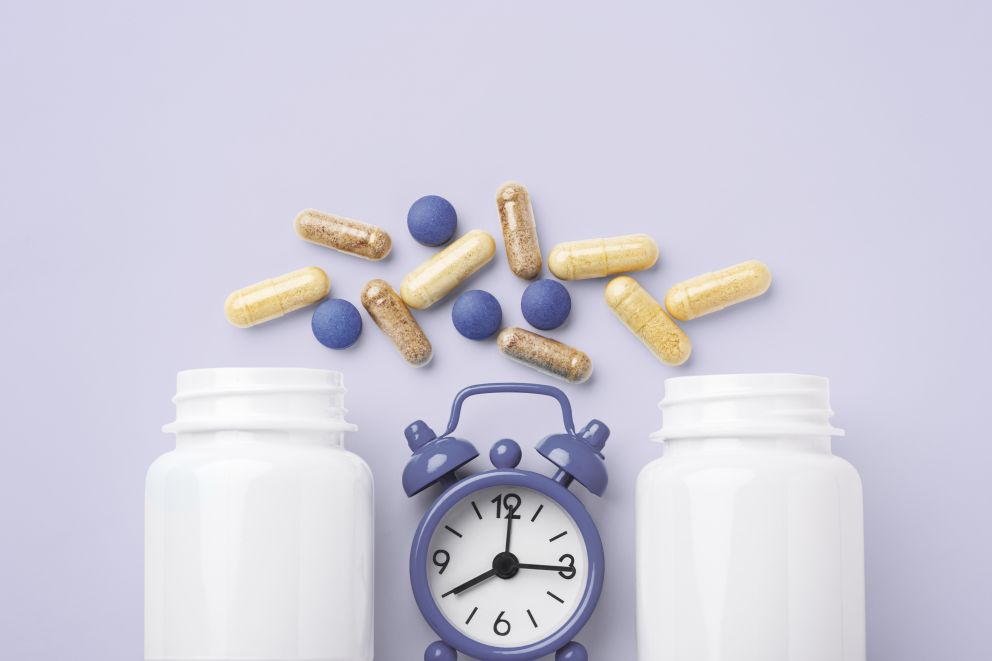
While it’s crucial to support nutrient balance during fasting, certain dietary supplements are formulated with ingredients that can trigger insulin release and break the metabolic fasting state. Knowing which supplements can be safely taken while fasting and which to avoid can help maximize the profound health benefits of caloric restriction.
Dietary supplements can support overall nutritional balance, but do vitamins break a fast?
While many vitamins are fasting-friendly and may help support the metabolic benefits of fasting, certain supplements can trigger an insulin response and interrupt a fast.
Discover which supplements are safe to take during fasting and learn what products to avoid to stay aligned with your fasting and wellness goals.
What does it mean to break a fast?
The metabolic fasting state, achieved by refraining from all foods and beverages except water, is characterized by low insulin levels, which allow the body to increase its fat-burning capacity.
During this state, the body shifts from relying on blood sugar as a primary fuel source to mobilizing stored fat to meet its energy demands—a physiological state known as ketosis.
Therefore, any food or beverage that has a significant caloric value and triggers an insulin response will break a fast by inhibiting fat-burning and shifting metabolic pathways back to using blood sugar as an energy source.
Carbohydrates, and to a lesser extent, amino acids from protein, stimulate insulin release most significantly.
Research published in Advances in Physiology Education confirms this, summarizing, “Certain amino acids (e.g., leucine, arginine) notably enhance insulin secretion from pancreatic β-cells, although protein-induced insulin responses are less pronounced than those from carbohydrates.”
In contrast, fats produce little to no insulin response. However, because large amounts of fat provide calories and activate digestive processes, they still technically break a fast, even if ketosis may continue.
As certain supplements contain carbohydrates and amino acids, they can disrupt ketosis and stop the body’s ability to burn fat. This can interfere with fasting-related health benefits, including weight loss, steady energy levels, and cognitive clarity.
Watch the video below to learn about key nutrients that help support effective fasting.
Do vitamins break a fast?
Vitamins and minerals themselves are unlikely to break a fast. However, dietary supplements formulated with certain amino acids and those that contain fillers and sweeteners such as sugars or dextrose can stimulate insulin release and break a fast.
This explains why many pre- and post-workout supplements, protein powders, and meal replacement shakes aren’t fasting-friendly.
These supplements often contain large amounts of amino acids, carbohydrates, or flavoring agents that trigger a metabolic response, shifting the body out of a fasted state and reducing the intended benefits of caloric restriction.
Vitamin supplements in gummy form are particularly problematic, as they typically contain added sugars or syrups that can spike insulin levels and disrupt efforts to maintain ketosis.
When taking supplements during a fasting window, it’s important to review ingredient labels carefully, especially if your goal is to lose weight, support cellular health, and nervous system integrity.

What are the best and worst vitamins to have while fasting?
During a fasting period, the goal is to support overall nutrition without triggering an insulin response or interrupting fat-burning processes.
While certain supplements can be taken without interfering with fasting, others are better reserved for the eating window or should be avoided altogether.
Here are the best and worst vitamins to have while fasting.
Supplements suitable during fasting
Water-soluble vitamins such as B vitamins and vitamin C are generally safe during the fasting period if they aren’t formulated with carbohydrates or other ingredients that trigger insulin release.
The same applies to probiotics, trace minerals, creatine, and vitamin D supplementation. These products don’t contain meaningful calories and typically won’t interfere with the metabolic fasting state, though vitamin D may be better absorbed when taken with food.
In fact, maintaining adequate intake of B-complex vitamins and trace minerals such as selenium and zinc can help support energy production, immune function, and overall metabolic balance during fasting.
It’s equally important to replenish electrolytes lost during fasting, as caloric restriction triggers hormonal and metabolic changes that can increase fluid loss and mineral excretion.
“Supporting electrolyte intake, especially potassium, can help minimize the risk of fasting-related discomfort, making both intermittent fasting and prolonged fasts more sustainable and effective,” explains Dr. Berg.
Choosing a sugar-free electrolyte powder sweetened with stevia or monk fruit is generally preferred, as these sweeteners don’t raise blood sugar levels or significantly stimulate insulin release.
Furthermore, many individuals take multivitamin products designed for specific purposes such as hormonal balance, metabolic health, blood sugar control, bone integrity, or immune support.
While these formulations can be beneficial and fasting-friendly, it’s important to review their ingredient lists carefully to ensure they don’t contain added sugars, starches, or flavoring agents that can cause insulin release and disrupt the fasted state.
Supplements unsuitable during fasting
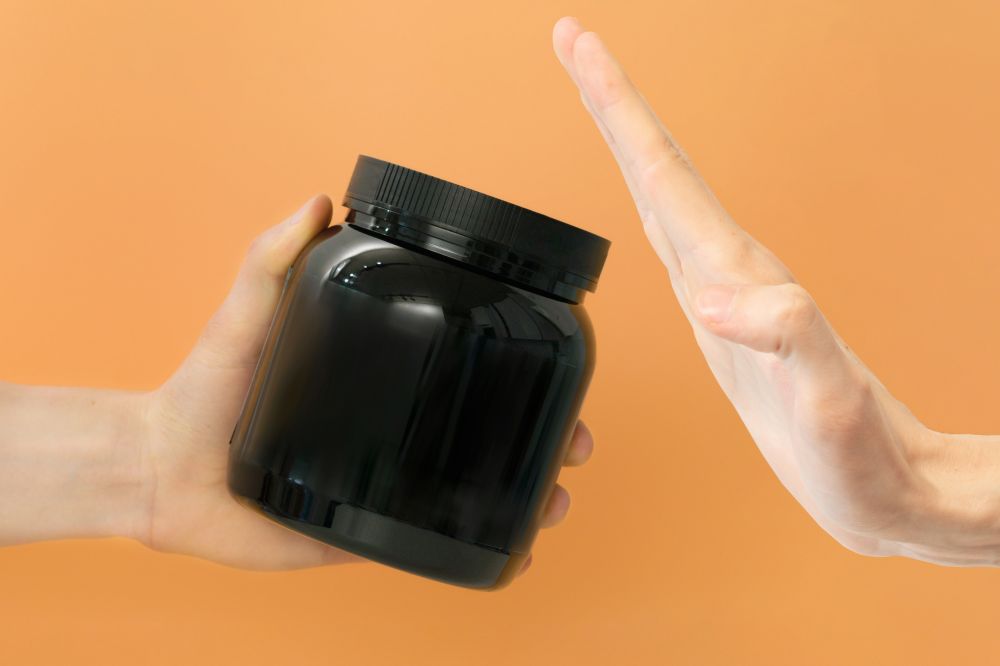
Any supplement that contains insulin-stimulating ingredients should be avoided during fasting, as these compounds can shift the body out of the metabolic fasting state.
Protein powders are among the most common examples, as they supply high concentrations of amino acids that activate metabolic pathways and stimulate insulin release.
Common supplement ingredients that can disrupt the fasting state include:
- Starches
- Dextrin or dextrose
- Maltose
- Maltodextrin
- High-fructose corn syrup
- Corn syrup solids
- Casein
- Whey powder
- Branched-chain amino acids (BCAAs)
These ingredients are frequently found in flavored supplements, workout formulas, meal replacement shakes, sugar-sweetened electrolyte blends or sports drinks, and many chewable or gummy vitamins.
Furthermore, research published in JAMA Internal Medicine suggests that chronically elevated insulin levels can directly stimulate weight gain and contribute to various metabolic imbalances.
This highlights that avoiding sugar-sweetened supplements and products containing insulin-stimulating fillers is beneficial for overall metabolic health, not only during fasting periods.

When to take vitamins if you’re fasting
To maximize health benefits and weight loss when practicing intermittent or prolonged fasting, timing your vitamins and nutritional supplements right can help ensure proper absorption, maintain energy levels, and avoid breaking the fast.
Supplements, including multivitamins, trace minerals, creatine, and probiotics, can be taken at any time during the fasting window if tolerated.
However, some individuals are sensitive and may experience digestive discomfort when taking supplements on an empty stomach. In these cases, it’s recommended to take vitamins with a meal at the start of the eating window to improve tolerance while still supporting overall nutrition.
Sugar-free electrolyte supplements, particularly in powder form, can be taken at any time during the fasting window, providing convenient, continuous hydration and mineral balance support without breaking the fast.
Digestive enzyme supplements should be taken with meals to support proper digestion, and are generally not recommended on an empty stomach unless specifically advised by a healthcare professional.
Because the absorption of fat-soluble nutrients is generally enhanced by dietary fat, fat-soluble vitamins such as A, D, E, and K are best taken with food during the eating window unless they’re formulated with a lipid carrier.
Key takeaways
- Vitamins themselves don’t break a fast, but supplements with added sugars, starches, or certain amino acids can trigger insulin secretion and interrupt fat burning.
- Fasting-friendly supplements include B vitamins, vitamin C, probiotics, trace minerals, creatine, and most fat-soluble vitamins if formulated without fillers.
- Sugar-free electrolytes are beneficial during fasting and help support hydration and mineral balance without affecting insulin levels or ketosis.
- Supplements to avoid while fasting include protein powders, BCAAs, gummy vitamins with sugar, and products containing dextrose, maltodextrin, or starches.
- Fat-soluble vitamins A, D, E, and K are best taken with food to enhance absorption, unless specifically formulated to be fasting-friendly.
FAQ
- 1. Do vitamins break a fast?
- 2. Do vitamins contain calories?
- 3. Do gummy vitamins break a fast?
- 3. Can you take electrolytes while fasting?
- 4. Should fat-soluble vitamins be taken with food?


