

At a glance
Although pork rinds are often classified as unhealthy junk food, when sourced and prepared properly, they’re a nutritious, keto-friendly option perfect for those seeking to lose weight or manage poor metabolic health. Naturally carb-free and rich in heart-healthy fats and collagen, pork rinds can help support joint function, skin health, and metabolic balance when consumed as part of a Healthy Keto® lifestyle.
Are pork rinds healthy? While often dismissed as junk food, pork rinds can actually be a valuable addition to a Healthy Keto® diet—if you choose the right kind.
These crispy, deep-fried pieces of pig skin are completely carb-free, rich in heart-healthy fats, and an excellent source of collagen. When made without artificial ingredients or processed oils, pork rinds are not only keto-approved but surprisingly nutrient-dense.
Discover three key reasons why you should eat pork rinds on keto and how to use them in Healthy Keto low-carb recipes.
Are pork rinds good for you?
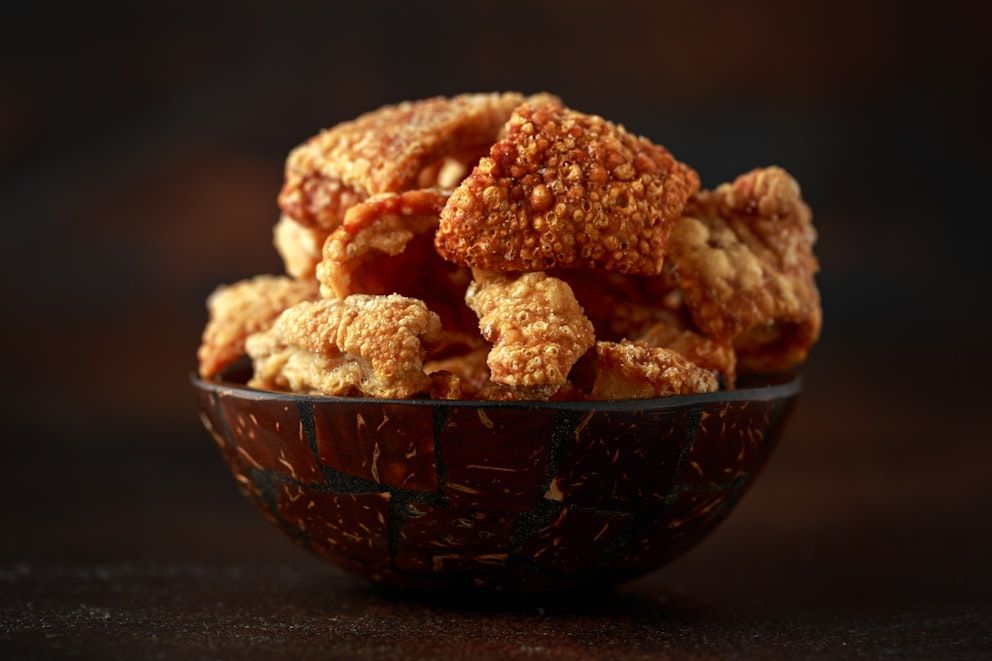
Pork rinds, or pork scratchings, are made from rendered pig skin that has been boiled, dehydrated, and deep-fried, resulting in a puffed and crispy texture.
Because pork rinds are carb-free and have an excellent fat-to-protein ratio, pork rinds are perfect for keto diets and work well in many low-carb recipes.
Although pork rinds don’t have significant amounts of beneficial vitamins, they are a rich source of heart-healthy monounsaturated fats, saturated fat, collagen, and selenium.
Eating pork rinds is healthier than snacking on potato chips and other processed snack foods high in carbs, trans fats, and artificial ingredients.
However, most pork rind products are ultra-processed and high in sodium or monosodium glutamate (MSG), a food additive commonly used in fast food and junk foods to enhance flavor.
MSG intake is linked to health problems, including migraines, high blood pressure, headaches, and chronic fatigue.
To enjoy pork rinds as part of a healthy and nutritious diet, choose organic products that are minimally processed, MSG-free, low in sodium, and contain no artificial flavoring or preservatives.
Watch the video below to learn how to select the best quality pork rinds on a Healthy Keto diet.
Three reasons to have pork rinds on keto
Pork rinds are a surprisingly keto-friendly choice. They’re naturally free of carbohydrates, rich in protein, and a concentrated source of healthy fats, making them an excellent fit for the Healthy Keto@ lifestyle.
Here are three reasons why pork rinds can be a valuable addition to your keto meals.
1. Rich source of healthy fats
Pork rind fat is rich in oleic acid, the same monounsaturated fatty acid found in olive oil and avocados—foods well known for supporting cardiovascular health.
Oleic acid helps raise high-density lipoprotein (HDL), commonly known as good cholesterol, and helps lower low-density lipoprotein (LDL), known as bad cholesterol. It also supports a balanced inflammatory response by influencing antioxidant activity and gene expression.
Research published in Nutrients highlights that oleic acid plays a key role in supporting immune function, modulating inflammation, and promoting vascular health through multiple cellular mechanisms.1
In addition, oleic acid has been shown to help lower C-reactive protein (CRP) levels, a substance produced in the liver in response to inflammation.
Maintaining healthy CRP levels is associated with a lower risk of chronic inflammatory conditions, including heart disease, Alzheimer’s disease, and asthma.
2. A natural source of collagen
Protein is an essential macronutrient needed for countless body functions, from muscle development to cellular repair.
“Pork rinds are an excellent source of collagen, an essential structural protein that contributes to healthier bone, joints, and connective tissues,” explains Dr. Berg. “Pork rinds are a surprisingly rich, natural source of collagen.”
Increasing dietary collagen intake has also been associated with improved skin texture and reduced visible signs of aging.
A study published in the Korean Journal of Community Nutrition found that collagen derived from pork skin significantly increased serum collagen levels and supported skin health in middle-aged women who consumed it daily for 12 weeks.2
3. Supports weight loss
Pork rinds are naturally carb-free, making them keto-approved and a healthy snack alternative to potato chips, popcorn, or crackers.
Unlike high-carb foods that spike blood sugar and trigger insulin production, pork rinds provide protein and fat without disrupting ketosis.
Maintaining low insulin levels is essential for fat burning. When insulin remains balanced, the body is more likely to tap into stored fat for fuel, which supports weight loss and helps maintain a healthy waistline.
How to use pork rinds in keto recipes
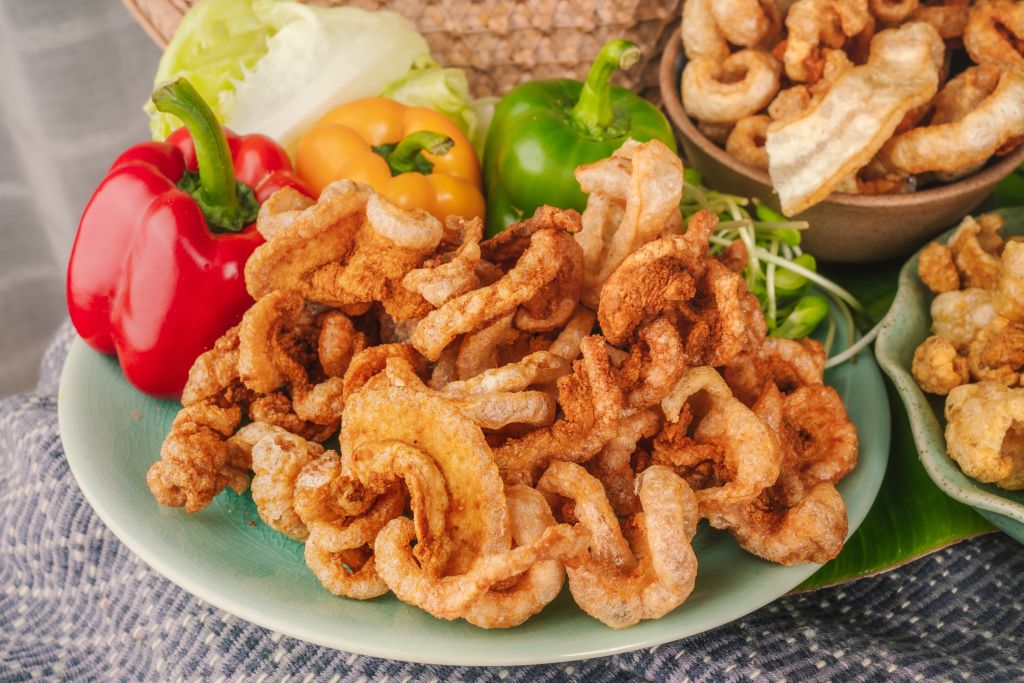
Pork rinds are a popular ingredient on the ketogenic diet thanks to their crunchy texture and zero-carb profile. While they’re often considered a snack, frequent snacking, even on keto-friendly foods, can still contribute to weight gain.
Pork rinds’ real value lies in how they can enhance keto meals as a flavorful, low-carb substitute.
One of the most common uses for pork rinds is as a breadcrumb replacement. Crushed pork rinds can be used to coat meats, fish, or vegetables, offering a crisp, golden finish without added carbs.
For example, combining crushed pork rinds with grated Parmesan creates a delicious crust for pork chops or chicken. If you love pork chops, try these delicious Pork Rind and Parmesan Crusted Pork Chops.
Pork rinds also work well as a topping for salads, soups, and stews, adding texture and depth without interfering with your carb goals. Their crispness makes them ideal for dishes that need a satisfying crunch, such as keto casseroles or vegetable bakes.
You can even use pork rinds as a base for creative recipes. Crushed and baked with cheese, they form a sturdy foundation for low-carb pizza. They can also stand in for tortilla chips in Keto Pork Rind Nachos.
When using pork rinds in recipes, choose minimally processed options with no artificial additives. For optimal freshness and quality, consider making your own pork rinds at home—they can be stored in an airtight container in the refrigerator for up to one week.
Key takeaways
- Pork rinds are rich sources of monounsaturated fats, including oleic acid, which supports heart function and immune health.
- They’re an excellent natural source of collagen essential for skin, joint, and connective tissue support.
- Pork rinds contain zero carbs, making them ideal for keto and weight management.
- Many commercial pork rind products are heavily processed, and it’s vital to choose organic, additive-free versions for maximum nutrition and benefits.
- Crushed pork rinds are an ideal replacement for breadcrumbs or chips, making them a suitable ingredient for low-carb recipes.
FAQ
- 1. What are pork rinds?
- 2. Are pork rinds healthy to eat?
- 3. Can I have pork rinds every day?
- 4. How many carbs are in pork rinds?
- 5. Are pork rinds keto-friendly?
- 6. Can I use pork rinds as breading?
- 7. Are pork rinds bad for cholesterol?
Sources
- https://www.mdpi.com/2072-6643/15/1/224 ↩︎
- https://koreascience.kr/article/JAKO200804748558388.page ↩︎
Related Articles
-
Net Carbs: How to Calculate Them and When It Matters
 Diet
DietNet Carbs: How to Calculate Them and When It Matters
At a glance Knowing how to calculate net carbs can be an excellent tool to increase healthy carb intake while staying in ketosis. Many ultra-processed foods have low net carbs…06/19/2026 -
How to Break a Weight Loss Plateau: 9 Simple Ways
 Keto
KetoHow to Break a Weight Loss Plateau: 9 Simple Ways
At a glance Weight loss plateaus typically occur when the body adapts to dietary and lifestyle changes, resulting in reduced energy requirements. Factors such as insulin resistance, poor sleep, and…05/08/2026 -
Keto on a Budget: Tips and Foods to Eat
 Diet
DietKeto on a Budget: Tips and Foods to Eat
At a glance A ketogenic diet can be maintained using simple, affordable whole foods rather than expensive specialty products. Prioritizing versatile ingredients and planning meals strategically can help reduce grocery…04/24/2026 -
Muscle Twitching on Keto: Causes and What to Do
 Diet
DietMuscle Twitching on Keto: Causes and What to Do
At a glance Muscle twitching is common when first starting keto and is often linked to shifts in fluid balance, electrolyte minerals, and digestive function as insulin levels remain steady.…03/19/2026 22.3k views -
Why You’re Not Losing Belly Fat on Keto
 Diet
DietWhy You’re Not Losing Belly Fat on Keto
At a glance Shedding stubborn belly fat may require more than cutting carbs. Insulin levels, stress hormones, liver function, and muscle mass all influence how efficiently your body can access…02/20/2026 13k views -
Keto Poop: How Keto Can Change Your Stool and Why
 Diet
DietKeto Poop: How Keto Can Change Your Stool and Why
At a glance Starting a ketogenic diet can alter stool consistency, frequency, and appearance, often referred to as keto poop. These effects are common and typically indicate that the digestive…02/06/2026 26.2k views -
How to Stop Cravings – 9 Strategies
 Diet
DietHow to Stop Cravings – 9 Strategies
At a glance Understanding how to stop cravings begins with identifying what triggers them. Blood sugar swings, insulin resistance, nutrient deficiencies, and gut imbalances can all contribute to persistent hunger…11/13/2025 -
Foods to Avoid on Keto – Foods That Stop Ketosis
 Diet
DietFoods to Avoid on Keto – Foods That Stop Ketosis
At a glance Many seemingly healthy foods can disrupt ketosis, and even low-carb options may contain ingredients that raise blood sugar, contribute to inflammation, or stall fat burning. Learning to…11/04/2025 25.6k views -
What Is Keto Rash?
 Diet
DietWhat Is Keto Rash?
At a glance Keto rash is an uncommon but temporary skin change that can appear as the body transitions into ketosis. Supporting digestion, easing into ketosis, and adjusting dietary habits…04/09/2025 73.4k views -
How to Get Back on Track after a Keto Cheat Day
 Diet
DietHow to Get Back on Track after a Keto Cheat Day
At a glance Keto cheat days can disrupt metabolic balance and may shift the body out of fat-burning mode for an extended period, depending on how your metabolism responds. While…04/09/2025 52.9k views