

At a glance
Keto rash is an uncommon but temporary skin change that can appear as the body transitions into ketosis. Supporting digestion, easing into ketosis, and adjusting dietary habits may help promote skin comfort during the keto-adaptation period.
Keto rash is a temporary skin condition that can develop during the initial weeks of a keto diet.
Most cases of keto rash are nothing to be concerned about and may actually indicate that your body is adjusting to ketosis. As your metabolism shifts from burning carbs to fat, the rash typically resolves on its own.
Discover what causes keto rash and explore four natural strategies to help your skin clear up quickly.
Causes of keto rash
The exact cause of keto rash isn’t fully understood, but several metabolic changes triggered by ketosis may temporarily contribute to skin irritation.
A rare skin condition called prurigo pigmentosa has almost identical symptoms to keto rash. It often occurs in people who have undergone bariatric surgery, are developing diabetes, or have started excessive fasting.
Research published in The Journal of Clinical and Aesthetic Dermatology suggests that the keto rash is similar to prurigo pigmentosa and is caused by temporary skin inflammation in response to ketosis.1
Although rare, keto rash typically indicates that your body is adjusting to fat burning and may need additional time or support to enter ketosis fully.
Here are six potential causes of keto rash.
1. Increased fat turnover
As your body enters ketosis, you start burning fat for energy. This mobilizes your metabolism to release more stored body fat for fuel.
However, fat doesn’t just serve as an energy reserve; it also carries toxins and metabolic waste. As more fat is broken down, these compounds are released and processed by the liver, which may not be fully prepared for the sudden increase.
One way your body eliminates toxins is through the skin, which explains why the increased demand on your liver during the early stages of a ketogenic diet can lead to temporary skin inflammation.
2. Sluggish fat digestion
Adjusting to a ketogenic diet takes time, especially if your body isn’t used to processing large amounts of fat.
Fatty foods in the stomach trigger your gallbladder to contract, causing the release of stored bile into the small intestines. The salts in your bile act like a detergent or soap and emulsify fats into soluble fatty acids. As you consume more fat, your liver produces more bile.
However, if you don’t have a gallbladder, don’t produce enough bile, or aren’t fully keto-adapted, your body will be less efficient in digesting fats and detoxification.
3. Lack of fat-soluble nutrients
Inefficient fat metabolism may also make it hard for your body to absorb crucial fat-soluble nutrients, such as vitamins A, D, E, and K, as well as omega-3 fatty acids.
Fat-soluble nutrients are essential for skin health. Vitamins A and E play vital roles in skin integrity and skin cell renewal, while vitamin D and omega-3 fatty acids have anti-inflammatory properties. Deficiencies in these nutrients can lead to issues such as rashes and itchy skin.

4. Food allergies
You may have incorporated new foods into your keto meal plan that your body is sensitive to.
Food sensitivities, combined with changes in your metabolism, can increase inflammation and may trigger keto rash.
5. Emotional stress
Although emotional stress may not directly cause keto rash, it can exacerbate its symptoms. Stress hormones can trigger inflammatory responses, contributing to skin sensitivity and irritation.
According to research published in the Archives of Dermatological Research, “Chronic psychological stress has been shown to sustain hyperactivity of the sympathetic branch of the autonomic nervous system.”2
This ongoing sympathetic activation has been linked to increased pro-inflammatory cytokine production and oxidative stress, which may aggravate inflammatory skin conditions.
6. Lack of vitamin B2
Vitamin B2 is essential for maintaining healthy skin, and signs of deficiency include dry, itchy, and scaly skin.
Because vitamin B2 is involved in fat metabolism, your body requires more of it as fat intake increases. If you start the keto diet with a pre-existing B2 deficiency, the heightened fat intake may exacerbate deficiency-related symptoms.
Watch the video below to learn how to help resolve keto rash naturally.
The stages of keto rash
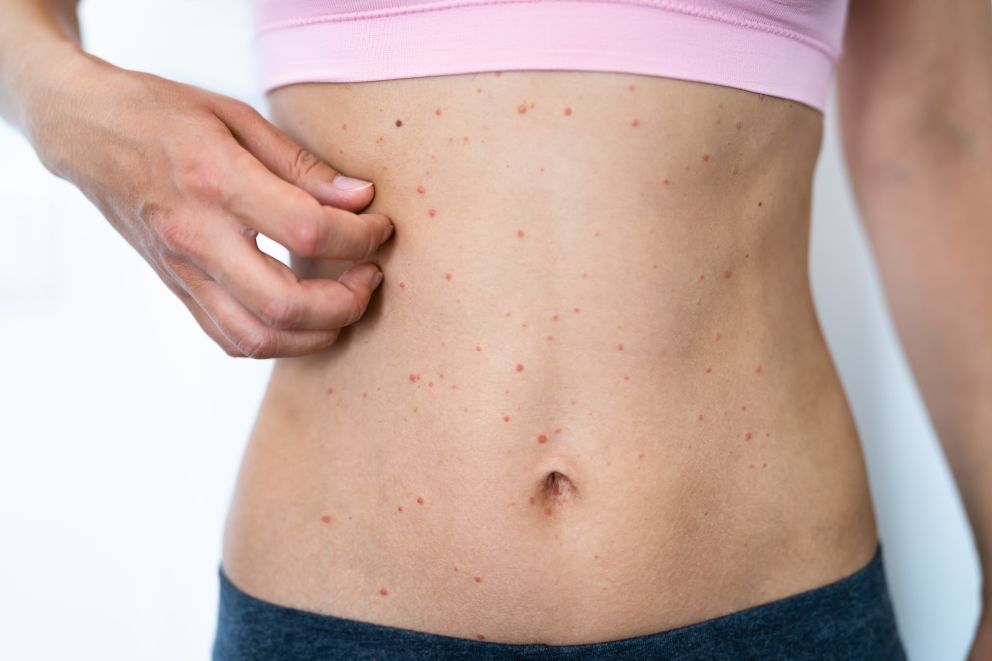
Keto rash typically appears within the first few weeks of starting a ketogenic diet. It often resembles dermatitis and presents as red or pink skin lesions across the torso, armpits, neck, shoulders, chest, or upper back. It’s rare for keto rash to affect the face or limbs.
Here are the four primary stages of keto rash:
- Skin may first develop light pink, raised lesions that resemble faint scratch marks. These early signs are often subtle and may go unnoticed.
- The rash becomes more pronounced with raised skin lesions or papules, small, raised bumps that may be filled with fluid or pus. This stage is typically accompanied by significant itching and discomfort.
- Early signs of healing emerge. The inflamed papules darken in color and begin to scab or scale over as inflammation subsides.
- The raised lesions fade, leaving a net-like or speckled pattern of darker pigment. Although some freckle-like spots may linger, the rash has resolved, and the skin gradually returns to its normal appearance.

How to get rid of keto rash
As your body becomes keto-adapted, keto rash usually improves and disappears after a few weeks. There isn’t a specific treatment to cure keto rash, but you can take plenty of steps to help your skin heal quickly.
Here are four strategies that may help you improve keto rash symptoms.
1. Support healthy digestion
“Keto rash is often connected to changes in fat metabolism. Dr. Berg explains, “Supporting bile and liver function can go a long way in making the transition smoother and promoting skin balance from the inside out.”
Certain herbs and foods have traditionally been used to promote digestive comfort and bile production. These include milk thistle tea, beets and beet greens, parsley, cilantro, dandelion, ginger, turmeric, and cinnamon.
Consuming these foods may help your body easily adapt to fat digestion and promote a speedy recovery.
2. Adjust your macronutrient intake
Your body may need more time to adjust to a low-carb, high-fat diet.
To support this transition, it may help to temporarily increase your carbohydrate intake slightly with healthy whole food options, such as organic root vegetables and high fiber fruits, rather than processed foods.
This approach gently shifts your body out of ketosis, allowing symptoms such as keto rash to improve. Once your skin clears, you can gradually reduce your carb count again to re-enter ketosis more smoothly.
If keto rash reappears, diet modification may be necessary. Some people can transition into keto within a few days, while others need a little longer.
Choosing fats that are easier to digest can also make a difference.
Foods high in long-chain fatty acids need bile salts to be absorbed. However, medium-chain triglycerides (MCTs) found in coconut oil don’t require bile and can be a helpful option for helping your body quickly adapt to using ketones for fuel.
Grass-fed butter and full-fat yogurt also offer small amounts of MCTs and are excellent choices to help your body adapt to ketosis.
3. Give your skin time to heal
Most keto rashes clear up without treatment. If you just started keto, you likely lowered your carb consumption drastically, causing profound shifts in your metabolism.
The longer you are in ketosis, the more your body will adapt to a high-fat diet, especially if you implement keto adaptation strategies.
4. Avoid skin irritants
Tight clothes, harsh soaps, excessive sweat, or loofahs are unlikely to cause keto rash, but keeping these potential skin irritants to a minimum helps to heal.
Keeping your skin moisturized with a gentle cream or oil can also help reduce itching and discomfort.
Watch the video below to learn how keto rash may be related to low bile production.
How to avoid keto rash
The exact cause of keto rash remains unclear, and not everyone experiences it. However, the way you transition into ketosis can significantly influence your chances of developing this itchy rash.
A healthy and balanced ketogenic diet doesn’t just require low-carb and high-fat foods. The best foods for keto rash are nutrient-dense foods that support healthy vitamin and mineral levels.
Following a Healthy Keto® plan can provide the foundation for smooth keto adaptation by emphasizing high-quality, organic, anti-inflammatory foods that nourish the body, support detoxification, and improve fat digestion, all key factors for promoting skin health on keto.
If your previous diet was high in refined carbs or low in healthy fats, your body may be more sensitive to ketone production during the early stages of ketosis. Therefore, it is crucial to ease into ketosis and allow your metabolism time to adapt.
Start keto by reducing carbohydrate intake gradually over several days or weeks. This gives your metabolism time to acclimate to fat-burning and helps prevent overwhelming your liver and gallbladder with fat processing and detoxification.
You can also help support this process with foods that naturally promote digestive flow and microbial balance, such as dandelion, arugula, and mustard greens, as well as fermented foods including sauerkraut and kimchi.
Taking 1 to 2 tablespoons of raw apple cider vinegar (ACV) diluted in water before meals is an excellent way to promote healthy digestion and support keto adaptation.
Thanks to its natural acidity and beneficial bacteria, ACV can aid the uptake of fat-soluble vitamins and help maintain microbial diversity in the gut to help balance inflammatory responses and support healthy liver function.
Finally, it’s crucial to avoid combining too many metabolic changes at once. Starting intermittent fasting and keto simultaneously may overwhelm your liver’s detox and fat-processing capacity.
Instead, gently build up your fasting window over time to reduce the risk of triggering inflammatory symptoms such as keto rash.
Key takeaways
- Keto rash is a rare side effect of ketosis that typically develops within the first few weeks of starting a ketogenic diet.
- While the exact cause of keto rash is unknown, it may relate to the temporary release of inflammatory compounds through the skin as the liver adjusts to ketosis.
- Food sensitivities, stress, nutrient imbalances, and changes in bile flow can also contribute to skin irritation during the adaptation phase.
- Easing into ketosis, choosing easily digestible fats, and supporting healthy digestion may help reduce the likelihood or severity of keto rash.
- Following a Healthy Keto diet and avoiding inflammatory foods can further help minimize the risk of developing symptoms and support skin comfort as the body adapts.
FAQ
- 1. Why do I have a rash after starting keto?
- 2. What causes a keto rash?
- 3. Is a rash common on keto?
- 4. Is a rash a symptom of the keto flu?
- 5. How can I get rid of a keto rash?
- 6. How long does a keto rash last?
- 7. How long does it take for a keto rash to go away after keto adaptation?
- 8. Can you get a rash from fasting?
- 9. Does keto rash go away?
- 10. What does a ketosis rash look like?
- 11. Where do you get keto rash?
- 12. Can you get keto rash on your legs?
- 13. Can keto cause hives?
- 14. How long do keto hives last?
- 15. Does keto cause a rash on your face?
- 16. How do I get rid of a keto rash on my face?
- 17. Does keto rash mean you are in ketosis?
- 18. Does ketosis make you itchy?
- 19. Is keto rash always itchy?
- 20. Does your skin get itchy when you lose weight?
- 21. Can keto cause allergies?
- 22. How do you get rid of ketosis bumps?
- 23. Does keto rash go away on its own?
- 24. Do antihistamines help with keto rash?
- 25. Can a low-carb diet cause a rash?
Sources
- https://pmc.ncbi.nlm.nih.gov/articles/PMC8903224/ ↩︎
- https://link.springer.com/article/10.1007/s00403-023-02542-4 ↩︎
Related Articles
-
What Are the Best and Worst Carbs?
 Nutrition
What Are the Best and Worst Carbs?
At a glance Carbohydrates can be a source of energy for the body, but their nutritional value can vary widely depending on the source. Some carbohydrate foods supply fiber, vitamins,…07/30/2026 -
Can You Drink Coffee While Fasting?
 Diet
DietCan You Drink Coffee While Fasting?
At a glance Fasting involves limiting food intake so the body can use stored energy and maintain steady metabolic function. Coffee can be consumed during a fast, and plain black…06/19/2026 -
Sugar Alcohols: What They Are and How They Affect Digestion
 Food and Drink
Sugar Alcohols: What They Are and How They Affect Digestion
At a glance Sugar alcohols are low-calorie sweeteners commonly used in sugar-free foods, chewing gum, desserts, and other processed foods. Unlike regular sugar, many sugar alcohols are not fully absorbed…05/21/2026 -
What Is Modified Food Starch?
 Foods to avoid
What Is Modified Food Starch?
At a glance Modified food starch is a widely used food additive and thickening agent. However, it may affect metabolic balance and gut health, particularly when consumed as part of…05/14/2026 -
How to Break a Weight Loss Plateau: 9 Simple Ways
 Keto
KetoHow to Break a Weight Loss Plateau: 9 Simple Ways
At a glance Weight loss plateaus typically occur when the body adapts to dietary and lifestyle changes, resulting in reduced energy requirements. Factors such as insulin resistance, poor sleep, and…05/08/2026 -
Keto on a Budget: Tips and Foods to Eat
 Diet
DietKeto on a Budget: Tips and Foods to Eat
At a glance A ketogenic diet can be maintained using simple, affordable whole foods rather than expensive specialty products. Prioritizing versatile ingredients and planning meals strategically can help reduce grocery…04/24/2026 -
How Many Calories Break a Fast?
 Fasting
How Many Calories Break a Fast?
At a glance Fasting keeps insulin levels low, allowing the body to burn stored fat and activate cellular repair processes. While any amount of calories technically breaks a fast, different…04/16/2026 -
Muscle Twitching on Keto: Causes and What to Do
 Diet
DietMuscle Twitching on Keto: Causes and What to Do
At a glance Muscle twitching is common when first starting keto and is often linked to shifts in fluid balance, electrolyte minerals, and digestive function as insulin levels remain steady.…03/19/2026 22.3k views -
What Is the Difference Between Virgin and Extra Virgin Olive Oil?
 Superfoods
What Is the Difference Between Virgin and Extra Virgin Olive Oil?
At a glance Virgin and extra virgin olive oils are both extracted from olives using mechanical methods, but extra virgin olive oil (EVOO) meets stricter quality standards. EVOO contains higher…03/06/2026 8.5k views -
Too Much Keto Weight Loss? What to Do If You’re Too Skinny
 Diet
DietToo Much Keto Weight Loss? What to Do If You’re Too Skinny
At a glance Keto weight loss often occurs rapidly during the early adaptation phase, primarily due to fluid loss rather than immediate fat reduction. While fat loss is expected, ongoing…03/06/2026 10.2k views


