

At a glance
Does herbal tea break a fast? No, unsweetened herbal tea won’t break a fast and can safely be enjoyed during periods of caloric restriction as it doesn’t contain calories or impact insulin levels. In fact, certain varieties, such as ginger, hibiscus, and peppermint tea, may even help maximize the benefits of fasting by supporting digestive functions, promoting fat burning, and offering health-promoting antioxidants.
Various herbal teas are commonly used to promote weight loss, boost metabolism, and improve health. But does herbal tea break a fast?
No, drinking tea won’t break a fast. In fact, certain herbal teas may enhance the impressive health benefits of fasting as long as they don’t contain high-carb ingredients such as fruits, sugar, or honey.
Learn more about drinking herbal tea while fasting and discover how to choose the best options to maximize your fasting success.
What is herbal tea?
Though some distinctions exist, tea and herbal teas are typically lumped into the same category.
Traditional tea is made by steeping the leaves of the Camellia sinensis plant in hot water. Only four types of tea are derived from this tea plant: black, green, oolong, and white tea.
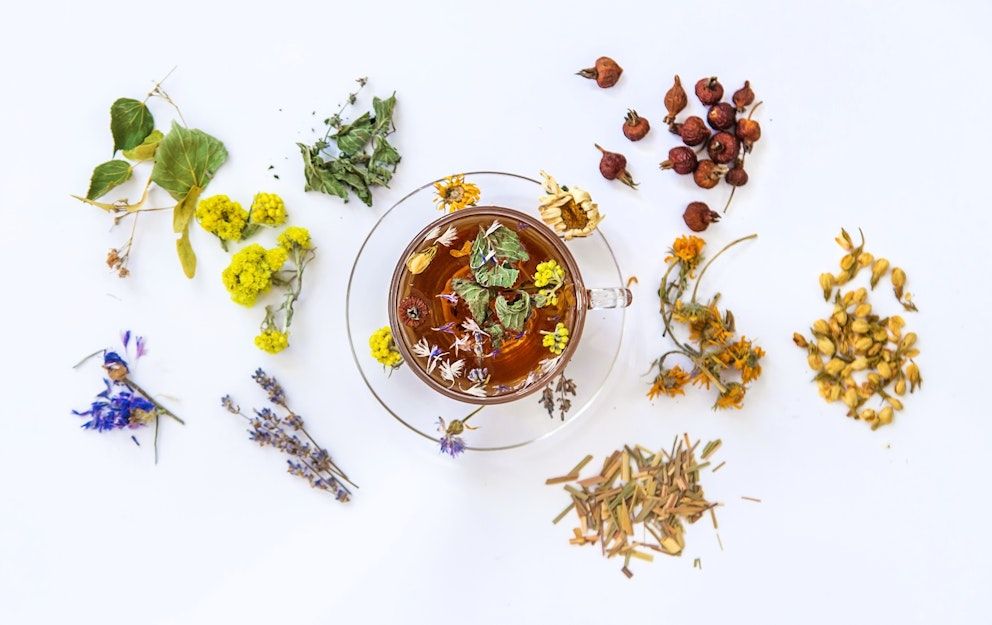
Though herbal teas are called teas, they’re actually infusions, as they’re made by steeping plants in hot water. Herbal teas don’t originate from the tea plant but are typically made from various other plants, herbs, and spices.
In addition, some varieties may contain dried fruits or flowers, such as raspberries, oranges, chamomile, roses, or hibiscus.
Popular fasting tea options include:
- Black tea
- Ginger tea
- “Health Benefits of Green Tea Explained Clearly | Dr. Berg.” Dr. Berg. https://www.drberg.com/blog/the-amazing-health-benefits-of-green-tea
- Hibiscus tea
- Peppermint tea
- White tea
Most teas are packaged in tea bags for effortless steeping, though they’re also available as loose tea leaves that undergo less processing, giving them a fresher and more aromatic flavor.
Watch the video below to learn more about what can break a fast and what doesn’t.
Does herbal tea break a fast?
There are several types of fasts, and whether or not you can drink herbal tea during the fasting period depends on the fast you’re practicing.
Common fasting methods include:
- Water fasts
- Dry fasts
- Intermittent fasting
Traditional fasting involves drinking only water for an extended period, typically lasting 16 to 18 hours but sometimes extending to 24 hours or longer. Consuming anything other than plain water during a water fast would technically break the fast.
Dry fasting is the most extreme method and involves abstaining from all food and liquids for no longer than one day.
Intermittent fasting is a broad term involving many fasting methods and consists of time-restricted periods of eating followed by periods of fasting.
The most popular form of intermittent fasting is the 16:8 method, which consists of 16 hours of fasting followed by an eight-hour eating window.
Any food or beverage that causes blood sugar spikes and triggers insulin release will break a fast. Insulin is a blood glucose-regulating hormone that regulates blood sugar balance.
Insulin also prevents fat-burning and puts the body into a state of fat storage, directly counteracting the beneficial effects of fasting.
Black coffee, tea, and herbal teas don’t contain calories, carbohydrates, or proteins that could raise insulin levels. This explains why you can safely consume these beverages during your fasting window.
However, it’s crucial not to add milk, creamers, sugar, honey, or any other carbohydrate-containing additive to your tea as they can trigger insulin release and break your fast.
“Plain and unsweetened herbal teas have virtually zero effect on insulin and won’t break a fast,” explains Dr. Berg.

Health benefits of herbal tea
There are thousands of herbal tea blends, each providing various potential health benefits depending on the herbs, flowers, or spices included. However, most herbal teas are rich in antioxidants and support overall well-being.
Here are six health benefits of regular herbal tea consumption.
1. Aids digestion
The gut microbiome contains trillions of microbes and has been linked to physical and emotional health. A balanced gut flora can promote a healthy body mass index (BMI), support immune system function, help regulate mood, and promote healthy digestion.
However, an imbalance of beneficial bacteria linked to antibiotic use or poor dietary habits can contribute to obesity and digestive problems, such as irritable bowel syndrome (IBS), gas, and bloating.
Research published in Nutrients found that ginger can promote gut health and support digestion by increasing the growth of beneficial bacteria in the gut microbiome.1
Consuming ginger tea while fasting may also help keep hunger cravings at bay, helping you achieve longer periods of caloric restriction and maximize the health benefits of fasting.
2. Promotes weight loss
Certain herbal teas, such as cinnamon and rooibos tea, may support weight loss by helping regulate blood sugar levels and reducing cravings during fasting periods.
A study published in Nutrients found that rooibos tea can help promote metabolic balance and lower inflammation, which is associated with a healthy body weight and reduced risk of obesity.2
3. Boosts antioxidant intake
Herbal teas contain various polyphenols, which are naturally occurring plant compounds with antioxidant and anti-inflammatory properties.
Antioxidants help neutralize free radicals, which are highly unstable metabolic by-products that can cause oxidative stress and damage to cellular components and DNA.
Research published in Animal Nutrition found that tea polyphenols reduce the risk of various cancers, hypertension, and cardiovascular diseases. The study also found that polyphenols protect against neurodegeneration and gene mutations.3

4. Reduces stress
Certain herbal teas, such as lavender, lemon balm, and chamomile, are known for their stress-reducing effect, which explains why sipping a cup of tea can help lower stress and anxiety.
Teas, such as passionflower and valerian root, have anxiolytic effects, meaning they can reduce anxiety. These teas may help lower the release of cortisol, an adrenal hormone linked to stress, tension, and elevated blood pressure.
5. Improves insulin resistance
Insulin resistance refers to the body’s inability to respond to insulin signaling, leading to chronically elevated blood sugar and excessive insulin release.
Blood sugar and insulin imbalances contribute to diabetes, cardiovascular disease, obesity, and metabolic syndrome.
Several studies indicate that certain herbal teas, like hibiscus tea, can enhance insulin sensitivity and reduce the risk of metabolic diseases.
Research published in the Journal of the Science of Food and Agriculture found that hibiscus tea mitigated insulin resistance, promoted normal blood sugar regulation, and supported balanced cholesterol levels.4
6. Enhances autophagy
Healthy cells are necessary for tissue regeneration, obtaining nutrients from food, and producing energy. Oxidative stress, toxins, and other factors can damage cellular components and lead to dysfunctional cell function.
Fasting triggers autophagy, a cellular repair mechanism that destroys and recycles damaged cells and proteins. Interestingly, certain polyphenols in herbal teas may enhance this process.
A study published in Nutrients concluded, “ Popular teas, including oolong tea, safflower tea, ginger tea, and hibiscus tea, as well as their polyphenolic components, have shown capacities in the modulation of autophagic pathways.”5
Tips for tea drinking during fasting
While herbal teas have many benefits that may help prolong fasting, boost autophagy, and promote overall health, there are some considerations when choosing a fasting tea.
China is the world’s largest tea producer, and teas grown in various Chinese regions have been linked to heavy metal contamination.
These metals include arsenic and lead, which pose significant health risks when consumed as they can damage the central nervous system, liver, and kidneys.
Additionally, Chinese teas may contain harmful levels of pesticides and herbicides. A study published in Food Chemistry found that nearly all of the 122 samples taken of Chinese herbal teas contained residual pesticides.6
To avoid heavy metal toxicity and pesticides, choose organic tea grown under stricter farming practices and regulations. Compared to the 900 chemicals used in conventional farming, organic farmers utilize only around 25 different pest-control products.
Moreover, organic teas are typically sold in unbleached bags, which reduces exposure to chemical bleaches like epichlorohydrin, a known carcinogen. You can also opt for loose-leaf tea using a non-toxic tea infuser to reduce exposure.
It’s also crucial to avoid sweet tea and herbal mixtures with dried fruits. Unlike plain tea, drinking tea with added sugar and carbs can spike blood sugar and break your fast.
Key takeaways
- Unsweetened herbal teas contain no calories or carbohydrates and won’t interfere with the metabolic state of fasting.
- Teas such as ginger, cinnamon, and hibiscus can help promote weight loss, reduce stress, and support gut and metabolic health.
- Avoid teas with added sugar, milk, or creamer, which can interfere with insulin levels and break a fast.
- Choosing organic, high-quality teas helps minimize exposure to pesticides and heavy metals.
FAQ
- 1. Can I drink herbal tea while fasting?
- 2. Will herbal tea stop autophagy?
- 3. Who should not drink herbal tea?
- 4. Is herbal tea good for you?
- 5. Is herbal tea keto-friendly?
- 6. Does green tea break a fast?
Sources
- https://pubmed.ncbi.nlm.nih.gov/static-page/down_bethesda.html ↩︎
- https://pubmed.ncbi.nlm.nih.gov/static-page/down_bethesda.html ↩︎
- https://pubmed.ncbi.nlm.nih.gov/static-page/down_bethesda.html ↩︎
- https://pubmed.ncbi.nlm.nih.gov/25965053/ ↩︎
- https://pubmed.ncbi.nlm.nih.gov/static-page/down_bethesda.html ↩︎
- https://pubmed.ncbi.nlm.nih.gov/35180605/ ↩︎
Related Articles
-
How to Get All Essential Nutrients in One Meal
 Diet
DietHow to Get All Essential Nutrients in One Meal
At a glance OMAD follows a 23:1 fasting pattern where all food is eaten within a single one-hour window each day. While OMAD doesn’t have strict food requirements, food quality…02/20/2026 13.2k views -
Potential Side Effects of Fasting and How to Avoid Them
 Diet
DietPotential Side Effects of Fasting and How to Avoid Them
At a glance Fasting is widely used to support metabolic health and weight management. While many people tolerate this eating pattern well, others may experience side effects of fasting. Understanding…01/23/2026 11.7k views -
Does OMAD (One Meal a Day) Slow Metabolism?
 Diet
DietDoes OMAD (One Meal a Day) Slow Metabolism?
At a glance OMAD is a fasting method that consolidates daily calorie intake into one meal, extending fasting to approximately 23 hours. Because metabolic efficiency primarily depends on dietary composition,…01/16/2026 17.7k views -
14-Hour Fast: Benefits and How It Works
 Diet
Diet14-Hour Fast: Benefits and How It Works
At a glance A 14-hour fast is a simplified approach to intermittent fasting that builds on the body’s natural overnight fast, making the transition into time-restricted eating more comfortable. It…12/05/2025 6k views -
Can Kids Fast?
 Diet
DietCan Kids Fast?
At a glance Fasting isn’t recommended for children, as it can interfere with healthy growth and development. However, supporting metabolic balance by eating nutritious meals, avoiding processed foods, and limiting…12/05/2025 37.1k views -
Dirty Fasting vs. Clean Fasting: Key Differences Explained
 Diet
DietDirty Fasting vs. Clean Fasting: Key Differences Explained
At a glance Clean and dirty fasting both limit calories, but they differ in how strictly they avoid ingredients that may influence insulin or digestion. Each approach has benefits, though…10/30/2025 -
How to Get Rid of Bloating While Fasting
 Health concerns
How to Get Rid of Bloating While Fasting
At a glance Several factors, including dietary habits, food sensitivities, and gut health, can all contribute to temporary digestive discomfort while fasting. Understanding common triggers and using simple, natural strategies…04/09/2025 47k views -
Why Do You Feel Cold While Fasting?
 Diet
DietWhy Do You Feel Cold While Fasting?
At a glance Fasting involves voluntarily abstaining from food and calorie-containing drinks to allow the body to shift from digestion to fat burning and restoration. As the body enters ketosis,…04/09/2025 126.6k views -
When Is the Best Time to Eat OMAD (One Meal a Day)?
 Diet
DietWhen Is the Best Time to Eat OMAD (One Meal a Day)?
At a glance Eating one meal a day (OMAD) is an intermittent fasting technique that can offer several metabolic benefits when planned effectively. The timing of your eating window and…04/09/2025 24.8k views -
The Best Food to Break a Fast
 Diet
DietThe Best Food to Break a Fast
At a glance Breaking a fast correctly is crucial to maximizing the health benefits of caloric restriction while minimizing digestive issues. The best foods to break a fast include easily…04/09/2025 31.2k views


