

At a glance
Nutritional yeast is a concentrated source of B vitamins, essential amino acids, and trace minerals, making it an excellent addition for those seeking to support balanced nutrition and overall health. Understanding the difference between nutritional yeast tablets and flakes can help you make the best choice for your lifestyle, taste preference, and how you plan to use it.
Nutritional yeast tablets vs. flakes—what’s the difference, and is one better than the other?
Choosing between nutritional yeast tablets and flakes depends on your health goals, how you intend to use it, and whether you prefer it as a flavorful seasoning or a convenient supplement.
Here’s how to choose between these two forms of nutritional yeast and what to look for to ensure you select a product that fits your needs and provides balanced and reliable nutrition.
What is nutritional yeast, and what does it do?
Nutritional yeast is a deactivated form of Saccharomyces cerevisiae, a yeast species closely related to brewer’s yeast and baker’s yeast that’s specifically cultivated for its nutritional content.
As Saccharomyces cerevisiae grows in a nutrient-rich medium, it produces vitamins, proteins, and other beneficial compounds that can be utilized once the yeast has been deactivated and harvested.
The end product is a concentrated source of B vitamins that’s also considered a complete protein, as it contains all nine essential amino acids. This makes nutritional yeast an excellent choice for those seeking to support amino acid balance while minimizing the risk of vitamin B deficiency.
Research published in Biological Trace Element Research has explored the nutritional properties and health benefits of yeast and how these nutrients may support blood sugar balance and overall metabolic health.
Supporting B-vitamin balance helps support cellular energy production, maintain healthy red blood cells, and contribute to overall cardiovascular health, including blood pressure regulation.
“During their growth phase, nutritional yeast cells release glutamic acid, which gives nutritional yeast its distinct umami flavor and cheesy taste, similar to Parmesan cheese,” explains Dr. Berg. “This makes it a popular plant-based alternative to animal products for flavoring meals.”
What are nutritional yeast tablets?
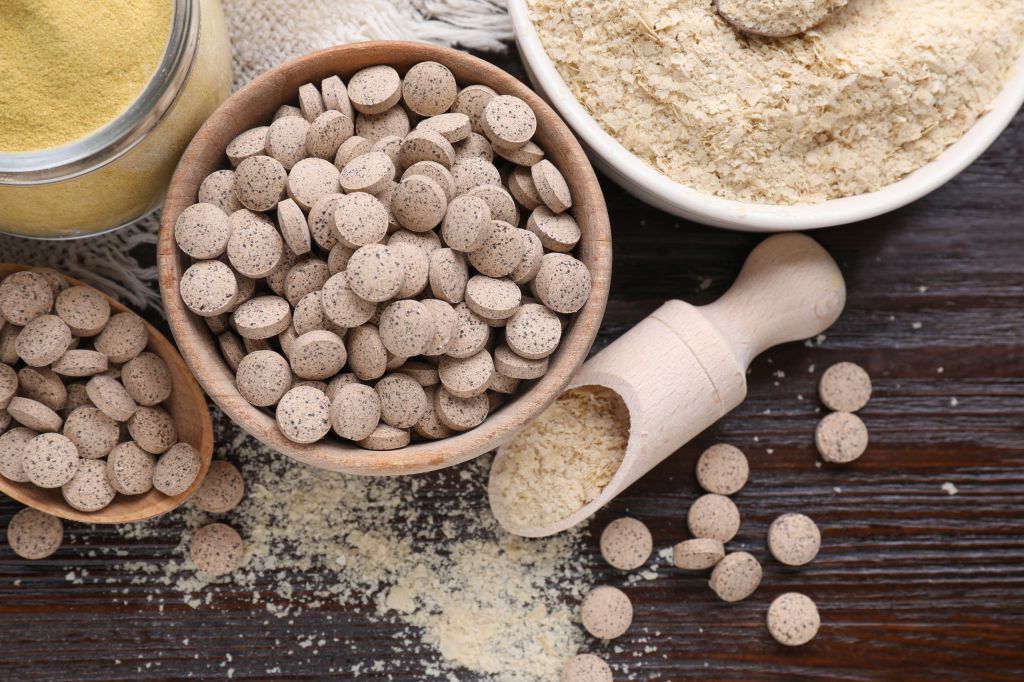
Nutritional yeast tablets are a popular dietary supplement made by compressing concentrated powdered nutritional yeast into tablets.
Depending on the product and whether it’s made with fortified or unfortified yeast, tablets tend to contain the same nutrient profile as nutritional yeast flakes.
Nutritional yeast tablet fortification with vitamin B12 is common, as Saccharomyces cerevisiae doesn’t produce significant amounts of this crucial nutrient. This makes vitamin B12-enriched nutritional yeast particularly valuable for those following vegan or vegetarian diets.
In addition to traditional yeast tablets that are swallowed, certain brands offer multi-use tablets with a texture and consistency that can be easily chewed or blended into water or smoothies.
What are nutritional yeast flakes?
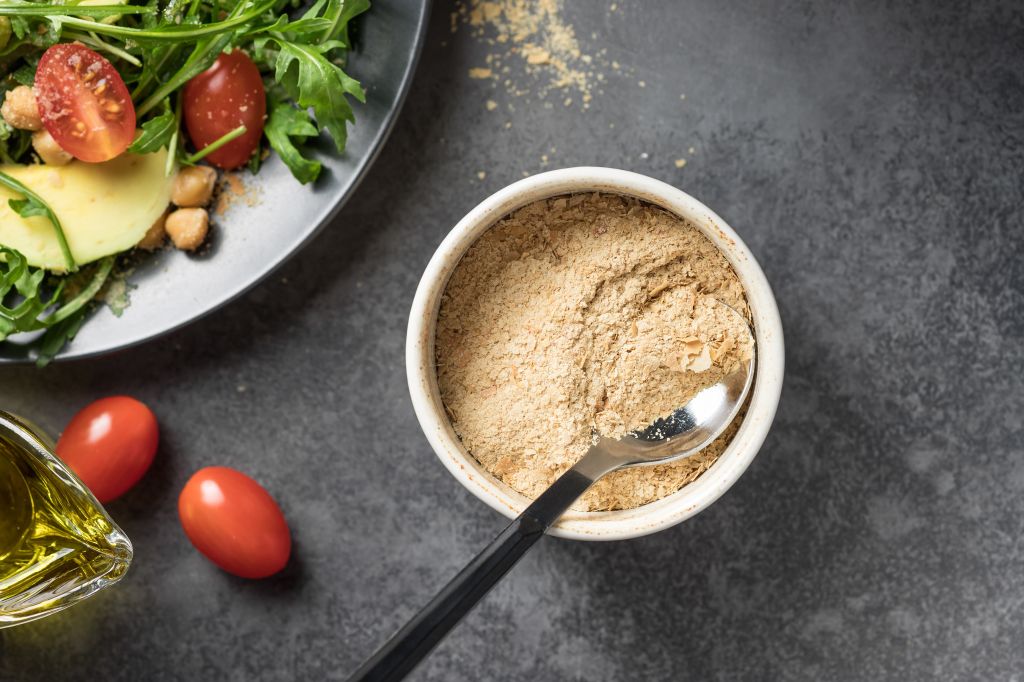
Nutritional yeast flakes are made by first harvesting the yeast, then heating it to deactivate the cells and stop fermentation. The inactivated yeast biomass is then processed and pressed into flake form.
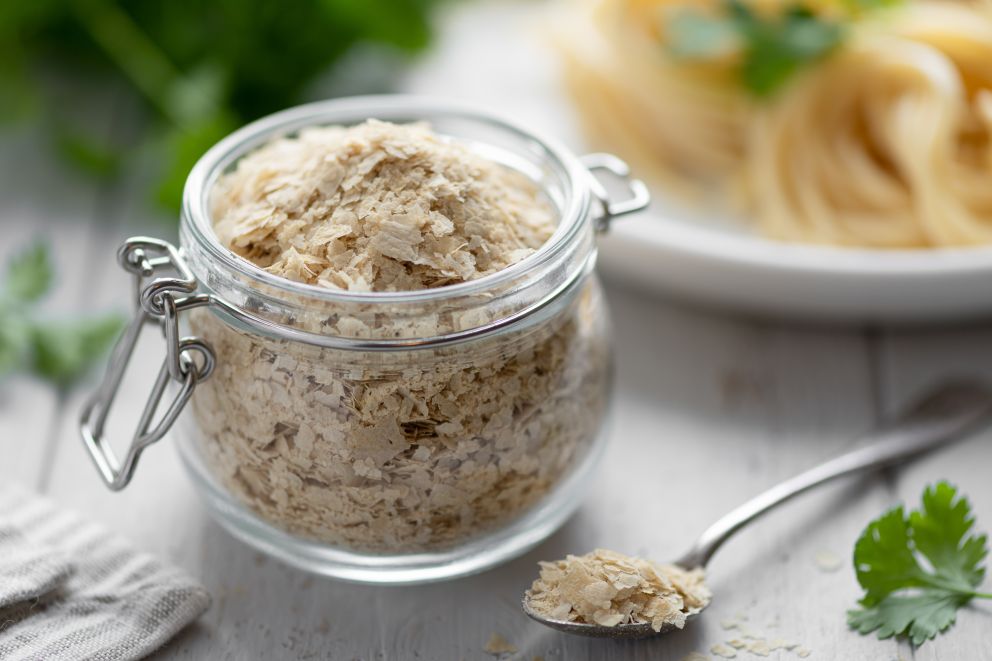
Because of their texture and savory flavor, it’s easy to eat nutritional yeast flakes directly. They’re often sprinkled on foods as a seasoning or incorporated into recipes to add both flavor and nutrients.
Nutritional yeast flakes are a popular ingredient in many vegan recipes, providing a cheesy, umami flavor without the need for animal products.
Because of their format, nutritional yeast flakes allow flexible dosing, which is ideal for those who prefer control over how much nutrition they want to add to their meals.
Nutritional yeast tablets vs. flakes: how do they compare?
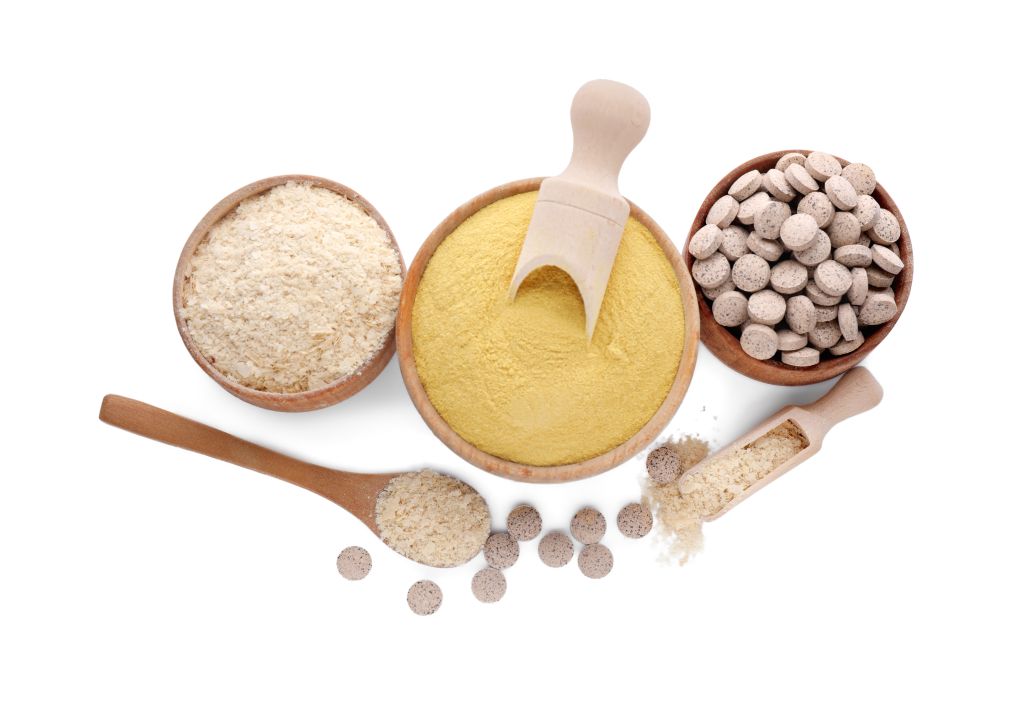
Nutritional yeast tablets provide a measured, concentrated dose of nutrients in an easy-to-take form.
While flakes are usually sprinkled on food, tablets can be taken directly as a supplement, making them ideal for those with busy routines or for individuals who want a consistent, precise daily intake.
Because they’re dehydrated and compressed, tablets tend to be more stable than flakes, offer a longer shelf life, and have a lower risk of moisture damage.
In contrast, flakes are a practical ingredient in the kitchen that offers both delicious umami flavor as well as nutritional value.
Nutritional yeast flakes are an excellent choice for various culinary applications, including:
- Kale chips and popcorn seasoning
- Vegan cheese sauces and dips
- Soups and stews
- Savory coating for meats and fish
- Seasoning blends
- Salad dressings
- Smoothies
How to choose between nutritional yeast tablets and flakes
When deciding between nutritional yeast tablets and flakes, consider how you plan to use them and the nutrients you want to get.
While tablets provide a measured, concentrated dose of B vitamins, nutritional yeast flakes are more versatile in the kitchen, allowing flexible dosing.
Whether you decide on a nutritional yeast supplement in tablet or flake form, it’s vital that you carefully read the product labels to identify if a product has been fortified and, if so, what type of nutrients have been added.
Many nutritional yeast products are enriched with vitamin B12 and sometimes vitamin B9, also known as folate. It’s important to choose products formulated with biologically active forms that the body can easily absorb and use.
For example, methylcobalamin and hydroxocobalamin are highly bioavailable and stable forms of B12, whereas cyanocobalamin is less efficiently used by the body.
For vitamin B9, it’s preferable to use methylfolate rather than synthetic folic acid. Methylfolate is the active form your body can readily utilize for important processes such as red blood cell formation and overall B vitamin metabolism.
Evidence published in Oxidative Medicine and Cellular Longevity confirms this, stating that natural forms of B vitamins are generally more effective at supporting nutrient balance than synthetic versions.
In addition, it’s important to choose nutritional yeast supplements that clearly indicate recommended serving sizes and are produced in accordance with current Good Manufacturing Practices (cGMP) to ensure safety, transparency, and potency.
Key takeaways
- Nutritional yeast is a dietary supplement that offers a natural source of B vitamins, trace minerals, and amino acids.
- It’s available in tablet form for precise daily dosing or as flakes that can be used as a savory seasoning or added to a variety of dishes, smoothies, or shakes.
- Because it’s derived from a type of yeast, it’s suitable for vegans and vegetarians and an excellent source of B vitamins and proteins for plant-based diets.
- In some cases, nutritional yeast tablets are fortified with vitamin B12 to provide a standardized and more reliable source of nutrition per daily serving.
FAQ
- 1. Are nutritional yeast flakes and nutritional yeast the same?
- 2. Are nutritional yeast tablets and flakes nutritionally equivalent?
- 3. How does fortification differ between nutritional yeast tablets and flakes?


