


At a glance
Tracking total carbs is simpler and more consistent for supporting metabolic health and maintaining ketosis. Net carbs can help expand food choices, but they can also backfire for glucose management and weight loss, particularly if you rely on processed low‑net‑carb products instead of whole foods.
Net carbs vs. total carbs—what’s the difference and which should you track?
There are several benefits to tracking how many carbs you consume in a day, but whether you should track net carbs or total carbs ultimately depends on the quality of the food you’re eating.
Discover the differences between carb types, the best time to track net carbs, and learn why relying solely on the net carb count shown on a food label may not always support a Healthy Keto® diet or help with losing weight.
What are carbohydrates?
Carbohydrates are one of the three main macronutrients the body uses for energy, alongside fat and protein. Sugars, starches, and dietary fiber are considered carbohydrates.
All carbohydrates are made of sugar molecules, but they differ in the number of sugar units, such as glucose and fructose, that are linked together, how easily the body can break them apart, and whether they can be digested at all.
When you eat digestible carbs, your body breaks them down into glucose, which enters the bloodstream and triggers insulin, the hormone that helps move glucose into cells for energy or store it as fat.
Because carbohydrate intake directly influences blood glucose and insulin levels, monitoring how many carbs you consume can be an effective way to support metabolic health, weight loss, and the management of conditions such as type 2 diabetes.
Watch the video below to learn which carbs you should avoid on keto.
How different carbs affect the body
To understand why some people prefer one carb-counting method over another, it helps to know how different carbohydrate types affect the body. Though they’re all technically carbohydrates, their structures influence digestion, blood sugar levels, and insulin.
Sugars
Sugars are made of one or two sugar molecules—these are called simple carbohydrates. Because their structure is so basic, the body can absorb them almost instantly, which can cause a sharp spike in blood sugar and a corresponding rise in insulin levels.
Sugars occur naturally in many foods, including certain fruits, vegetables, dairy, and honey. They are also found in refined carbohydrates such as sodas, candy, baked goods, and other processed foods.
Starches
Starches are complex carbohydrates made of longer chains containing three or more sugar units.
Many starches are found in whole foods, such as legumes and whole grains, where they’re packaged with dietary fiber and other nutrients. In these plant foods, the added complexity typically slows digestion and promotes a more gradual blood glucose response compared to simple sugars.
However, refined carbohydrates—such as white bread, processed flours, white rice, and modified food starches that have been stripped of fiber—are digested more quickly and can act similarly to simple sugars in the body.
Dietary fiber
Dietary fiber is another type of complex carbohydrate, but humans lack the enzymes to fully digest it. Instead, gut bacteria help ferment certain fibers into beneficial compounds, which can be used for energy, cellular signaling, and supporting gut barrier integrity.
Research published in Microorganisms highlights that microbial fermentation of dietary fibers produces short-chain fatty acids (SCFAs) and other functional metabolites that play crucial regulatory roles in maintaining metabolic and inflammatory balance and immune function.
There are two primary types of natural fiber (soluble and insoluble), and most whole foods contain a mix of both:
- Soluble fiber dissolves into a gel-like substance that slows digestion, blunts glucose absorption, and promotes more steady blood glucose release. It also helps lubricate the digestive tract and support motility. High-fiber foods rich in soluble fiber include chia seeds, flaxseeds, and legumes.
- Insoluble fiber, also known as roughage, is the tougher structural component of plants. It doesn’t dissolve and is minimally fermented, but it adds bulk to stool and helps move waste through the digestive tract.
There are also isolated or functional fibers, which are non-digestible carbohydrates extracted from plants or synthetically produced. Examples include inulin, chicory root fiber, isomalto-oligosaccharides (IMO), and polydextrose.
Although these added fibers are designed to resist digestion in the small intestine and are often subtracted when calculating net carbs, their actual impact on blood sugar varies significantly, and many people still see blood sugar spikes after consuming some of them.
Sugar alcohols
Sugar alcohols, or polyols, occupy a unique place among carbohydrate types. They’re derivatives of sugar, made by adding hydrogen to carbohydrate chains—so they resemble both carbohydrates and alcohols and are usually included in the total carb count on a nutrition label.
Because sugar alcohols are only partially digested, they typically provide fewer calories than regular sugar and, depending on the type, can have a lower impact on blood sugar and insulin. Common examples of sugar alcohols include erythritol, xylitol, sorbitol, and maltitol.
While sugar alcohols can offer a low-carb way to add sweetness to a meal, some of them, such as maltitol, have been shown to create significant blood sugar spikes. They may also cause digestive discomfort in sensitive individuals, especially when consumed in larger amounts.
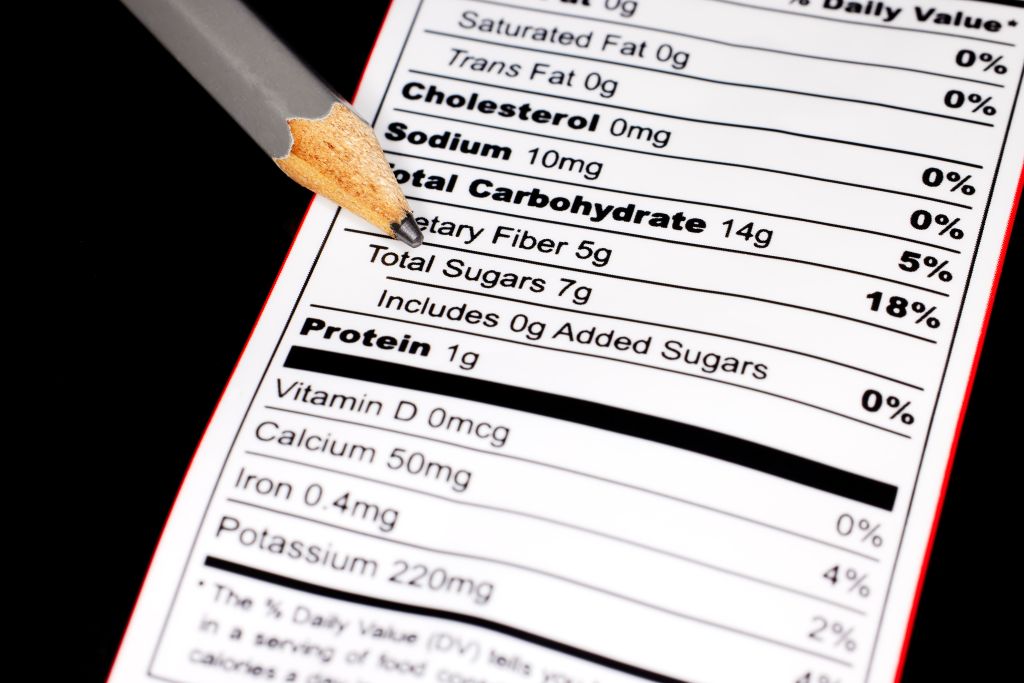
What are total carbs?
Total carbohydrates is the umbrella term printed on every nutrition facts label. It includes all carbohydrates in a serving—sugars, starches, dietary fiber, and sugar alcohols.
When people talk about counting carbs or watching their carb intake, they’re usually referring to the grams of total carbohydrates per meal and per day.
What are net carbs?
Because not all carbohydrates are digested and absorbed the same way, some people base carb intake solely on the carbs most likely to raise blood sugar and insulin levels. This is called a net carbohydrate count.
The basic formula for net carbs is total carbs minus fiber and sugar alcohols.
However, because net carbs aren’t officially regulated or defined by the U.S. Food and Drug Administration (FDA)—which only mandates the listing of total carbohydrates—there is no standard formula for calculating the grams of net carbs a food actually contains.
As a result, food manufacturers and tracking apps may calculate net carbs differently by subtracting additional ingredients such as functional fibers, resistant starches, or specialty sweeteners, even when those ingredients may still affect blood sugar in some people.

Is it better to track net carbs or total carbs on keto?
For those following a low-carb or Healthy Keto diet and eating mostly whole foods, tracking net carbs can be a beneficial approach—allowing more room for nutritious whole foods while keeping digestible carbohydrate intake low enough to support nutritional ketosis.
However, net carb counts can be misleading with processed foods, which often use refined ingredients, such as resistant wheat starch, IMOs, and maltitol, to appear low‑carb. Yet these foods may still score high on the glycemic index (GI), which measures how rapidly and intensely a food raises blood sugar levels.
This means that eating these foods may unknowingly knock you out of ketosis, even if your perceived carb intake is low.
“Many people assume that low net carb means low glycemic impact, but the type and quality of the carbohydrate still matter,” explains Dr. Berg. “Even smaller amounts of seemingly low-carb ingredients can have a strong effect on blood sugar and insulin levels.”
For this reason, a hybrid approach is often recommended: Use net carbs for whole foods and total carbs for packaged foods. This helps provide flexibility without letting processed low-carb products distort your carb intake.
That said, reviewing the ingredient list and avoiding high GI ingredients is often the best way to make more effective, Healthy Keto-friendly choices, rather than relying solely on how many carbs are advertised on the front of the package.
Key takeaways
- Simple carbohydrates digest quickly and can rapidly spike blood sugar, while complex carbohydrates usually digest more slowly or not at all.
- Total carbs include every gram of carbohydrate in a food, regardless of digestibility.
- Net carbohydrates subtract fiber and sugar alcohols to estimate the carbs that actually raise blood glucose and insulin.
- Because net carbs aren’t officially recognized or regulated by the FDA, food manufacturers’ calculations may be inconsistent and do not guarantee a steady glucose response.
- Counting net carbs can be helpful for whole foods, but it’s less reliable for processed low-net-carb products that contain refined carbohydrates, functional fibers, and certain sugar alcohols, which can still raise blood sugar.
FAQ
- 1. Is it better to count net carbs or total carbs?
- 2. How do you calculate net carbs from a nutrition label?
- 3. Which sugar alcohols should be subtracted from net carbs?
- 4. Do vegetables count as carbs?
- 5. Are net carbs listed on food labels?