

At a glance
Creatine is a natural compound stored primarily in the muscles that plays a central role in how the body produces and utilizes energy. While it’s widely used to support physical performance, emerging research suggests it may have broader applications for overall health. Although some people may experience mild water retention or digestive discomfort, creatine is generally well-tolerated and considered safe for most individuals.
You’ve likely heard of creatine, especially within the health and wellness community, but what is creatine?
Creatine is a popular supplement among athletes and fitness enthusiasts as it can help build muscle mass and improve endurance. However, its benefits extend beyond the gym.
Let’s look at the health benefits of creatine and understand important considerations for its use.
What is creatine?
Creatine is a naturally occurring compound that is found in small amounts in certain foods and can be synthesized by the human body. It’s composed of three amino acids: arginine, glycine, and methionine.
The majority of creatine is stored in skeletal muscle cells, with smaller amounts found in the brain and other body tissues.
“Creatine is essential for energy metabolism, particularly in muscle cells, especially during high-intensity, short-duration activities. It’s a key component of the phosphocreatine system, allowing you to recycle or recover adenosine triphosphate (ATP), the body’s main energy currency,” Dr. Berg explains.
Watch the video below to learn more about creatine and how it can benefit your health.
How does creatine affect muscle growth?
Creatine enhances muscle growth primarily through its role in ATP regeneration.
During intense exercise, ATP is broken down into adenosine diphosphate (ADP) and inorganic phosphate (Pi), releasing energy necessary for muscle contractions. As ATP levels drop, muscle performance and endurance diminish.
Stored in muscle cells as creatine phosphate, creatine donates its phosphate group to ADP, rapidly regenerating ATP. This quick replenishment of ATP promotes a steady energy supply, allowing muscles to sustain high-intensity exercise for longer periods.
Creatine can help increase training intensity and volume by maintaining higher energy levels during workouts, which is critical for building muscle mass.

Benefits of creatine for exercise performance
Due to its ability to rapidly regenerate ATP, creatine is a powerful dietary supplement for enhancing exercise performance. Research has shown that taking creatine supplements can increase muscle mass and strength when combined with resistance training.
According to research published in Nutrients, “Creatine is an efficient supplementation for increasing muscle strength, muscle mass, and athletic performance in the healthy young population with adequate training in a variety of dosage strategies and athletic activities.”1
Moreover, creatine helps enhance recovery between sets and workouts, especially when paired with proper electrolyte supplementation. This means athletes can train harder and more frequently, leading to greater muscle growth and strength gains.

Other health benefits of creatine
In addition to its positive impact on exercise performance, research suggests that creatine supplementation may affect clinical health markers beyond muscle performance.
The benefits of creatine for muscle function may offer relief from symptoms such as chronic pain and muscular fatigue related to conditions such as Ehlers-Danlos syndrome.
According to a study published in Cureus, “Following [creatine monohydrate] supplementation, the patient reported significant benefits in their muscular fatigue symptoms, allowing them to engage in daily activities and exercises more effectively.”2
Creatine has also been shown to play a crucial role in brain function.
Evidence published in Nutrients highlights creatine’s role in supporting brain energy metabolism, which is crucial given that the brain consumes up to 20 percent of the body’s total energy.3
The study suggests that creatine supplementation may enhance cognitive processing, particularly under stressful conditions such as sleep deprivation or during complex mental tasks. Combining creatine with a ketogenic diet may further support brain energy metabolism, as both strategies optimize cellular fuel availability.
In addition, research published in Nutrients found that “there is some evidence suggesting that creatine may help individuals manage some types of depression and/or anxiety disorders, particularly when combined with choline.”4
Moreover, creatine shows promise in mitigating the effects of mild traumatic brain injury and potentially aiding in recovery from concussions.

Safety and downsides
Not only is creatine a compound that is naturally created in the body but it has also been extensively studied for safety.
Research published in the Journal of the International Society of Sports Nutrition suggests that ”Short and long-term supplementation (up to 30 g/day for five years) is safe and well-tolerated in healthy individuals and in a number of patient populations ranging from infants to the elderly.”5
That said, it’s not uncommon to experience water retention and temporary weight gain during the first few days of starting creatine supplementation.
However, this doesn’t appear to be a long-term concern, as evidence published in the Journal of the International Society of Sports Nutrition found no significant increase in total body water content after ten weeks of creatine supplementation.6
A study published in Research in Sports Medicine did report the potential for temporary mild gastrointestinal discomfort at high doses, including symptoms such as diarrhea, stomach upset, and belching.7
Notably, these effects weren’t significantly different from those reported by placebo groups.
Overall, creatine is considered safe when taken in recommended amounts, with gastrointestinal distress being more common at higher, single doses.
However, it’s always advisable to consult with your healthcare provider before starting any new supplement regimen, especially if you have pre-existing health conditions or are taking prescription medications.

What happens when you stop taking creatine?
When individuals cease creatine supplementation, muscle creatine levels gradually return to their baseline pre-supplementation levels.
According to research published in the Journal of Aging and Physical Activity, “withdrawal from creatine had no effect on the rate of strength, endurance, and loss of lean tissue mass with 12 weeks of reduced-volume training.”8
This indicates that while muscle creatine concentrations decrease, the strength and lean tissue gains from prior resistance training and creatine use are largely maintained.
However, the study noted a significant reduction in muscle endurance following cessation of creatine supplementation.
This shows that while stopping creatine supplementation reduces muscle creatine levels and might affect muscle endurance, it doesn’t significantly impact overall strength or lean muscle mass gains.
Foods high in creatine
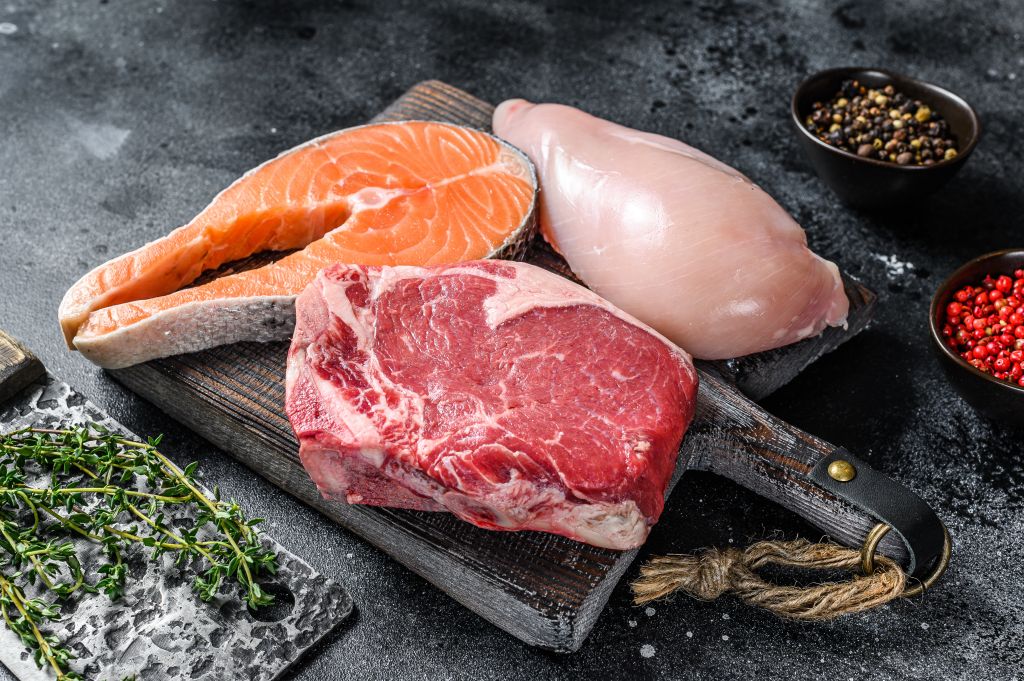
The best food sources of creatine are animal products such as red meat, pork, poultry, fish, and dairy.
However, it’s worth noting that cooking meat can convert some of the creatine to creatinine, which is less useful for muscle function.
Additionally, the amount of creatine you can obtain from food alone is typically much lower than what you’d get from supplementation.
For example, you would need to eat several pounds of meat or fish to consume the equivalent of a typical five-gram creatine supplement dose. Therefore, taking oral creatine supplements is a more practical approach for those looking to maximize their creatine intake.
Key takeaways
- Creatine is a naturally occurring compound made from amino acids and stored primarily in the muscles, where it supports ATP recycling and provides energy for high-intensity, short-duration activity.
- Creatine can support muscle strength, endurance, and recovery by increasing energy availability in muscle cells, which allows for higher training intensity and greater workout volume.
- Creatine may also support cognitive performance and brain energy metabolism, with evidence suggesting potential benefits for mood, cognitive processing, and resilience during demanding or stressful conditions.
- Temporary water retention is the most commonly reported side effect of creatine supplementation, and some individuals may experience short-term digestive discomfort at higher doses.
- Creatine is generally safe when taken as recommended, though individuals with pre-existing medical conditions should consult their healthcare provider before beginning supplementation.
FAQ
- 1. Are creatine supplements recommended for athletes?
- 2. What does creatine do for your body?
- 3. Is taking creatine good for you?
- 4. What are the pros and cons of creatine?
- 5. Does creatine have any side effects?
- 6. When should you take creatine?
- 7. Should I take creatine every day?
- 8. Are creatine gains permanent?
- 9. Does creatine cause kidney disease?
Sources
- Wu SH, Chen KL, Hsu C, et al. Creatine Supplementation for Muscle Growth: A Scoping Review of Randomized Clinical Trials from 2012 to 2021. Nutrients. 2022;14(6). doi:10.3390/nu14061255. https://www.ncbi.nlm.nih.gov/pmc/articles/PMC8949037 ↩︎
- Behringer CR, Afrin S. Creatine Monohydrate as an Effective Supplement for Muscular Fatigue in an Ehlers-Danlos Patient. Cureus. 2024;16(6):e61721. doi:10.7759/cureus.61721. https://www.ncbi.nlm.nih.gov/pmc/articles/PMC11154074 ↩︎
- Roschel H, Gualano B, Ostojic SM, Rawson ES. Creatine Supplementation and Brain Health. Nutrients. 2021;13(2). doi:10.3390/nu13020586. https://www.ncbi.nlm.nih.gov/pmc/articles/PMC7916590 ↩︎
- Kreider RB, Stout JR. Creatine in Health and Disease. Nutrients. 2021;13(2). doi:10.3390/nu13020447. https://www.ncbi.nlm.nih.gov/pmc/articles/PMC7910963 ↩︎
- Kreider RB, Kalman DS, Antonio J, et al. International Society of Sports Nutrition position stand: safety and efficacy of creatine supplementation in exercise, sport, and medicine. Journal of the International Society of Sports Nutrition. 2017;14:18. doi:10.1186/s12970-017-0173-z. https://www.ncbi.nlm.nih.gov/pmc/articles/PMC5469049 ↩︎
- Antonio J, Candow DG, Forbes SC, et al. Common questions and misconceptions about creatine supplementation: what does the scientific evidence really show?. Journal of the International Society of Sports Nutrition. 2021;18(1):13. doi:10.1186/s12970-021-00412-w. https://www.ncbi.nlm.nih.gov/pmc/articles/PMC7871530 ↩︎
- Ostojic SM, Ahmetovic Z. Gastrointestinal Distress After Creatine Supplementation in Athletes: Are Side Effects Dose Dependent?. Research in Sports Medicine 2008;16(1):15-22. doi:10.1080/15438620701693280. https://www.tandfonline.com/doi/full/10.1080/15438620701693280 ↩︎
- Candow DG, Chilibeck PD, Chad KE, et al. Effect of ceasing creatine supplementation while maintaining resistance training in older men. J Aging Phys Act 2004;12(3):219-31. doi:10.1123/japa.12.3.219. https://pubmed.ncbi.nlm.nih.gov/15263100 ↩︎
Related Articles
-
Muscle Loss with Age: Causes, Signs, and What to Do
 Aging & longevity
Muscle Loss with Age: Causes, Signs, and What to Do
At a glance Age-related muscle loss involves gradual changes in muscle mass, strength, and physical performance as the body gets older. These changes can become more noticeable when they begin…10/08/2026 -
Creatine Loading vs. Daily Dosing: What’s the Difference?
 Fitness
Creatine Loading vs. Daily Dosing: What’s the Difference?
At a glance Creatine loading involves higher daily doses of creatine, split into smaller doses, whereas daily dosing starts with smaller amounts. Both raise muscle creatine stores to a similar…10/01/2026 -
Rest Days: Why They Matter for Progress
 Fitness
Rest Days: Why They Matter for Progress
At a glance Rest is when the body repairs muscle tissue and restores the energy systems that power your workouts. Skipping rest can stall progress, increase injury risk, and undermine…07/03/2026 -
Sore Muscles: Recovery vs. Overdoing It
 Fitness
Sore Muscles: Recovery vs. Overdoing It
At a glance Sore muscles are a normal response to unfamiliar or intense exercise. Mild to moderate soreness is usually a sign of productive adaptation, while sharp pain, significant swelling,…06/25/2026 -
Can you Exercise While Fasting?
 Fasting
Can you Exercise While Fasting?
At a glance Doing exercise while fasting can be a useful method for supporting weight loss and metabolic health, especially when combined with a Healthy Keto® diet and proper hydration.…05/07/2026 -
Protein Basics: Benefits, Sources, and Daily Intake
 Nutrition
Protein Basics: Benefits, Sources, and Daily Intake
At a glance Protein is a vital macronutrient that supports tissue strength, hormone regulation, and healthy metabolism. Although many foods contain protein, their quality and absorption can vary significantly, making…04/09/2025 22.2k views -
Five Foods High in Creatine
 Nutrition
Five Foods High in Creatine
At a glance Creatine is a compound made from amino acids that fuels muscle contractions and supports brain health. Found naturally in beef, pork, fish, and dairy, creatine may help…04/08/2025 31.5k views


