

At a glance
Green tea is a rich source of antioxidants and polyphenols, including EGCG, which has profound skin health benefits. The anti-inflammatory, antimicrobial, and anti-aging properties of green tea may help reduce redness, protect against sun damage, stimulate cellular repair, and support collagen production.
Green tea has been revered for millennia, not just as a staple beverage but for its impressive health benefits, including those for the skin.
Let’s explore eight benefits of green tea for skin health and discover how to incorporate this health-promoting drink into your daily beauty routine.
What is green tea?
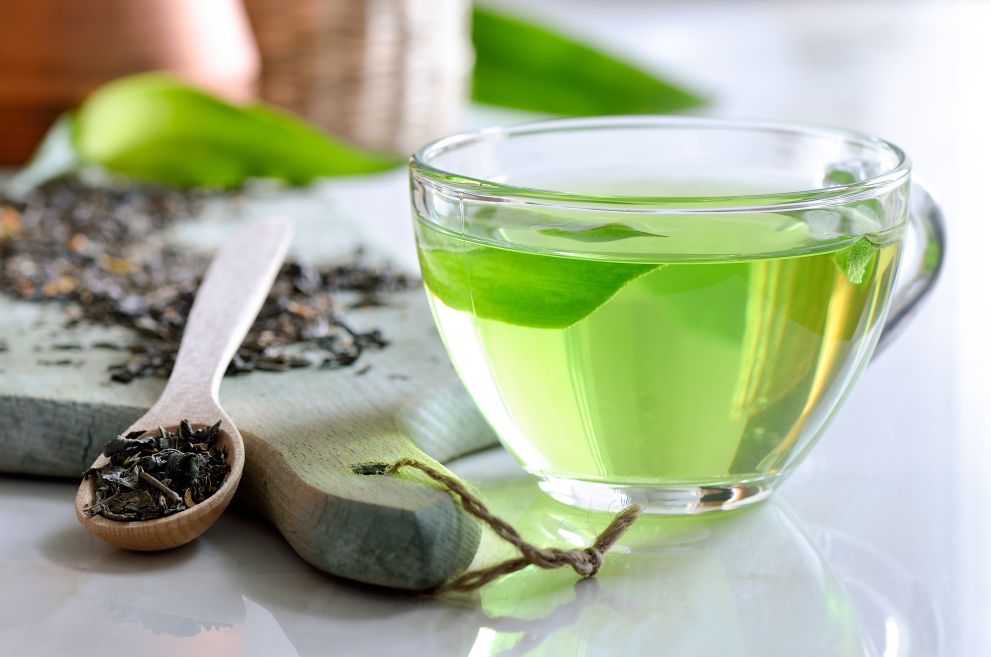
Green tea is made from the fresh tea leaves of the Camellia sinensis plant. Unoxidized green tea leaves contain high concentrations of catechins, a type of polyphenol with natural antioxidant capacities.
One of the most extensively studied green tea polyphenols is epigallocatechin gallate (EGCG), known for its powerful antioxidant properties.
In comparison, black tea, which is derived from the same plant as green tea, undergoes a different processing method during which the leaves are fully oxidized. This oxidation process alters polyphenol concentrations, resulting in significantly lower EGCG levels but higher tannin content.
Research published in The American Journal of Clinical Nutrition has found that consuming tannic acid can inhibit the absorption of essential nutrients, including thiamine, also known as vitamin B1, which can lead to thiamine deficiency.
Therefore, due to its delicate processing, green tea is considered more nutritious than black tea and is often the focus of scientific research for its wide variety of potential health benefits and wellness applications.
Watch the video below to learn about the benefits of drinking green tea for your skin health.
8 skin benefits of green tea
Green tea has been enjoyed for centuries, and many traditional wellness practices incorporate this soothing beverage for its natural compounds and supportive properties.
Here are eight impressive benefits of green tea for skin health.
1. Reduces skin inflammation
For those struggling with acne vulgaris, rosacea, and other inflammatory skin disorders, regularly drinking green tea may offer a natural solution to support skin health, especially when paired with a nutritious diet.
Research published in Molecules found that the abundance of polyphenols in green tea possesses anti-inflammatory properties, which can help reduce skin redness, irritation, and swelling.
Green tea’s natural nutrient profile can help soothe irritated skin, making it a potentially beneficial therapeutic tool for managing several inflammatory skin conditions.
2. Protects against sun damage
Photoaging refers to the aging of the skin due to prolonged exposure to solar ultraviolet (UV) radiation. This can manifest in various skin issues, including wrinkling, loss of elasticity, and changes in pigmentation.
A recent study published in Nutrients reports that EGCG, a key antioxidant in green tea, shows promising regenerative properties that may help counteract UV-induced damage.
3. Promotes autophagy
Green tea polyphenols have been shown to stimulate a crucial biological process known as autophagy.
Autophagy is the body’s process of cleaning out and recycling old and damaged cells to regenerate newer, healthier cells.
“Autophagy is a fascinating repair mechanism that helps reduce inflammation, extends cellular lifespan, and has anti-aging properties,” explains Dr. Berg.
Autophagy regulates the process of recycling old cells, which is crucial for maintaining the integrity and regeneration of skin cells, thereby contributing to the appearance of a radiant complexion.

4. Helps manage oily skin
Another important attribute of green tea polyphenols is their natural antimicrobial properties, which may help protect the skin from bacterial and fungal infections.
Research published in Antioxidants showed that the combination of the antimicrobial and anti-inflammatory effects of green tea polyphenols can support the management of both oily skin and acne.
Both drinking green tea and applying it topically have been shown to help reduce the production of sebum, which contains the natural oils produced by the skin’s sebaceous glands.
5. May slow premature skin aging
Green tea may offer promising skin-rejuvenating and anti-inflammatory properties.
A study published in the International Journal of Molecular Sciences highlights green tea’s effectiveness in supporting hydration of the skin and retaining moisture, which is pivotal in slowing skin aging.
Additionally, green tea’s potential to combat free radicals may help reduce sun-related skin damage, offering a natural solution to prevent early signs of aging.
6. Reduces the appearance of cellulite
Incorporating green tea into your health and wellness routine may support the reduction of cellulite.
Its benefits for cellulite management are attributed to the metabolic effects of green tea’s caffeine and catechin concentrations, which have been found to promote fat burning and metabolic health, linked to a lower risk of cellulite.

7. Offers collagen support
Collagen provides structure, strength, and elasticity for the skin. As we age, collagen production decreases, resulting in common signs of aging, including wrinkles, fine lines, and a loss of skin elasticity.
The antioxidant properties of green tea extract have been found to reduce collagen breakdown while promoting collagen crosslinking, which is crucial for maintaining structural integrity and skin resilience.
As a result, green tea intake can provide collagen support and support the skin’s suppleness and elasticity, thereby helping prevent the formation of wrinkles.
8. May decrease skin cancer risk
Certain polyphenols in green tea have been linked to potential anti-cancer properties.
A key factor in the onset of skin cancer is attributed to UV radiation damage to skin cell DNA. This damage can interfere with normal skin cell functions and potentially lead to mutations and, in the long term, skin cancer.
Research published in the Archives of Biochemistry and Biophysics highlights that polyphenols, such as EGCG, stand out for their ability to support the skin’s natural DNA repair mechanisms.
As a result, green tea polyphenols can help mitigate the effects of UV ray exposure, particularly the long-term risk of developing skin cancers such as basal cell carcinoma, squamous cell carcinoma, and potentially melanoma.

How to use green tea for skin health
Green tea leaves offer a variety of beneficial plant compounds that can be incorporated into easy at-home skincare practices.
Here are several ways to incorporate green tea into your skin health routine.
1. Green tea face mask
You can make a simple green tea facial mask by mixing one tablespoon of green tea powder, commonly known as matcha, with one teaspoon of honey to form a paste.
Honey is known for its moisturizing and antibacterial properties, which can complement the skin-health-promoting effects of green tea.
You can also add a teaspoon of aloe vera gel to the mix for an added boost of antibacterial and anti-inflammatory properties.
Apply the mask to your clean face, leave it on for 15 to 20 minutes, and rinse off with warm water.
2. Green tea bags
Saving used green tea bags can be a cost-effective and convenient way to enjoy the skin health benefits of green tea.
Used green tea bags can be placed on the eyes to reduce puffiness and dark circles. However, ensure the tea bags are cool and moist before applying them to your eyes for about 10 to 15 minutes.

3. Drinking green tea
Regular consumption of green tea not only contributes to skin health but can also offer various benefits for overall well-being.
Drinking between one and three cups of green tea daily can be an excellent way to incorporate this health-promoting beverage into your daily routine.
However, remember to consume green tea in moderation to avoid potential side effects from excessive caffeine intake, such as headaches, dehydration, and restlessness.
Key takeaways
- Green tea is a rich source of EGCG, which provides potent antioxidant, anti-inflammatory, and antimicrobial benefits for the skin.
- EGCG may help reduce skin inflammation, manage oily skin, protect against sun damage, and support collagen production, which is linked to improved skin elasticity and texture.
- Green tea consumption may stimulate autophagy, aiding in cell repair and skin rejuvenation, and may reduce the risk of UV-related skin damage.
- Regular consumption or topical application can improve skin hydration, reduce the appearance of cellulite, and contribute to a healthy, youthful complexion.
FAQ
- 1. Can drinking green tea improve your skin health?
- 2. What are the top benefits of green tea for skin health?
- 3. How often should you drink green tea for clear skin?
- 4. Is it safe to drink green tea every day?
- 5. What is the best way to use green tea for skin health?
- 6. How do I use green tea on my face?
Sources
- https://pubmed.ncbi.nlm.nih.gov/910744/
- https://pmc.ncbi.nlm.nih.gov/articles/PMC9370301/
- https://pmc.ncbi.nlm.nih.gov/articles/PMC3077767/
- https://pubmed.ncbi.nlm.nih.gov/29316635/
- https://pmc.ncbi.nlm.nih.gov/articles/PMC5384166/
- https://pmc.ncbi.nlm.nih.gov/articles/PMC6930595
Related Articles
-
Niacinamide vs. Niacin Supplements
 Nutrition
Niacinamide vs. Niacin Supplements
At a glance Niacinamide and niacin are both forms of vitamin B3, but there are key differences in how they function in the body. Niacin is associated with flushing and…07/03/2026 -
Does Bone Broth Break a Fast?
 Diet
DietDoes Bone Broth Break a Fast?
At a glance While bone broth is often considered fasting-friendly, it does contain calories and amino acids that can interrupt the metabolic state of fasting. While it’s rich in collagen,…03/27/2026 -
HPV Skin Tags: Causes and What to Do
 Health concerns
HPV Skin Tags: Causes and What to Do
At a glance While both skin tags and warts can be linked to human papillomavirus (HPV), they differ in appearance and how they affect the body. Targeted dietary and lifestyle…03/13/2026 16.6k views -
What Is the Top Cause of Rosacea?
 Health concerns
What Is the Top Cause of Rosacea?
At a glance Rosacea is a chronic skin condition marked by facial redness and discomfort. The cause of rosacea extends beyond the skin, with growing research highlighting the connection between…02/20/2026 8.1k views -
5 Natural Remedies for Ringworm and Prevention Tips
 Natural remedies
5 Natural Remedies for Ringworm and Prevention Tips
At a glance Ringworm is a common and highly contagious fungal skin infection that thrives in warm, moist environments. It can affect many areas of the body and is easily…02/06/2026 8.3k views -
5 Causes of Itching and How to Get Relief
 Health concerns
5 Causes of Itching and How to Get Relief
At a glance Itching can be triggered by changes on the skin's surface or by factors such as everyday stress and hormonal imbalances. Common triggers include allergic reactions, inflammatory conditions,…01/23/2026 3.8k views -
Dark Spots on Skin: Causes and Natural Remedies
 Health concerns
Dark Spots on Skin: Causes and Natural Remedies
At a glance While dark spots on skin are a normal part of aging, they may also reflect poor lifestyle and dietary habits, and can be improved with targeted changes.…01/22/2026 6.5k views -
Does Vitamin D Help with Acne?
 Skin health
Does Vitamin D Help with Acne?
At a glance Vitamin D plays important roles in immune regulation, microbial balance, and sebaceous gland activity, all of which may lower the risk of acne. Maintaining adequate sunlight exposure…01/08/2026 36.7k views -
Psoriasis Relief: Everyday Habits for Healthier Skin
 Health concerns
Psoriasis Relief: Everyday Habits for Healthier Skin
At a glance Psoriasis is an inflammatory skin condition marked by red, itchy, and scaly patches caused by rapid skin cell buildup. Symptoms can range from mild irritation to widespread…12/11/2025 5.3k views -
5 Spider Vein Natural Remedies
 Health concerns
5 Spider Vein Natural Remedies
At a glance Spider veins are often influenced by genetics, hormonal shifts, and circulatory factors. Natural remedies that support healthy circulation and vein integrity, combined with targeted lifestyle habits, may…11/20/2025 19.6k views


