


At a glance
Food labels can provide useful nutrition information, but they don’t always reflect a food product’s actual quality. Serving sizes, nutrient claims, health claims, and ingredient names can make highly processed foods appear healthier than they are. Understanding how food labels work can help make packaged foods easier to evaluate.
Food packages often highlight low calorie counts, fiber and protein content, gluten-free claims, or low-sugar messaging. However, these claims don’t always reflect the quality of the ingredients or how the food fits into a healthy diet.
Discover how to read food labels, including what to check first, which ingredients to avoid, and how to choose healthier foods with more confidence.
What are food labels?
Food labels provide nutrition information, ingredient details, allergen statements, and product claims on packaged foods.
In the U.S., the Nutrition Facts label is regulated by the Food and Drug Administration (FDA) and lists serving size, calories, key nutrients, and Percent Daily Value (%DV). It typically includes total fat, saturated fat, trans fat, cholesterol, sodium, total carbohydrates, dietary fiber, total sugars, added sugars, protein, vitamin D, calcium, iron, and potassium.
Food labels can also include an ingredients list, allergen information, nutrient content claims, and health claims. These parts of the label serve different purposes, which is why reading only one area can give an incomplete picture of the product.
The Nutrition Facts label can help you compare nutrient amounts between individual foods. The ingredients list shows what the product is made from, with ingredients listed by weight from highest to lowest.
“If you want to know the real quality of a food, look at the ingredients first,” explains Dr. Berg. “The Nutrition Facts label can look good, but the ingredients list shows what you’re actually eating.”
Watch the video below to learn how to read food labels.
How to read food labels
Reading food labels starts with the ingredients list because food quality depends on what the product is made from. Research published in Appetite found that nutrition knowledge influences how effectively people use food labels.
The authors state, “Consumers with prior knowledge are more likely to use label information effectively, that is, focus on salient information, understand information, and make healthful decisions based on this information.”
The Nutrition Facts label still matters, but it should be used to understand serving size, nutrient amounts, and specific label details after the ingredients have been reviewed.
The following are five steps for reading food labels.
1. Read the ingredients list first
The ingredients list gives the clearest view of ingredient quality.
Ingredients are listed by weight, meaning the first few ingredients make up the largest portion of the food. If sugar, refined flour, maltodextrin, modified starch, soybean oil, canola oil, or corn syrup appear near the top, the product likely contains a significant amount of ultra-processed ingredients.
Shorter ingredients lists made up of recognizable foods are typically easier to evaluate. Long lists with refined starches, sugars, oils, protein isolates, gums, artificial flavors, and preservatives often indicate a highly processed product.
2. Check the serving size
Serving size is the foundation for every number on the Nutrition Facts label, including calories, carbohydrates, added sugars, sodium, saturated fat, and other nutrients.
If a package contains two servings and the whole package is eaten, the calories and nutrients must be doubled. This can significantly change the amount of carbohydrates, added sugars, sodium, or other nutrients consumed.
Serving size may not reflect what people typically eat. This is important to understand because packaged foods may list a serving size that is smaller than the amount people commonly consume.
3. Look at total carbohydrates, fiber, and added sugars
Total carbohydrates include fiber, sugars, and starches. For those following a low-carb or keto diet, this section is especially important.
Dietary fiber is a type of carbohydrate that isn’t fully digested and can support digestive regularity and gut health. However, high-fiber claims should still be checked against the ingredients list, as some products use isolated or processed fibers.
Total sugars include naturally occurring sugars and added sugars. Naturally occurring sugars are found in foods such as milk, fruit, and some vegetables, while added sugars are added during processing or packaging.
The added sugars line can be helpful, but it shouldn’t be read alone. Sweeteners and refined starches can still appear in the ingredients list under names that may not be immediately recognizable as ingredients that can spike blood sugar levels.
4. Review fat sources
Fat quality matters more than the total fat or saturated fat number alone. Saturated fat from whole foods such as eggs, grass-fed meat, butter, full-fat dairy, and coconut oil is different from fat found in ultra-processed foods made with refined starches, added sugars, and seed oils.
The ingredients list can reveal whether a product contains industrial seed oils. Some of these include soybean, canola, corn, cottonseed, sunflower, safflower, and rice bran oils. These oils are common in chips, crackers, dressings, sauces, frozen meals, and baked goods.
Trans fats are more concerning, particularly artificial trans fats created through hydrogenation. Even if the Nutrition Facts label lists 0 grams of trans fat, check the ingredients list for hydrogenated oils or partially hydrogenated oils.
5. Check sodium per serving
Sodium is worth checking because packaged foods can contain significant amounts, even when they don’t taste salty. It’s often added for preservation, texture, and shelf stability, which can make total intake easy to underestimate.
The sodium line on the Nutrition Facts label shows how much sodium is in one serving. This is especially useful for canned foods, sauces, dressings, frozen meals, snack foods, processed meats, and packaged breads that tend to be higher in sodium.
Sodium is an essential electrolyte, so the goal isn’t to eliminate it entirely. Sodium intake should be balanced with potassium intake and interpreted in context with serving size, hydration, activity level, overall diet quality, and individual health needs.
Ingredients to avoid on food labels
Once the label has been reviewed, the next step is identifying ingredients that signal a highly processed product.
Ultra-processed ingredients often fall into four main categories: sugars, starches, seed oils, and isolated proteins.
Here are four ingredient patterns to watch for.
1. Ultra-processed sugars
Ultra-processed sugars can appear under names that don’t immediately look like sugar. Common examples include corn syrup, high-fructose corn syrup, glucose syrup, dextrose, maltose, agave, fruit nectar, juice concentrate, and maltodextrin.
These ingredients are common in cereals, flavored yogurt, sauces, drinks, protein bars, and baked goods.
Research published in The BMJ found that greater exposure to ultra-processed foods was associated with higher risks of several adverse health outcomes, especially cardiometabolic, mental health, and mortality-related outcomes.
2. Refined starches
Refined starches are often used to thicken, bind, or add bulk to packaged foods. Common examples include modified cornstarch, modified food starch, cornstarch, corn flour, potato flour, wheat flour, rice flour, tapioca flour, dextrin, and maltodextrin.
These starches can increase total carbohydrates and spike insulin levels even if a food doesn’t taste sweet.
3. Industrial seed oils
Industrial seed oils include vegetable, corn, soybean, canola, cottonseed, sunflower, safflower, and rice bran oils.
Hydrogenated oils and partially hydrogenated oils are especially important to watch for because they indicate industrially altered fats.
4. Ultra-processed proteins
Ultra-processed proteins include soy protein isolate, soy protein concentrate, textured vegetable protein, wheat gluten, hydrolyzed soy protein, hydrolyzed corn protein, calcium caseinate, and milk protein isolate.
These ingredients are common in protein bars, meal replacements, plant-based meats, cereals, and other processed foods.
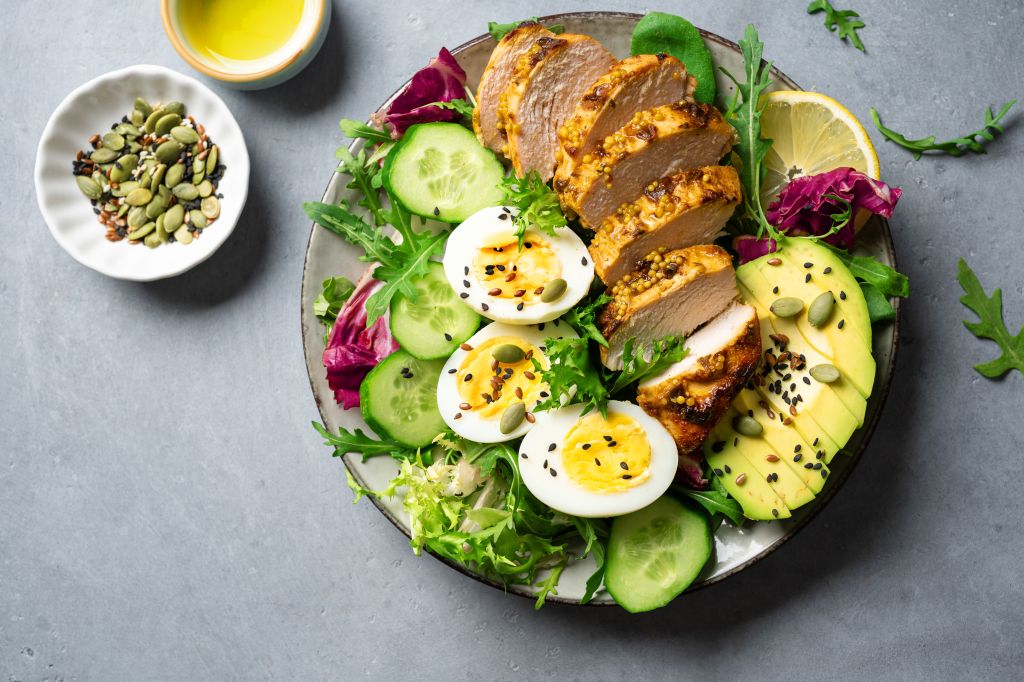
How to make healthier food choices
Food labels are most useful when they help identify whether a product supports overall food quality.
For packaged foods, the best options usually have short ingredients lists and are free from the most common ultra-processed ingredients, especially when those ingredients appear near the top.
For example, when comparing nut butters, choose one made with nuts and salt instead of added sugar, hydrogenated oils, or seed oils. A shorter ingredients list usually makes the product easier to evaluate.
This keeps food choices focused on ingredients, food quality, and nutrient density rather than front-of-package claims or calorie counts alone.
Key takeaways
- Reading food labels starts with the ingredients list, which shows what a packaged food is actually made from.
- The Nutrition Facts label can help compare serving size, carbohydrates, added sugars, fats, sodium, and other nutrients, but it shouldn’t be read separately from the ingredients.
- Front-of-package claims such as gluten-free, whole-grain, high fiber, low sugar, or plant-based can make foods appear healthier than they are.
- Ultra-processed sugars, refined starches, industrial seed oils, isolated proteins, and hydrogenated oils are common ingredients to watch for.
FAQ
- 1. What is the first thing to look for when reading food labels?
- 2. Can food labels be misleading?
- 3. What do food labeling regulations require?
- 4. What does Percent Daily Value mean on nutrition labels?
- 5. Are saturated and trans fats the same?


