

At a glance
Trace mineral supplements provide nutrients that the body needs in small amounts. These minerals play important roles in energy production, enzyme function, immune health, bone strength, cardiovascular wellness, and thyroid regulation. Choosing the right supplement can help maintain mineral balance and support overall health goals.
Trace mineral supplements are a convenient option for those seeking to support the intake of essential nutrients that promote energy production, vitality, immune function, bone health, and cardiovascular wellness.
Discover the benefits of maintaining mineral balance and learn how to select the most effective trace mineral support to meet your health goals.
What are trace minerals, and what do they do?
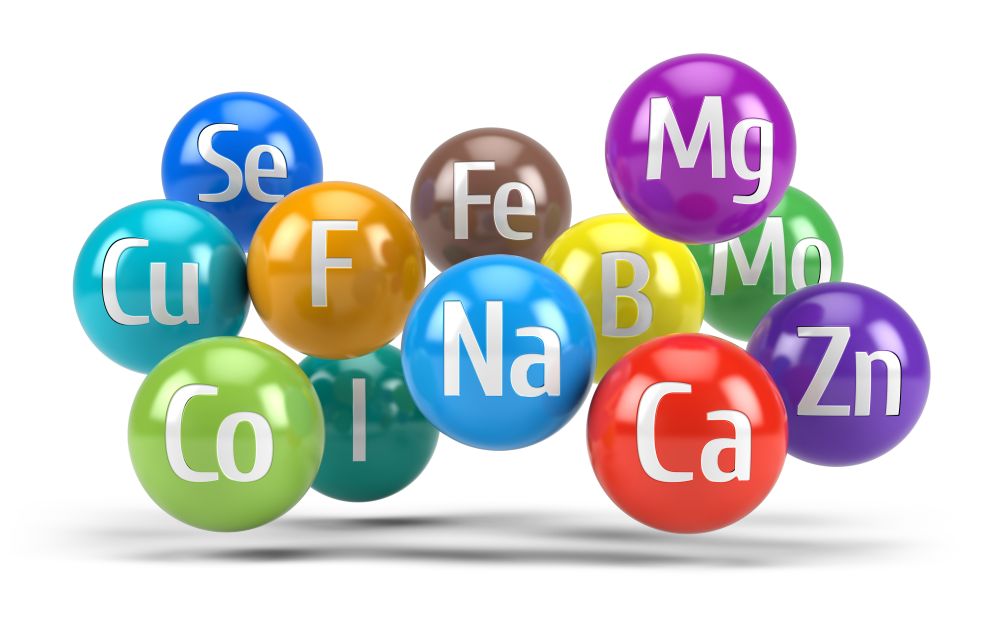
Trace minerals are a group of nutrients that the body needs in very small amounts but are still essential for overall health.
Even though only tiny quantities are required, these minerals play important roles in helping many systems in the body work properly.
Trace minerals participate in cellular functions and help the body produce energy, support enzyme activity, and assist in how the body uses vitamins and other nutrients.
One important benefit of supporting trace mineral balance is its role in skeletal health, as these nutrients support bone strength by helping maintain proper bone structure and mineral balance within bone tissue.
Trace minerals also contribute to cardiovascular health by supporting normal heart and blood vessel function. Another key role is helping immune cells to function properly, which supports overall resilience and vitality.
In addition, certain trace minerals are vital for optimal thyroid health, blood glucose regulation, and insulin sensitivity, as well as brain and nervous system functions.
Research published in Nutrients confirms the health benefits of maintaining adequate trace mineral intake, summarizing, “Trace minerals are essential in numerous metabolic functions, playing a pivotal role in human health by facilitating critical processes, including enzyme activation and immune system support, which are vital for maintaining overall physiological well-being.”
Trace minerals shouldn’t be confused with electrolyte minerals such as calcium, potassium, and magnesium, which are required in larger amounts to support crucial bodily functions.

Common trace minerals found in supplements
Exact supplement compositions vary. Some products are full-spectrum formulas that provide a wide range of trace minerals, while others are targeted formulations that supply only a few specific minerals.
Common trace minerals found in supplements include:
- Boron
- Copper
- Iodine
- Manganese
- Molybdenum
- Selenium
- Zinc
While iron can also be found in many trace mineral supplements, others are formulated without this nutrient.
Not only do iron requirements vary by gender, age, and life stage, but iron can also compete with other trace minerals for absorption.
“Iron’s interaction may reduce how efficiently certain minerals are absorbed, which can affect the overall effectiveness of a supplement,” explains Dr. Berg. “For this reason, some brands choose to exclude iron from trace mineral formulas.”

What forms of trace mineral supplements are available?
As most trace minerals are metals and therefore highly reactive in their elemental form, they’re typically bound to a carrier compound to improve stability. The compound to which a trace mineral is bound can significantly affect its absorption and overall effectiveness.
Here are common forms of trace minerals in supplements.
1. Chelated forms
Trace minerals bound to amino acid chelates are highly stable, offer superior absorption rates, and are generally found in high-quality products.
Examples include manganese amino acid chelate, copper orotate, zinc bisglycinate, and molybdenum amino acid chelate.
A study published in Scientific Reports supports this, stating that amino acid-chelated trace minerals are significantly more effective in supporting blood levels of these health-promoting nutrients.
2. Whole food-derived
While most trace minerals are metals, iodine is a non-metal compound that can be derived from whole foods such as sea kelp or other sea vegetables or synthetically manufactured in laboratories.
Whole-food-derived iodine is generally preferred, as it occurs in a naturally occurring matrix alongside other nutrients, which may help support balanced absorption and utilization in the body.
3. Mineral salts
Trace minerals bound to simple compounds such as sulfate, oxide, or chloride are categorized as mineral salts and include forms such as zinc sulfate, copper chloride, and ferrous sulfate.
Because they’re relatively inexpensive to produce, trace mineral salts are widely used in many standard trace mineral supplements. However, mineral salts tend to have a lower absorption rate than amino acid chelates and can cause digestive discomfort in sensitive individuals.
4. Liquid trace minerals
Ionic or colloidal trace mineral supplements contain minerals as very small particles or ions that are suspended in a liquid.
Products such as liquid ionic trace mineral drops or colloidal mineral solutions are often marketed for rapid absorption, though scientific evidence on their effectiveness varies.
What are the RDAs for trace minerals?
The Recommended Dietary Allowances (RDAs) for trace minerals vary by gender, age, and life stage, and are designed to guide intake that supports overall health and normal body function.
Here are the RDAs of key trace minerals for adults:
- Zinc:
- Men: 11 mg
- Women: 8 mg
- Chromium:
- Men: 35 mcg
- Women: 25 mcg
- Iron:
- Men: 8 mg
- Women: 18 mg
- Manganese:
- Men: 2.3 mg
- Women: 1.8 mg
- Iodine:
- Men and women: 150 mcg
- Selenium:
- Men and women: 55 mcg
- Copper:
- Men and women: 0.9 mg
- Molybdenum:
- Men and women: 45 mcg
Due to soil depletion and the increased consumption of nutrient-poor processed foods, most people don’t naturally consume enough trace minerals through diet alone. This makes trace mineral supplements a convenient option to support overall nutrient balance.

How to choose a trace mineral supplement
To maximize the potential health benefits of a trace mineral supplement, it’s crucial to choose products formulated with food-derived minerals or amino acid chelates, which are generally better absorbed by the body.
Because iron can interfere with the absorption of other minerals, it may be beneficial to select a supplement without iron unless you have increased iron needs or are at risk of iron deficiency.
Look for products with transparent labeling that clearly lists the mineral forms, serving sizes, and daily doses of each nutrient.
While trace minerals are available in liquid or dissolvable tablet forms, traditional capsules often offer the greatest stability, shelf life, and convenience.
In addition, some trace mineral supplements include medium-chain triglycerides (MCTs), which act as a carrier to help improve absorption and make the supplement easier on the digestive system.
Individuals with sensitivities or allergies may also benefit from selecting a brand that conducts third-party testing and certifies the absence of common irritants such as soy, dairy, eggs, corn, gluten, or peanuts.

Who should be cautious with trace mineral supplementation?
While trace minerals are generally well tolerated in healthy adults, certain individuals should use dietary supplements containing minerals with caution.
Individuals with existing health problems or chronic diseases, such as kidney disease or thyroid disorders, should be especially careful, as excess intake of trace minerals can worsen these conditions.
In addition, certain trace minerals can interact with various pharmaceuticals, including antibiotics, thyroid medications, blood pressure drugs, and anticoagulants.
Therefore, it’s vital to discuss the use of trace mineral supplements with a doctor, especially if you have underlying health issues or are taking prescription drugs.
Key takeaways
- Trace minerals are essential nutrients required in very small amounts to support normal bodily functions.
- Common trace minerals in supplements include boron, copper, iodine, manganese, molybdenum, selenium, and zinc.
- Amino acid chelated and whole-food-derived minerals are generally better absorbed than simple mineral salts such as sulfates or oxides.
- Trace minerals are typically taken in blended formulations, allowing multiple minerals to work in combination.
FAQ
- 1. What are the most common trace minerals in supplements?
- 2. What does “ionic trace minerals” mean on a label?
- 3. Are trace minerals usually taken individually or in blends?
- 4. Do trace minerals support healthy hair?


