

At a glance
Digestive enzymes help facilitate the breakdown of food into nutrients the body can absorb and use for energy and essential bodily functions. Digestive enzyme supplements are available as broad-spectrum and targeted formulas designed to meet individual needs, help support overall digestive health, and optimize nutrient utilization.
Digestive enzyme supplements are available in both broad-spectrum and targeted formulations aimed to promote digestive health and support nutrient absorption.
Discover how digestive enzymes may help support your gut function and learn how to choose the best digestive enzymes for your health needs.
What are digestive enzymes, and what do they do?
Digestive enzymes are specialized proteins that facilitate the chemical breakdown of food into smaller molecules. This process releases nutrients into bioavailable forms that the body can absorb and utilize for energy production, growth, tissue repair, and other essential bodily functions.
Digestion begins in the mouth, where salivary enzymes initiate the degradation of food and prepare it for further processing. As food moves through the digestive tract, additional enzymes are released to aid digestion, thereby ensuring efficient nutrient breakdown.
Once food enters the stomach, gastric enzymes begin digesting large protein and fat molecules, breaking them into smaller peptides and fatty acids.
When these partially digested nutrients enter the small intestine, various digestive enzymes complete the digestion of proteins into individual amino acids and further break down carbohydrates and fats.
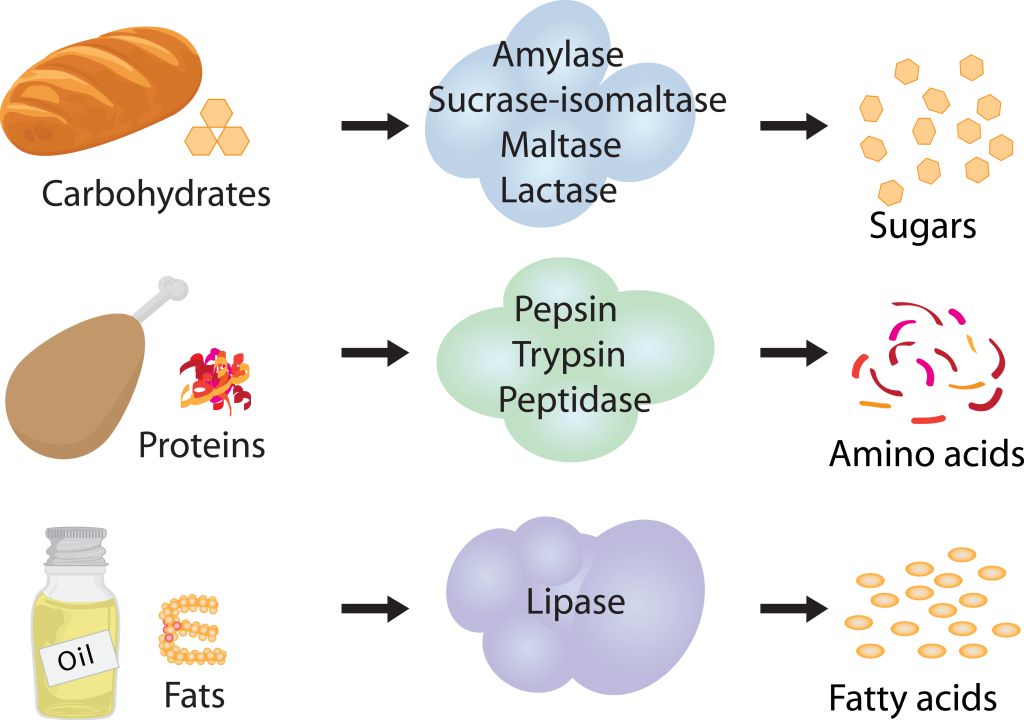
Pancreatic enzymes play a central role in intestinal nutrient breakdown and absorption, as they convert complex carbohydrates, proteins, and fats into simple sugars, amino acids, and fatty acids that the body can readily absorb.
Once broken down, these nutrients are readily absorbed through the intestinal lining and transported via the bloodstream, where they are used to maintain normal physiological function.
What are the different types of digestive enzymes?
Digestive enzymes are produced and released by several tissues and organs, including the salivary glands, stomach, intestinal lining, and the pancreas. Each has a specialized function that targets specific nutrients and works at different stages of the digestive process.
The following are six types of digestive enzymes.
1. Proteases
Proteases are enzymes released by the stomach, pancreas, and small intestine that break down proteins into peptides and amino acids.
Key digestive proteases include pepsin, trypsin, chymotrypsin, and carboxypeptidases.
2. Lipases
Lipases facilitate the breakdown of dietary fats and lipids into fatty acids and glycerol. While they’re primarily pancreatic enzymes, lipases are also produced in the stomach, salivary glands, and, to a lesser extent, liver cells.
These enzymes play a critical role in fat digestion, enabling the body to absorb dietary fats and the fat-soluble vitamins A, D, E, and K, which are needed for energy production, hormone synthesis, and overall health and well-being.

3. Amylases
The primary function of amylase enzymes is to break down complex carbohydrates and starches into simple sugars to provide quick energy.
Key types include salivary amylase, which initiates carbohydrate digestion in the mouth, and pancreatic amylase, which continues digestion in the small intestine.
4. Sucrase
Sucrase is a digestive enzyme active in the small intestine that breaks down sucrose, widely known as table sugar, into glucose and fructose. These simple carbohydrates are readily absorbed and can be directly converted into energy.
5. Lactase
Lactase is released by specialized cells lining the small intestine and helps digest lactose, the primary carbohydrate found in milk.
6. Maltase
Maltase is primarily found in the small intestine and is responsible for cleaving the sugar maltose, found in certain grains, into two simpler monosaccharide molecules.

Factors that can affect digestive enzyme needs
Digestive enzyme needs can vary significantly based on dietary habits and overall digestive health.
Diet composition is a primary factor that can affect enzyme needs. Meals that contain high amounts of protein, fat, or carbohydrates can increase the demand for specific digestive enzymes, such as proteases, lipases, or amylases.
“Diets high in ultra-processed foods provide less stimulation for normal enzyme release,” explains Dr. Berg. “This can contribute to sluggish digestive functions and poor nutrient absorption.”
Meal size and meal frequency can also influence digestive workload, as excessively large meals may require higher enzyme output to break down nutrients.
Frequent snacking can disrupt normal digestive signaling and enzyme release, potentially leading to imbalances in digestive function and increasing the risk of discomfort.
Finally, food preparation methods affect enzyme demand, as cooking and mechanical processing, such as pureeing, help break down foods and improve digestibility.
However, raw foods, especially fibrous vegetables, whole grains, and legumes, often require greater enzymatic activity to be fully digested.

How much digestive enzyme support do you need?
An individual’s digestive enzyme needs vary based on age, diet, and overall health status.
Due to age-related digestive changes, many individuals who are seeking additional digestive support incorporate digestive enzyme supplements into their routine.
This has been confirmed by research published in Gastroenterology, reporting that the production of digestive enzymes, including pepsin, declines by approximately 40 percent in adults aged 65 to 98.
Digestive enzyme supplements aim to support gut function and are often utilized to optimize digestive health and nutrient absorption.
They are typically taken before or during a meal to promote digestion, and it’s often advised to start with the lowest amount indicated on the product packaging, monitor how your body responds, and adjust based on tolerance or meal composition.
Compared to vitamins and minerals, digestive enzymes don’t have established recommended daily intake values. Therefore, it’s crucial to carefully follow the product’s instructions and consult a healthcare provider to determine the appropriate enzyme type for your individual needs.

How to choose a digestive enzyme supplement
There are many types of digestive enzyme support products, including broad-spectrum supplements and targeted enzyme products.
Broad-spectrum supplements often include a range of enzymes, such as amylase, lipase, and protease, to support general digestive needs.
Targeted enzyme products typically contain higher concentrations of one or a few enzymes. For example, lactase supports the digestion of dairy products, while protease- or lipase-focused formulas may be more appropriate for individuals who consume high-protein or high-fat meals.
It’s crucial to look for natural supplements free from unnecessary fillers, artificial additives, and common allergens such as soy, dairy, or gluten.
It’s also important to consider whether you prefer plant-based enzymes or animal-derived enzymes.
Plant-based enzymes, typically derived from fruit, fungi, or microbes, are suitable for vegetarians or vegans and retain activity across a broader pH range.
Animal-derived enzymes, especially those sourced from hog tissues such as the pancreas, closely mimic human digestive enzymes and may be more readily recognized and utilized by the body to support overall digestion.
A study published in Current Drug Metabolism found that the “Pancreatic physiology of hogs is more similar to humans than any other animal species. Enzymatic activity levels from pork sources are approximately 30 to 50 percent higher than beef sources.”

Who should be cautious with digestive enzyme supplementation?
Digestive enzyme supplements are generally considered safe for healthy adults when used as directed.
However, individuals with conditions that impair enzyme production, such as exocrine pancreatic insufficiency, chronic pancreatitis, or cystic fibrosis, should consult a healthcare provider before using over-the-counter (OTC) enzyme supplements.
These conditions often require medically supervised pancreatic enzyme replacement therapy, and self-treatment with OTC supplements may mask or worsen symptoms.
Certain digestive enzymes may also interact with medications, including blood thinners, antiplatelet drugs, antibiotics, diabetes medications, or acid-reducing therapies.
Therefore, it’s vital to consult your healthcare provider to determine whether enzyme supplementation is appropriate and safe.
Key takeaways
- Digestive enzymes are specialized proteins that help break down carbohydrates, proteins, and fats, allowing these nutrients to be absorbed and used by the body.
- Common digestive enzyme supplements typically include proteases to break down proteins, lipases to digest fats, and amylases to help process carbohydrates.
- Digestive enzyme support may benefit individuals seeking to enhance digestive function and optimize nutrient absorption.
- Enzyme needs are often influenced by eating habits and meal composition, particularly diets high in fat or protein, as well as frequent consumption of ultra-processed foods.
FAQ
- 1. What are the most common types of digestive enzymes?
- 2. Are plant-based and animal-based enzymes different?
- 3. Should digestive enzymes be taken with meals?
- 4. Are broad-spectrum enzyme formulas better?
- 5. Are digestive enzyme supplements safe?


