

At a glance
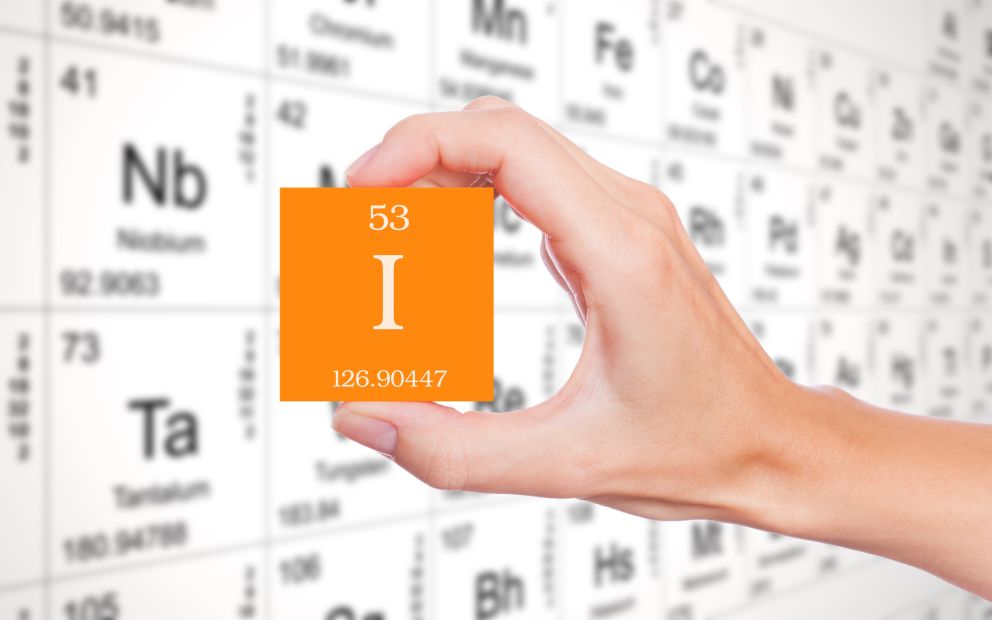
Iodine is a trace dietary mineral involved in hormone production and in functions that affect metabolism, growth, brain development, and cognitive performance. Both too little and too much iodine can interfere with normal function, making balanced intake important throughout life. Dietary needs differ by age and life stage, and iodine content can vary widely among food sources.
Although the body needs only small amounts of iodine, this trace mineral supports several essential physiological processes.
It is especially important for thyroid activity, which influences metabolism, energy use, and normal growth and development.
Maintaining adequate iodine levels helps support functions that depend on proper iodine intake.
What is iodine?
Iodine is an essential trace mineral that the body can’t produce on its own, meaning it must be obtained through food or other dietary sources.
It occurs naturally in seawater and certain foods, particularly seaweed, seafood, and dairy products.
After consumption, iodine is primarily absorbed as iodide, a form that the thyroid gland can take up from the bloodstream.
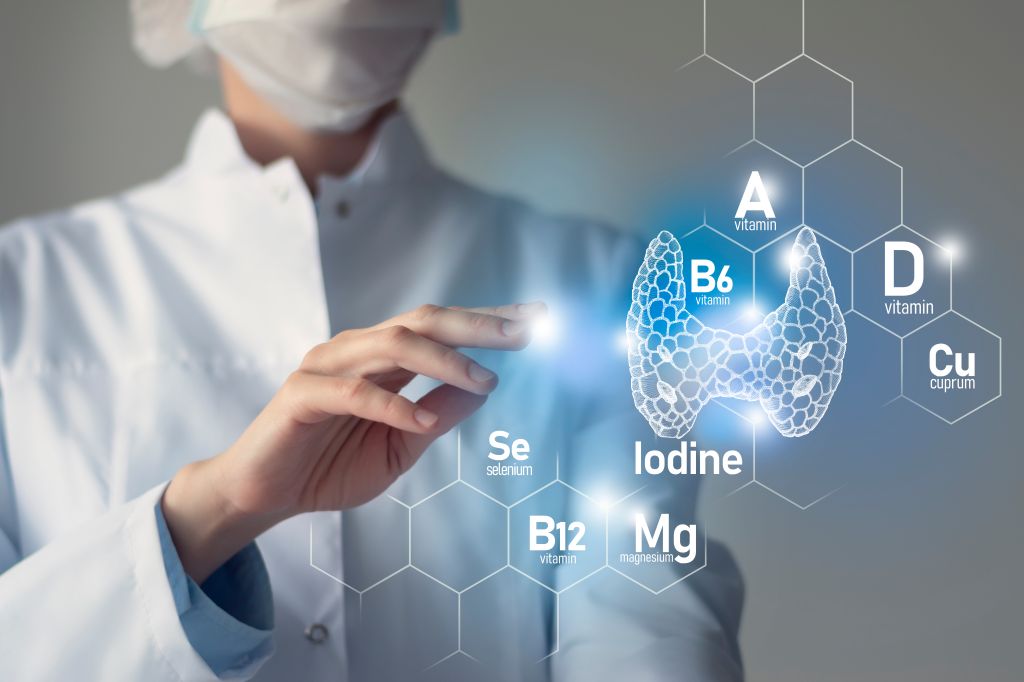
The thyroid concentrates a large portion of the body’s iodine and uses it to produce the hormones thyroxine (T4) and triiodothyronine (T3).
T4 is the main hormone released by the thyroid, while T3 is the more active form that helps regulate metabolism, body temperature, heart rate, and other cellular processes.
Because iodine content can differ considerably among foods, intake depends on factors such as food source, soil iodine levels, and dietary choices.
Watch the video below to learn more about potential benefits of iodine.
Why is iodine important for the body?
Iodine is necessary for maintaining normal thyroid activity, which has wide-ranging effects throughout the body.
“Thyroid hormones help regulate processes such as protein synthesis, enzyme activity, heart function, and digestive activity,” explains Dr. Berg.
The importance of adequate iodine becomes especially pronounced during periods of rapid brain and nervous system development.
A review published in Public Health Nutrition highlights the importance of adequate iodine intake during pregnancy, particularly because the fetal brain depends on maternal thyroid hormones during early gestation.
Both insufficient and excessive iodine intake can interfere with normal thyroid function, making balanced intake crucial.
Five health benefits of iodine
Adequate iodine intake supports a range of functions across tissues and organs.
Let’s look at five ways iodine helps maintain normal function throughout the body.
1. Supports normal thyroid function
The thyroid is particularly sensitive to prolonged iodine deficiency, which can cause structural changes within the gland.
When iodine levels remain too low, the thyroid can enlarge as it attempts to compensate, leading to a condition known as goiter.
According to a review published in Nutrients, iodine deficiency is closely associated with endemic goiter and other iodine-deficiency disorders, underscoring the importance of adequate iodine status for thyroid health.
2. Regulates normal metabolic activity
Iodine status may also be linked to metabolic processes that regulate blood sugar and fats in the bloodstream.
A study published in the Endocrine Journal examined iodine levels and metabolic health in 4277 adults with normal thyroid function.
Researchers found that insufficient iodine intake was associated with a higher likelihood of metabolic syndrome and elevated blood glucose in women compared with adequate iodine intake.
3. Promotes brain and nervous system development
Through its role in thyroid hormone production, iodine supports several processes involved in the formation and organization of the nervous system, including neuronal migration, cell differentiation, and myelination.
Myelination creates a protective covering around nerve fibers that helps electrical signals travel efficiently between nerve cells.
Given this vital role, a review published in Seminars in Cell & Developmental Biology reports that iodine deficiency can impair thyroid hormone production, potentially disrupting these pathways and interfering with maturation and structural organization in the developing brain.
Ultimately, proper development of neural pathways helps support efficient communication throughout the brain and nervous system.
4. Contributes to healthy skeletal growth
Iodine is important during periods of rapid physical development because it helps maintain the thyroid hormone activity needed for normal growth.
When iodine deficiency becomes severe enough to disrupt thyroid function, healthy development can be affected.
This connection is supported by evidence published in Nutrients, which reports that low iodine intake can impair overall physical growth.
The review also notes that severe iodine deficiency associated with untreated congenital hypothyroidism can contribute to short stature, while the effects of milder iodine deficiency on growth remain unclear.
5. Helps maintain cognitive function
Iodine may be important for certain aspects of cognitive performance, particularly reasoning and the ability to recognize relationships between ideas and visual information.
Even a mild iodine deficiency may interfere with children’s ability to reach their full cognitive potential.
In fact, a randomized controlled study published in The American Journal of Clinical Nutrition found that children who received iodine had higher overall cognitive scores and performed better on measures of perceptual reasoning compared with those who received a placebo.
Signs of iodine deficiency
Iodine deficiency can develop gradually, and early symptoms may be subtle or easy to overlook.
When iodine deficiency affects thyroid function, symptoms may include persistent fatigue, unexplained weight gain, increased sensitivity to cold, constipation, muscle weakness, and a slower-than-normal heart rate.
In addition, some people may notice dry or rough skin, thinning hair, increased hair loss, or difficulty concentrating and thinking clearly. However, these symptoms are not specific to an iodine deficiency and may occur with other health conditions.
A more pronounced deficiency can also lead to visible swelling or enlargement in the neck.
If you suspect iodine deficiency, consult your doctor before taking iodine supplements or substantially increasing your iodine intake.
Best dietary sources of iodine
Marine foods are among the most concentrated natural sources of iodine because iodine is abundant in seawater.
Sea vegetables such as kelp, kombu, wakame, and nori can be easily included in a balanced diet and provide iodine, although concentrations can differ considerably between species, and some varieties may contain excessive amounts.
Other iodine-rich foods include the following:
- Cod and other ocean fish
- Shrimp, oysters, clams, and scallops
- Eggs, particularly the yolks
- Milk, yogurt, and certain cheeses
Iodized salt can also provide iodine and is an important dietary source of this essential mineral.

How much iodine do you need?
Iodine requirements depend on age and life stage, with needs increasing during pregnancy and breastfeeding.
According to the National Institutes of Health (NIH), the recommended dietary allowance for most adults is 150 micrograms (mcg) per day, while pregnant women need 220 mcg and breastfeeding women need 290 mcg daily.
Children ages 1 to 8 need 90 mcg per day, while those ages 9 to 13 require 120 mcg per day. Beginning at age 14, the recommended amount increases to 150 mcg daily.
More iodine isn’t necessarily better. The NIH lists 1100 mcg per day from all sources as the tolerable upper intake level for adults, as excessive regular consumption can have adverse effects.
Individual needs may differ in certain circumstances, so higher iodine intakes should be discussed with a healthcare provider.
Key takeaways
- Iodine is an essential trace mineral needed for normal thyroid activity, brain development, and cognitive function.
- Iodine deficiency can contribute to symptoms such as fatigue, weight gain, and neck swelling.
- Seaweed, ocean fish, eggs, and dairy products are among the best dietary sources of iodine.
- Most adults need 150 mcg of iodine daily, while pregnancy and breastfeeding increase requirements to 220 and 290 mcg.
FAQ
- 1. What are the symptoms of low iodine?
- 2. What foods are high in iodine?
- 3. What happens if I consume iodine every day?
- 4. What causes someone to not get enough iodine?
Sources
- https://pubmed.ncbi.nlm.nih.gov/18053280/
- https://pmc.ncbi.nlm.nih.gov/articles/PMC9967346/
- https://pubmed.ncbi.nlm.nih.gov/36567075/
- https://pubmed.ncbi.nlm.nih.gov/21802524/
- https://pubmed.ncbi.nlm.nih.gov/36839172/
- https://pubmed.ncbi.nlm.nih.gov/19726593/
- https://ods.od.nih.gov/factsheets/Iodine-Consumer/