

At a glance
Turmeric is a rich source of curcumin, a bioactive compound with anti-inflammatory and antioxidant properties. Curcumin offers potential benefits for men, including supporting heart and liver health, reducing muscle soreness, promoting reproductive function, aiding weight management, and enhancing mental well-being.
Men encounter unique health challenges, and many are seeking natural, holistic ways to support their overall well-being.
Let’s look at eight health benefits of turmeric for men and discover how to incorporate this vibrant spice into your wellness routine.
What is turmeric?
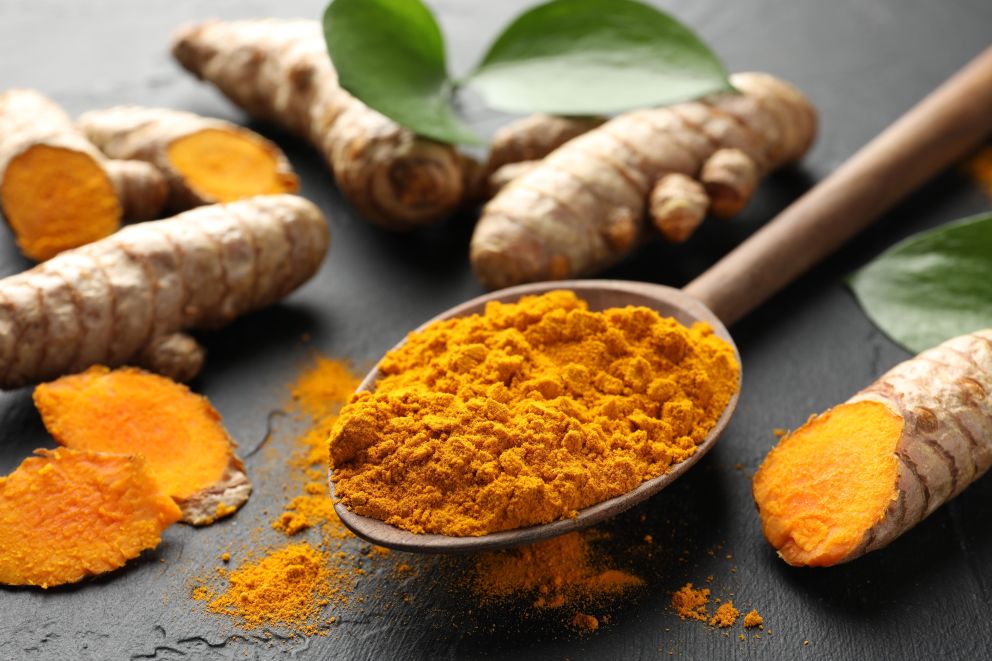
Turmeric, also known as the golden spice of India, is a popular seasoning that originated approximately 4000 years ago. It’s derived from the Curcuma longa plant, making it a member of the ginger family.
Curcumin, a bioactive compound found in turmeric root, has been used in Ayurvedic medicine for centuries as a natural remedy for a wide range of health concerns.
Research published in Foods highlights that curcumin supports inflammatory balance and strengthens cellular integrity against everyday stressors.
Because of its anti-inflammatory and cell-supportive properties, regular turmeric use has been linked to various health benefits.
While fresh turmeric root may be challenging to find in Western supermarkets, ground turmeric powder and curcumin supplements are widely available and often used by men seeking to support overall health and wellness.
Watch the video below to learn more about the incredible health benefits of turmeric.
8 turmeric benefits for men
Turmeric is a versatile and vibrant spice used for centuries in cooking and wellness practices, offering a range of ways men can support and enhance their daily routine.
Let’s look at eight potential health benefits of turmeric for men.
1. Promotes heart health
Incorporating turmeric can be an excellent strategy for men to naturally support their circulatory health and cardiovascular well-being.
Research published in Preventive Nutrition and Food Science found that curcumin supports better blood pressure by stimulating blood flow and suggests that turmeric’s benefits for blood vessel function may increase with prolonged use.
It’s believed that curcumin helps relax blood vessels and supports balanced inflammatory responses, which together promote healthy circulation and blood pressure.

2. May support skeletal and muscle comfort
Turmeric is believed to enhance joint and muscle comfort by influencing compounds in the body that affect musculoskeletal balance and mobility.
A study published in the Indian Journal of Clinical Biochemistry found that turmeric intake can support joint health due to its potential to modulate cytokines, a group of proteins that influence muscle function and joint integrity.
3. Speeds up muscle recovery
Muscle soreness often occurs when the connective tissues around muscles experience stress or minor damage during or after physical activity.
While muscle soreness is normal and typically indicates muscle growth, it can be an uncomfortable experience and may prevent some individuals from participating in certain activities.
Research published in Critical Reviews in Food Science and Nutrition found that curcumin showed promising results in reducing self-perceived pain and tenderness after physical activity.
It’s believed that curcumin’s natural anti-inflammatory and antioxidant properties can aid faster recovery after intense exercise.
4. Supports mental well-being
Although men face mental health challenges similar to women, many hesitate to seek support because of fear of judgment or stigma.
Evidence published in Frontiers in Psychiatry found that curcumin may benefit mood regulation by impacting neurotransmitter balance, including serotonin and dopamine.
Both serotonin and dopamine are critical neurotransmitters for maintaining mood stability and enhancing mental well-being.
“Curcumin may increase the production of brain-derived neurotrophic factor (BDNF), a protein that regulates the maintenance of nerve cells and overall brain function,” explains Dr. Berg.

5. Promotes weight loss
With the abundance of unhealthy food options, weight gain has become a persistent issue for many men, and taking turmeric supplements may offer a natural way to support a healthy body weight.
Research published in Frontiers in Pharmacology suggests curcumin can enhance basal metabolic rate and increase energy levels, which has potential benefits for weight management.
6. Supports reproductive health
As men age, maintaining optimal testosterone production can support overall reproductive function and vitality.
A study published in Endocrine Oncology suggests that curcumin may enhance the body’s ability to protect Leydig cells from oxidative stress, thereby supporting their role in healthy testosterone production and overall testicular function.
The authors conclude, “There is plenty of evidence supporting curcumin’s capacity to preserve testicular architecture and function, which is usually attributed to its antiapoptotic and antioxidant actions.”

7. Aids normal inflammatory balance
Curcumin is believed to help maintain the body’s natural balance between antioxidants and free radicals while supporting the regulation of inflammation.
Research published in Molecules suggests that curcumin possesses potential antioxidant and anti-inflammatory properties, which may explain why turmeric intake has been associated with overall better health and wellness.
8. Supports liver health
Regularly incorporating turmeric into your wellness routine can support a healthy liver, which is vital to maintaining various crucial physiological functions.
According to a study published in Nutrients, curcumin has demonstrated several benefits for liver health, including supporting detoxification pathways, enhancing glutathione production, and promoting liver cell resilience.

How much turmeric should you take?
Turmeric is generally recognized as safe (GRAS) by the U.S. Food and Drug Administration (FDA), making it a suitable dietary supplement for daily use.
While general recommendations suggest taking 500 mg of curcumin twice a day, it’s best to consult your healthcare provider before taking turmeric supplements to ensure the dosage is appropriate for your individual needs and circumstances.

How to use turmeric
Turmeric is a versatile spice that’s widely available in various forms, including powders, capsules, extracts, and even oils.
Turmeric supplements are a convenient source of curcumin as they’re premeasured and can be taken on the go.
Dried turmeric powder, on the other hand, can be added to a wide range of dishes, including soups, curries, dips, and marinades.
Because curcumin is poorly absorbed, heating and cooking turmeric are great ways to enhance its bioavailability and maximize its health benefits.
In addition, turmeric oil can be applied topically to support skin health, and turmeric paste is typically mixed with coconut milk to create golden milk, a soothing and health-promoting beverage.
Regularly drinking turmeric tea is another excellent option to enjoy this health-promoting and aromatic spice.

Potential adverse effects of turmeric
While turmeric is generally considered safe, it’s crucial to be aware of the potential adverse effects of curcumin supplementation.
Certain individuals are sensitive to turmeric and may experience gastrointestinal issues such as abdominal pain, diarrhea, and acid reflux.
Although rare, in some cases turmeric can trigger allergies or cause headaches and dizziness.
Turmeric can also interact with certain medications, such as blood thinners, antacids, and diabetes drugs, and it’s crucial to discuss its use with a healthcare provider if you are taking prescription medication or have underlying health conditions.
To maximize the health benefits of turmeric while minimizing the risk of side effects, it’s essential to follow the recommended dosage of the supplement you plan to use.
Key takeaways
- Turmeric contains curcumin, which may support cardiovascular health, promote healthy blood flow, and enhance joint and muscle comfort.
- Curcumin may also reduce muscle soreness, support liver function, and help maintain inflammatory balance.
- Turmeric use can support mental well-being by influencing neurotransmitters and may aid weight management by supporting metabolic balance.
- While considered safe when used as a spice or in moderate supplement doses, turmeric can cause gastrointestinal issues in sensitive individuals if consumed in excess.
FAQ
- 1. What are the turmeric benefits for men?
- 2. Does turmeric increase testosterone?
- 3. Can men take turmeric daily?
- 4. Can curcumin boost libido?
- 5. How can I increase the bioavailability of curcumin?
Sources
- https://www.ncbi.nlm.nih.gov/pmc/articles/PMC5664031/
- https://www.ncbi.nlm.nih.gov/pmc/articles/PMC9007706/
- https://www.ncbi.nlm.nih.gov/pmc/articles/PMC4310836/
- https://pubmed.ncbi.nlm.nih.gov/32319320/
- https://www.ncbi.nlm.nih.gov/pmc/articles/PMC7728608/
- https://www.ncbi.nlm.nih.gov/pmc/articles/PMC6582779/
- https://pmc.ncbi.nlm.nih.gov/articles/PMC10305475/
- https://pmc.ncbi.nlm.nih.gov/articles/PMC6272784/
- https://pmc.ncbi.nlm.nih.gov/articles/PMC6073929/


