

At a glance
Blue light is part of the visible light spectrum and comes from both natural and artificial sources. Its effects depend largely on timing, intensity, and duration of exposure. Because indoor lighting and screen use often extend into the evening, blue light has become an important factor in sleep quality and nighttime routines.
The correlation between blue light exposure and good sleep quality is important to consider, as light exposure helps regulate the body’s internal clock.
Blue light from sunlight can support alertness and a healthy circadian rhythm during the day, while evening exposure may delay normal sleep signals, making it harder to wind down and ensure you get enough sleep at night.
Discover how blue light can hinder sleep and what can help reduce nighttime exposure.
What is blue light?
Blue light is a short-wavelength, high-energy type of visible light. It occurs naturally in sunlight and is also emitted by artificial sources such as smartphones, tablets, computers, televisions, fluorescent lights, and light-emitting diode (LED) bulbs.
During the day, exposure to blue-enriched natural light helps promote alertness and supports circadian rhythm, the internal 24-hour clock that helps regulate sleep, body temperature, hormone patterns, and daytime wakefulness.
Research published in Somnologie notes that light exposure affects human circadian rhythm, sleep, and mood, with timing playing a central role in these effects.
This is why blue light exposure can be helpful in the morning and during the day, but disruptive in the evening. The body relies on changes in light and darkness to distinguish daytime from nighttime.
Watch the video to learn more about the effects of artificial blue light.
How blue light affects sleep
Blue light affects sleep primarily by influencing the circadian rhythm and the production of the hormone called melatonin. Melatonin is released in response to darkness and helps signal to the body that it is time to prepare for sleep.
Evening light exposure can interfere with this process by sending wake-promoting signals to the brain. This may delay the body’s release of melatonin, disrupt natural sleep cycles, and increase sleep onset latency, which refers to the time it takes to fall asleep.
A study published in Frontiers in Neurology highlights the effects of nocturnal blue light exposure on sleep. The authors state that “Evening exposure to blue light suppresses melatonin, delays circadian phase, and prolongs sleep onset latency, impairing sleep quality.”
Lower melatonin levels at night can make it harder for the body to shift into a restful state, especially when bright electronic screens or indoor lighting are used close to bedtime.
Artificial blue light at night can also combine with mental stimulation. Bright screens, work emails, social media, gaming, or emotionally engaging content may keep the nervous system more alert when the body should be preparing for rest.
“Cell phones, tablets, and TVs all emit blue light that can affect the circadian rhythm, which is the internal clock that governs the sleep-wake cycle,” explains Dr. Berg. “Blue light can also elevate cortisol, the body’s stress hormone that can cause difficulty falling or staying asleep.”
Cortisol typically rises in the morning to support alertness and declines later in the day. When bright light, stress, or stimulating activities keep the body in a more activated state at night, sleep may become lighter and less restorative.
Common sources of blue light exposure
Blue light exposure can come from both natural and artificial sources.
The sun is the strongest natural source, while indoor lighting and electronic devices can provide repeated exposure throughout the day and even at night.
Common sources of artificial blue light include:
- Phones
- Tablets
- Computer screens
- Televisions
- LED and fluorescent light bulbs
- Gaming devices
- E-readers
- Bright bathroom or bedroom lighting
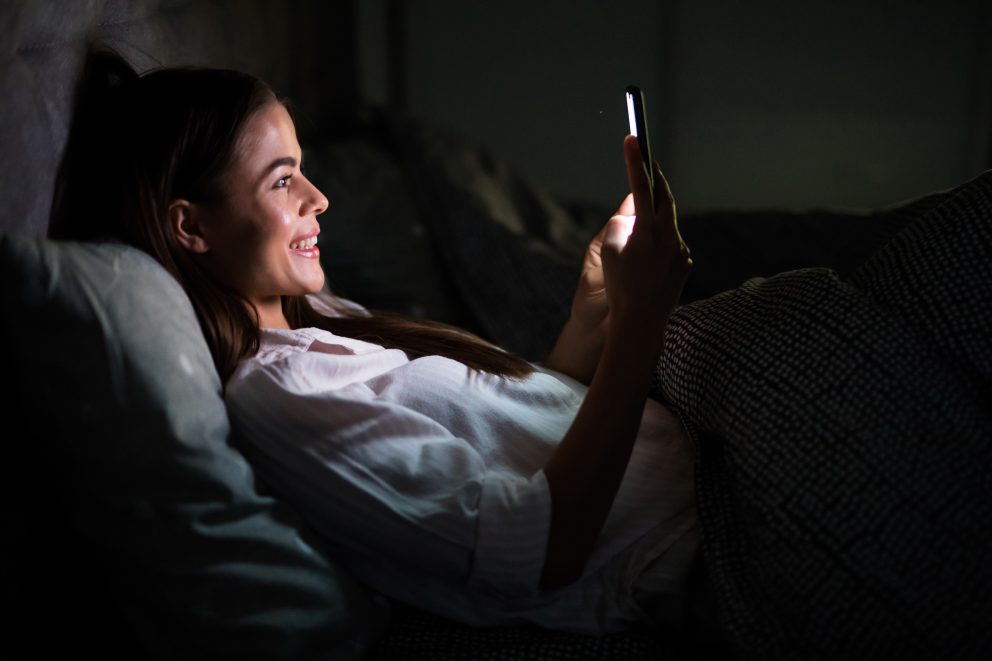
Screen use is a major source of nighttime blue light exposure because it often happens close to the face and near bedtime. The amount of blue light emitted from screens varies by device type, brightness level, screen distance, and time of use.
Artificial light from overhead fixtures and lamps can also matter, especially when indoor lighting is bright, cool-toned, or used late at night. Brighter screens and cool-toned light bulbs generally emit more blue light than dimmer, warmer lighting.
Signs blue light may be affecting your sleep
The impact of blue light depends on timing, brightness, duration, individual sensitivity, and overall sleep habits.
Nighttime blue light exposure may be a factor if sleep disturbances occur alongside late-evening screen use or bright indoor lighting. This can include difficulty falling asleep, feeling unusually alert at night, going to bed later than intended, waking frequently, or feeling tired in the morning.
Some people may also notice more daytime fatigue, reduced morning alertness, or increased reliance on caffeine after nights with heavy screen use. However, poor sleep can also be linked to stress, caffeine intake, irregular schedules, blood sugar fluctuations, or underlying sleep disorders.
Persistent sleep problems should be discussed with a healthcare provider, especially when accompanied by loud snoring, pauses in breathing, anxiety, chronic fatigue, or frequent nighttime waking.
How to reduce blue light exposure at night
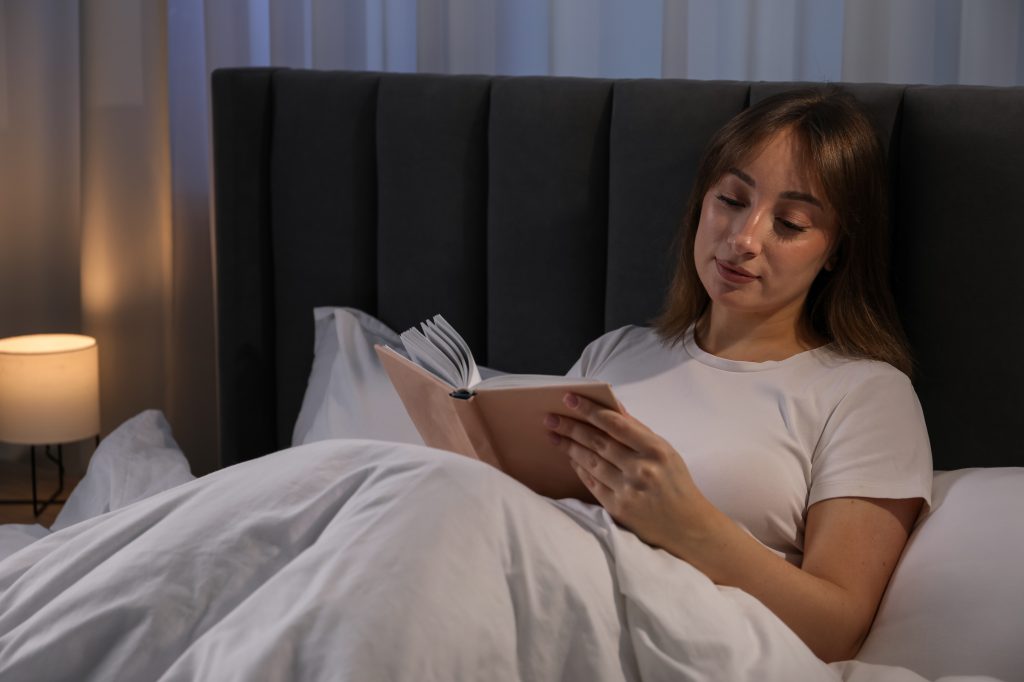
Reducing blue light exposure at night may help improve sleep by supporting the body’s natural transition from wakefulness to rest.
The goal isn’t to avoid all blue light, but to support daytime light exposure while reducing bright artificial light in the evening.
Here are 3 ways to reduce blue light exposure at night.
1. Limit screen use before bed
Reducing screen use in the evening helps lower both light exposure and mental stimulation.
Phones, tablets, computers, and televisions can keep the brain engaged, especially when used for work, gaming, social media, or engaging with emotionally stimulating content. This can delay the wind-down process and make sleep feel less natural.
Turning off screens 1 to 3 hours before bed can help the body prepare for sleep. Those who are especially sensitive to light may benefit from a longer screen-free period.
2. Dim lights in the evening
Bright indoor lighting can affect sleep signals, even without screen use. Lowering overhead lights in the evening helps create a stronger contrast between daytime and nighttime for the body.
Warm, dim lighting is generally better suited for evening hours than bright white or blue-toned light. Red or orange light may be less disruptive at night because these wavelengths have a weaker effect on melatonin compared to blue light.
Using lamps, low-watt light bulbs, or indirect lighting can help create a calmer evening environment. Additionally, people who have to sleep at irregular hours may improve sleep quality by using blackout curtains to block out blue light from the sun before bed.
3. Filter blue light
When screen use is unavoidable in the evening, blocking nocturnal blue light may help reduce the impact of artificial light exposure before bed.
Most phones, tablets, and computers include “night mode” display settings that reduce blue light and shift the screen toward warmer colors. Blue light-blocking glasses may also help limit exposure from screens or bright indoor lighting at night.
A study published in the Journal of Psychiatric Research found that adults with insomnia symptoms who wore blue-light blocking glasses with amber lenses for two hours before bed for one week experienced improvements in sleep duration, sleep quality, and sleep soundness compared to those who wore clear lenses.
These tools may help reduce evening blue light exposure, but they shouldn’t replace lower screen brightness, dim evening lighting, or reduced screen use before bed.
Key takeaways
- Blue light is a short-wavelength light that comes from sunlight, screens, LED lights, and fluorescent lighting.
- Blue light and sleep are closely connected because light exposure helps regulate circadian rhythm and melatonin release.
- The effects of blue light depend on timing, as daytime exposure can support alertness while evening exposure may delay normal sleep signals.
- Limiting screen usage before bed, dimming evening lights, and using blue light settings or filters may help reduce excessive nighttime exposure.
FAQ
- 1. Does blue light affect sleep?
- 2. Is blue light bad for you?
- 3. How long before bed should you avoid blue light?
- 4. Do blue light glasses help with sleep?
- 5. What color light is best for sleep?


